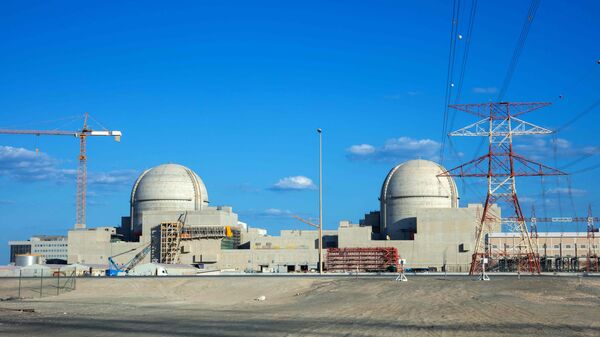
An electrical generator on the perimeter of the United Arab Emirates’ Barakah nuclear power plant was set ablaze after a targeted drone attack on Sunday, threatening the Iran war ceasefire.
The strike caused no radiological release nor injuries. No one immediately claimed responsibility for the attack, authorities in the UAE’s capital, Abu Dhabi, told the Associated Press.
However, suspicion immediately fell on Iran, which has been increasingly threatening the UAE over recent days as the country hosted Israeli Iron Dome missile defenses and troops during the war, the report added.
Barakah plant provides a fifth of UAE’s energy
The $20 billion was built by the UAE with the help of South Korea and went online in 2020. It’s the first and only nuclear power plant on the Arabian Peninsula and can provide a quarter of all the energy needs in the UAE, a federation of seven sheikhdoms. It’s also the first commercial nuclear power plant in the Arab world.
The UAE’s nuclear regulator said the fire didn’t impact the plant safety. “All units are operating as normal,” the organization wrote on X.
The UAE statement didn’t blame any party for the attack. The Vienna-based International Atomic Energy Agency, the United Nations’ nuclear watchdog, did not immediately respond to a request for comment.
Sunday’s strike marked the first time the four-reactor Barakah plant has been targeted in the Iran war. The plant sits in the far western deserts of Abu Dhabi, near the border with Saudi Arabia.
The UAE signed a strict deal with the US over the power plant, known as a “123 agreement,” in which it agreed to give up domestic uranium enrichment and reprocessing of spent fuel to halt any proliferation fears. Its uranium comes from abroad.
Iran vs US over Strait of Hormuz
The strikes on the power plant were launched as Iran still has a chokehold on the , a vital waterway through which a fifth of the world’s oil and natural gas passed before the war, disrupting global energy supplies.
Meanwhile, America continues to block Iranian ports in response as negotiations to solidify the ceasefire have failed to advance.
US President Donald Trump has suggested hostilities could resume, and Iranian state television has repeatedly aired segments with anchors holding Kalashnikov-style rifles in an effort to prepare the public for war, AP reported.
Meanwhile, fire exchanges between Israel and Hezbollah in Lebanon have been rising in recent days as well, threatening a separate ceasefire there.
Iran, US talks over ceasefire
Talks between Iran and the US are at a standstill as the shaky ceasefire threatens to collapse and tip the Middle East back into open warfare, prolonging the worldwide energy crisis sparked by the conflict.
On Iranian state TV, presenters on at least two channels appeared armed during live programs, the Associated Press reported.
In one program, Hossein Hosseini received basic firearms training from a member of the paramilitary Revolutionary Guard, whose face was covered with a mask, the report added. After being shown how to prepare the weapon, Hosseini mimed firing a shot at the flag of the UAE.
On another channel, woman presenter Mobina Nasiri said a weapon had been sent to her from a gathering in Tehran’s Vanak Square so she could appear armed on camera. She said: “From this platform, I declare that I am ready to sacrifice my life for this country.”
(With inputs from the Associated Press)