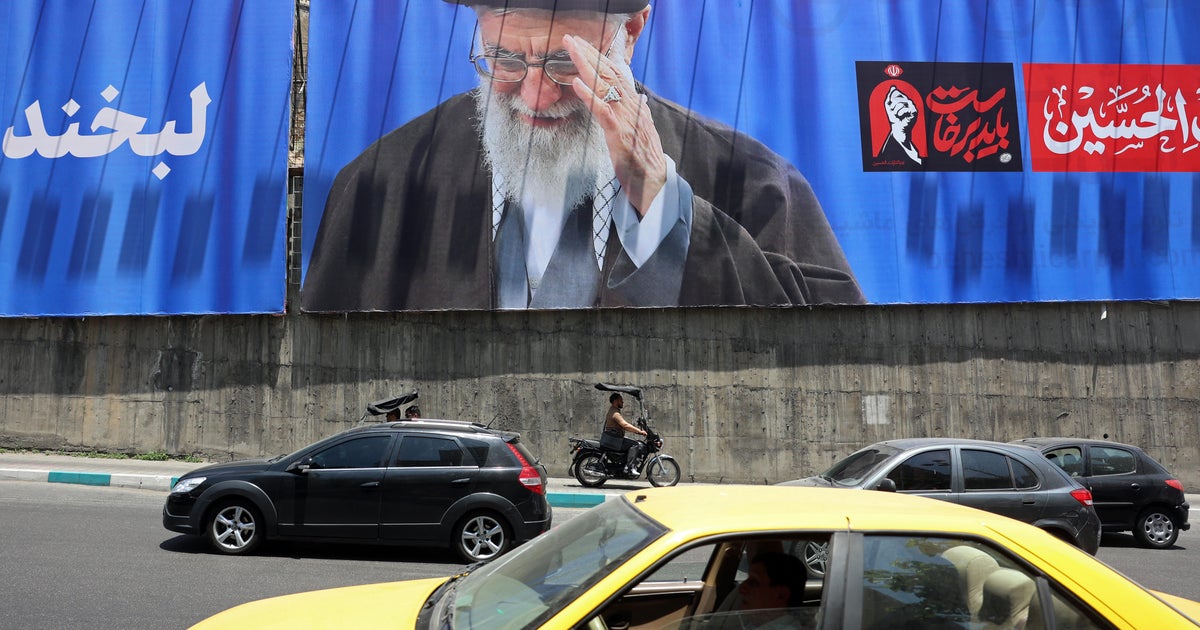
Iran’s chief negotiator Mohammad Bagher Ghalibaf called on Thursday for massive turnout at Ali Khamenei’s funeral to avenge the supreme leader’s death in U.S.-Israeli strikes at the start of the war.
“I invite all the Iranian people … to write a glorious page in the history of Islamic Iran through your presence” at the funeral ceremonies starting Saturday, said Ghalibaf, who is also Iran’s parliament speaker.
“The nation’s call for vengeance must ring in the ears of the whole world,” he added in a statement.
Khamenei’s funeral, initially delayed at the height of the war, will take place after President Trump and Qatari and Pakistani mediators claimed there had been positive progress in indirect talks this week.
The ceremonies are expected to draw between 15 and 20 million mourners, according to officials, which would make it the biggest state funeral in the country’s history.
Iran “is preparing to experience one of the most significant moments in its history,” Ghalibaf said.
It remains unknown if Khamenei’s son and successor Mojtaba, who has not been seen in public since becoming supreme leader, will be present.
Representatives from around 30 countries are expected to attend the funeral, with people pouring in from neighbouring Iraq, Afghanistan and Pakistan.
CBS/AFP
Pakistan’s Prime Minister Shehbaz Sharif will attend the funeral of the slain Iranian supreme leader Ali Khamenei this week, the South Asian nation’s foreign ministry said on Thursday.
“The Prime Minister, Muhammad Shehbaz Sharif, will go to Iran and Turkey from 3-5 July … he will go to Iran first for (the) supreme leader’s funeral,” ministry spokesman Tahir Andrabi told reporters.
Pakistan has been mediating between the United States and Iran to end the regional war which began in February with U.S.-Israeli strikes that killed the 86-year-old Iranian supreme leader in Tehran.
The public funeral will begin on Saturday, with his body lying in state at the colossal complex in central Tehran that hosts major Friday prayers, official ceremonies and religious gatherings.
Pakistan shares deep historic ties with Iran. The two share a 560-mile border and cultural links, with Sunni-majority Pakistan home to the world’s second-largest Shia population after Iran.
Sharif’s trip to Turkey would involve meetings with Turkish leadership and businesspeople, Andrabi said.
AFP
As President Trump touts progress in indirect U.S.-Iran talks, former Trump national security adviser H.R. McMaster expressed skepticism on “The Takeout with Major Garrett,” arguing the diplomatic push is giving Iran a chance to refill its coffers.
McMaster, a CBS News contributor, said “Iran is the one making the progress in these negotiations because they’re receiving big paychecks.”
He noted that the U.S. lifted sanctions on Iranian oil and has floated unfreezing Iranian assets, which McMaster said could help Iran rebuild its military and rearm its regional proxies.
“They’re getting the infusion of cash they desperately needed to get themselves up off the mat,” said McMaster, who believes Mr. Trump’s initial decision to go to war with Iran was correct.
Earlier Wednesday, when asked about reports that he had mulled a return to war with Iran, the president said “I think they’ve come a long way” and expressed optimism about Iran’s compliance with the 60-day U.S.-Iran memorandum of understanding.
McMaster argued, “The Iranians have come a long way because they’re getting everything that they wanted.”
Qatar and Pakistan said Tuesday that “positive progress was made” during indirect talks between the U.S. and Iran in Doha, Qatar’s capital “regarding issues related to the memorandum of understanding” that continued the Iran war ceasefire.
“Qatar & Pakistan mediators concluded separate meetings with the US & Iranian negotiators in Doha today, with positive progress made on issues related to the Islamabad Memorandum of Understanding, building on the outcomes of the Lake Lucerne Summit,” Qatari Ministry of Foreign Affairs spokesman Majed Al Ansari, and Pakistan’s foreign ministry, said in a joint statement shared on social media. “The parties agreed to continue discussions over the coming period, with the next meeting to be scheduled at the earliest possible time following the funeral processions of the former Iranian Supreme Leader.”
Vice President JD Vance said talks are going well in Doha, but would not take a return to full-scale military action off the table, saying it lies in the hands of Iran.
“I can’t commit to anything, because obviously it depends on what the Iranians are ultimately going to do,” Vance told reporters after speaking to Marines at Naval Air Station Oceana in Virginia. “As I said up there, what I can commit to is the president’s not going to send our military back in unless he has to, unless there’s a clearly defined purpose for it.”
“If we’ve got to do more, of course, that’s kind of up to the Iranians,” he added. “If they try to rebuild their nuclear program, if they try to start shooting at commercial vessels again, that’s going to change our calculus. But right now, what the president has said is, ‘Go and make a deal, go and negotiate in good faith,’ and that’s what he’s empowered us to do.”
Vance’s comments also seemed to indicate conversations specific to the Iranian nuclear program had not yet begun.
“Obviously, we’re worried about the nuclear issue, we’re going to start talking about that,” Vance said. “So right now the talks are going well, it’s still pretty early, but talks are going well.”
Vance also outlined a familiar list of conditions that could lead the U.S. to restart military action against Iran.
“If they try to rebuild that nuclear program, if they refuse to let inspections in, if they … resume shooting commercial vessels, which they have stopped for a few days, then obviously the president still has a lot of options on the table,” Vance said.
Three members of a four-person MH-60S Sea Hawk helicopter crew were rescued at sea after an “emergency water landing” in the Arabian Sea early Wednesday morning, according to U.S. Naval Forces Central Command.
A search continues for the fourth and final crew member.
There is “no indication” the helicopter, which is assigned to the USS George H.W. Bush, was shot down by hostile action, the military said.
“Three of the helicopter’s four crew members have been recovered and are in stable condition aboard George H. W. Bush,” U.S. Naval Forces Central Command said. “U.S. Navy assets in the region are currently searching for [the] other aircrewman still missing.”
Iranian state media outlets have published the schedule for the funeral of Ayatollah Ali Khamenei, the country’s former supreme leader who was killed on Feb. 28, the first day of the war, in a U.S.-Israeli strike.
Ceremonies will take place across three major Iranian cities, Tehran, Qom and Mashhad, as well as two important Shiite Muslim cities in Iraq, Karbala and Najaf.
Iranian officials say they expect some 15-20 million mourners to join the events, which would make it the biggest state funeral in Iran’s history.
Commemorations are expected to last for six days, beginning on July 4 with three days of events in Tehran culminating with the main funeral procession on July 6. The airspace above the city will be completely closed during the period, state media said.
On July 7, Khamenei’s body will be transferred to the holy city of Qom, then onto Najaf and Karbala in Iraq before the final day of commemorations on July 9 in Mashhad, where he will be buried.