US President Donald Trump has renewed his threat to strike , declaring that the United States will target the underground site “pretty soon” as Washington continues its military campaign against Tehran.
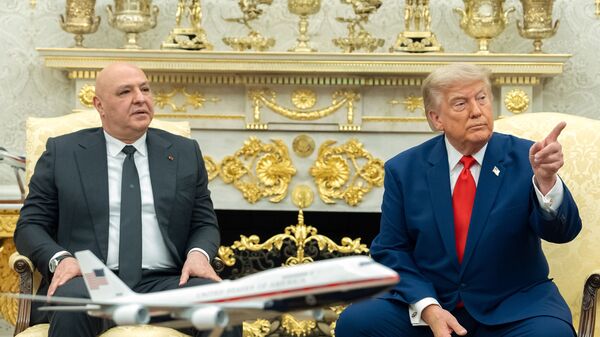
Speaking to reporters during a meeting with Lebanese President Joseph Aoun in the Oval Office on July 21, said the US was preparing a major strike on the mountain complex located near .
“We’ll be hitting that area pretty soon, and very heavily,” said.
He added that he was speaking openly about the planned operation only because he believed Iran would be unable to counter it.
“Normally, I wouldn’t say that. If I thought they could do something about it, I would never say that.”
Trump focuses on enriched uranium
argued that the real concern was not Iran’s centrifuges but its stockpile of highly enriched uranium.
“It doesn’t mean anything unless they have the material. You’re talking about the centrifuges. It doesn’t mean anything unless they have the material. They don’t have it. We follow the material. That’s where the action is.”
Iran is believed to have produced nearly 1,000 pounds of uranium enriched to 60% purity — close to weapons-grade level. Reports indicate the material is stored at or near the Pickaxe Mountain complex, making it a focal point in the stalled US-Iran negotiations over Tehran’s nuclear programme.
Trump repeats earlier warning
Trump’s latest comments echo remarks he made during a July 13 interview on The Hugh Hewitt Show, where he first publicly threatened the site.
“We’re going to take out Pickaxe Mountain. Tell the Iranians to be ready.”
He also claimed Washington was closely monitoring activity at the facility.
“We’re watching Pickaxe Mountain closely. We see no activity there. They’re not doing well with their nuclear situation. Every time we hear about it, we blow it up… But we’ll probably give Pickaxe a shot relatively soon.”
Why Pickaxe Mountain matters
Pickaxe Mountain lies about 220 kilometres (140 miles) south of Tehran and roughly 2 kilometres from the Natanz nuclear complex, one of Iran’s principal uranium enrichment sites.
Construction of the underground facility reportedly began in 2020 after an explosion damaged parts of the Natanz complex. Iranian officials later confirmed they were building a larger and more advanced underground facility inside the mountain to house centrifuge-related operations.
Satellite imagery analysed by the Institute for Science and International Security (ISIS), a US-based nuclear non-proliferation think tank, indicates the site contains two deeply buried tunnel complexes estimated to be at least 100 metres underground, protected by reinforced entrances and an extensive security perimeter.
Experts say facility is difficult to destroy
Military and nuclear experts believe the underground complex is among Iran’s most heavily fortified nuclear facilities and could be beyond the reach of even the United States’ most powerful bunker-buster bombs.
The ISIS think tank has assessed that while the facility is still under construction and not yet operational, it could eventually be used for centrifuge assembly if Iran rebuilds its nuclear infrastructure.
The organisation also suggested that sabotage or ground operations could prove more effective than conventional aerial bombing, although certain vulnerabilities may still be exploitable through specialised deep-penetration weapons.
Nuclear tensions remain high
Trump’s latest threat comes as tensions between Washington and Tehran remain elevated following months of military exchanges and unsuccessful diplomatic efforts over Iran’s nuclear programme.
The fate of Iran’s highly enriched uranium stockpile remains one of the central disputes in negotiations, with US officials insisting the material poses the greatest proliferation risk.