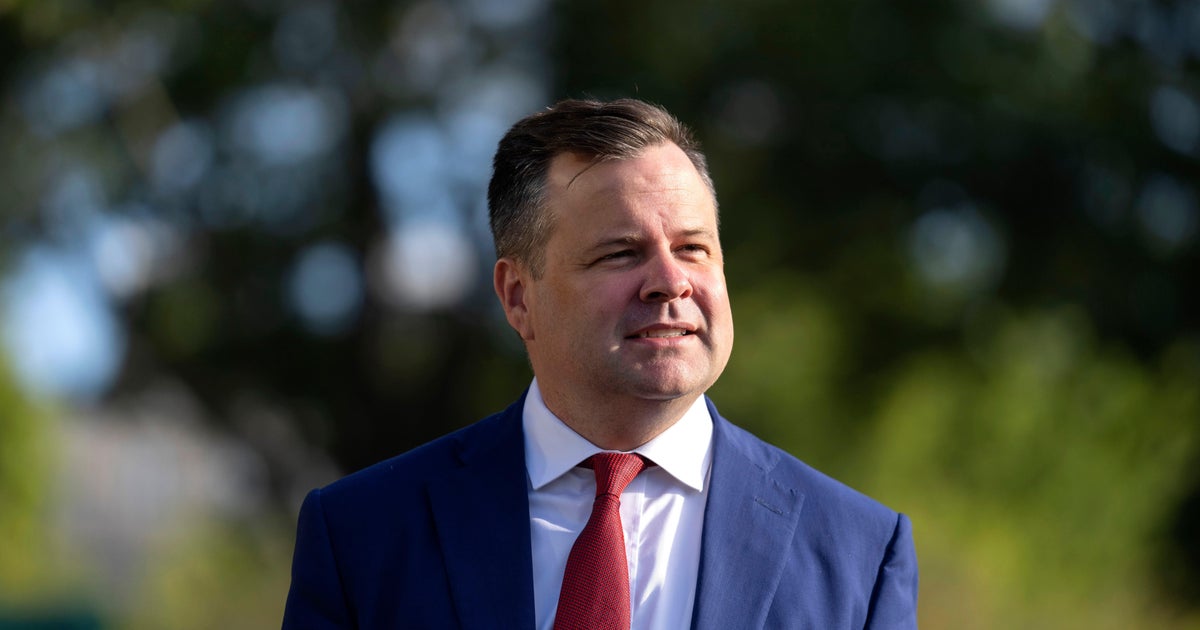
Bill Pulte will begin serving as acting director of national intelligence in a week-and-a-half, President Trump announced Tuesday, effectively standing by his decision to name the housing regulator and Trump loyalist to the job — as the appointment endangers a bipartisan compromise on renewing a key spy authority.
The president’s announcement appeared to move up the start date for Pulte, who currently leads the Federal Housing Finance Agency, and is now slated to start leading the intelligence community on June 19. Outgoing Director of National Intelligence Tulsi Gabbard was originally set to remain in her role until the end of the month.
The initial decision to name Pulte to the job last week drew intense backlash from Democrats due to Pulte’s lack of a national security background and his controversial tenure at the housing agency, during which he accused a litany of Trump foes of mortgage fraud.
The president has said Pulte will not be named director of national intelligence permanently, which would require Senate confirmation. Pulte will remain director of the Federal Housing Finance Agency, which oversees mortgage giants Fannie Mae and Freddie Mac.
The contentious appointment came as lawmakers from both parties rushed to extend Section 702 of the Foreign Intelligence Surveillance Act before it expires Friday.
Democrats said they would not support any reauthorization of Section 702 — which allows the government to collect communications of noncitizens abroad without a warrant — as long as Pulte remained in the position. Last week, Senate Minority Leader Chuck Schumer castigated Pulte for his “record of abusing his office to attack Mr. Trump’s political enemies,” and said “the timing of this announcement could not be worse.”
The choice of Pulte wasn’t met with enthusiasm by many Republicans, with Sens. John Cornyn, Bill Cassidy and Thom Tillis all voicing their disapproval. Asked Monday whether Mr. Trump should withdraw Pulte, Cornyn said: “If he wants to get 702 reauthorization passed, that sounds like the price that they’re going to demand.”
Even before Pulte was named, the negotiations to extend Section 702 were delicate. National security officials have long argued that the law is vital for disrupting terrorist plots, foreign espionage, international drug trafficking and cyber intrusions. But some members of both parties warn that Section 702 can sweep up data on Americans who are in contact with foreigners without a search warrant, prompting calls for for reforms to safeguard civil liberties.
The House passed an extension of the program with some guardrails in late April, with 42 Democrats voting in favor. The issue stalled in the Senate due to an unrelated debate over a proposal to block the creation of a central bank digital currency.
Now, the naming of Pulte to a key intelligence post has created fresh uncertainty. The Senate voted against advancing a Section 702 extension last week, with seven Republicans and almost every Democrat voting no.
Rep. Jim Himes of Connecticut, the top Democrat on the House Intelligence Committee, told “Face the Nation with Margaret Brennan” on Sunday that House Democratic support for extending Section 702 has also begun to evaporate.
“In the basket of awful appointments he has made, this is probably the worst and most dangerous,” Himes said of Mr. Trump’s decision to appoint Pulte. “He doesn’t like to back down, but he’s also not going to like the terrorist attacks that might happen if there is no 702 collection authority.”
In a letter over the weekend, the Republican chairs of the Senate Intelligence and Judiciary committees asked Secretary of State Marco Rubio to begin preparing for the loss of legal authority to gather intelligence on some foreign targets. The GOP lawmakers told Rubio, who also serves as Mr. Trump’s national security adviser, that their Democratic counterparts were “walking away” from an agreement to extend Section 702 for three years.
Senate Majority Leader John Thune told reporters Tuesday that “we are encouraging” the White House to name a permanent director of national intelligence. He called congressional Democrats’ position “incredibly irresponsible,” but said the issue needs to be worked out between Democrats and the White House.
House Speaker Mike Johnson met with Mr. Trump and top officials at the White House on Tuesday. In a press conference later in the day, he said he believed the president was “very close” to appointing a full-time director of national intelligence. Johnson accused Democrats of seeking to “play politics with the security of the American people.”
He said a bipartisan solution on Section 702 “was working well until just a few days ago, when the Democrats decided…they don’t want to reauthorize FISA because the president announced an interim appointment, a short-term appointment for something they disagree with.”