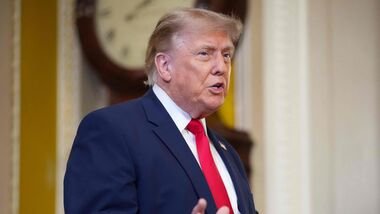
Several increasingly view President as a political liability ahead of the 2026 midterm elections, citing his repeated attacks on GOP lawmakers, insistence on pursuing controversial proposals and falling approval ratings, according to a report by The Hill.
According to the report, Republican senators fear Trump’s political standing could hurt the party’s chances of retaining control of the Senate in the 2026 midterm elections.
GOP senators worry about Trump’s impact
One unnamed Republican senator told the publication that concerns over Trump’s declining approval ratings and their impact on congressional races are widely shared within the Senate GOP conference.
“That’s the perception in the room,” the senator was quoted as saying.
The report said even Republican incumbents in traditionally safe states such as Kansas and Nebraska are now viewed as potentially vulnerable.
Criticism over ‘anti-weaponization’ fund
Several Republican senators have also criticised Trump’s refusal to abandon a proposed $1.8 billion “anti-weaponization” fund, which was intended to compensate MAGA allies investigated or prosecuted during the Biden administration.
According to The Hill, senators feared the proposal would strengthen Democratic accusations that the Trump administration was engaging in political favouritism.
North Carolina Republican Sen. Thom Tillis described the proposal as both “horrible policy” and “horrible politics”.
“I want this yoke off of the members who are up for election in November because there’s no way to explain it,” Tillis was quoted as saying.
He argued the proposal would hand Democrats a potent campaign issue against Republican candidates.
Justice Department rescinds fund order
The report said Acting Attorney General Todd Blanche and the Justice Department rescinded the order establishing the fund after Tillis and Texas Sen. John Cornyn threatened to block Blanche’s confirmation as attorney general.
The Justice Department said Blanche had repeatedly informed Congress that the fund would not move forward.
However, The Hill reported that Cornyn and Tillis claimed resistance from within the White House had delayed efforts to permanently eliminate the proposal.
Concerns over SAVE America Act
Republican lawmakers also expressed concern over Trump’s continued demand that the Senate pass the Safeguard American Voter Eligibility () Act before the election.
GOP senators believe the legislation has little chance of becoming law and warned that raising expectations among conservative voters could ultimately depress Republican turnout if the bill fails.
Cornyn argued that the strategy risked “demoralizing” the Republican base.
Trump’s criticism of Senate leadership
The report said Republican senators have also become frustrated with Trump’s increasingly public criticism of Senate Majority Leader John Thune.
Trump recently questioned whether Thune should remain Republican leader and complained at a Georgia rally that the Senate “is a place you send things when you want them to die”.
White House defends Trump
Responding to the criticism, White House spokesperson Olivia Wales defended the president’s record and rejected suggestions that he was hurting Republican electoral prospects.
According to The Hill, Wales described Trump as the “unequivocal leader” of the Republican Party and highlighted his administration’s achievements on border security, tax cuts and crime.
She said Trump would continue contrasting his agenda with that of congressional Democrats on issues such as immigration and public safety.
Polling fuels Republican anxiety
The report noted that recent polling showing Republican candidates trailing Democratic challengers in North Carolina and GOP-leaning states such as Ohio, Iowa and Texas has intensified concerns among Senate Republicans.
According to reports, several incumbents, including Susan Collins of Maine, Jon Husted of Ohio and Dan Sullivan of Alaska, are viewed as facing increasingly difficult re-election contests amid Trump’s declining popularity, particularly among independent voters.