President Trump has framed last week’s deal for the U.S. government to take a stake in Venezuela’s oil reserves as a boon not just for gas prices, but also for the Strategic Petroleum Reserve, which has dropped to historically low levels.
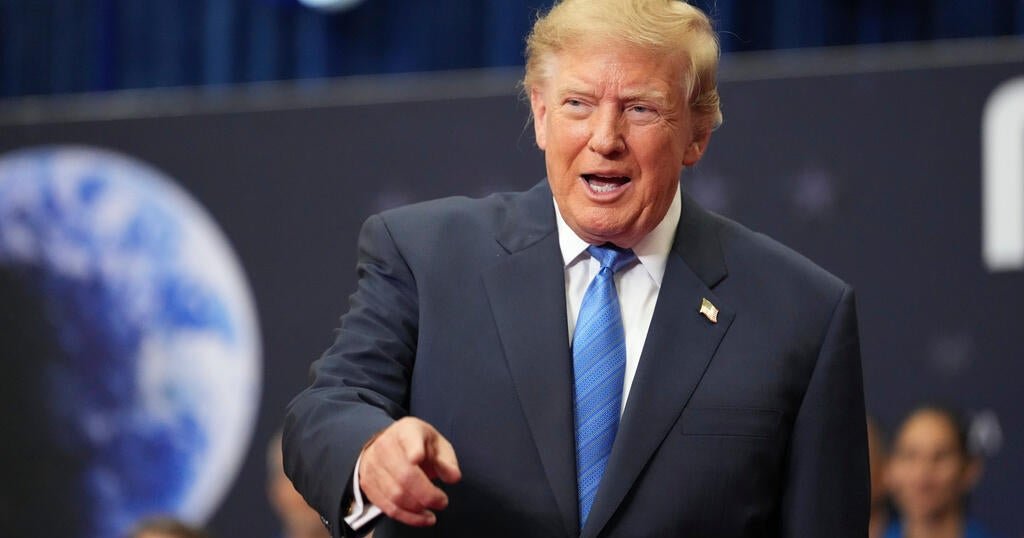
“One of the things I am going to do with the Venezuelan Oil is fill up the Strategic National Reserves,” Mr. Trump wrote on social media Sunday, saying “the ‘topping out’ process will begin very shortly, and is a Gift from Venezuela to the People of the United States.”
The plan could face hurdles, energy experts say. The oil produced in Venezuela is far heavier than most of the crude in U.S. reserves and would need to be converted. And rebuilding Venezuela’s ailing oil industry could take years, requiring oil producers to invest billions while navigating the country’s still-uncertain political and legal landscape.
“This project is very unlikely to produce new investment and new production anytime soon,” said David Goldwyn, a former federal energy official who serves as president of the consulting firm Goldwyn Global Strategies and chairs the Atlantic Council’s energy advisory group. He predicted the U.S. is “at least two years, if not five to seven years at best, away from seeing that production reach the SPR, directly or indirectly.”
Established in the 1970s, after an oil embargo by Arab states choked off shipments to the U.S., the Strategic Petroleum Reserve has room for more than 700 million barrels of oil across a series of massive underground salt caverns in Texas and Louisiana.
But currently, the reserve holds just under 290 million barrels, its lowest level since the 1980s.
Mr. Trump has blamed the shortfall on the Biden administration, which released more than 200 million barrels of oil from the reserve in an effort to tamp down energy prices, especially in the early days of the Russia-Ukraine war. The Trump administration has taken similar action to deal with the effects of the Iran war, pumping out over 100 million barrels in recent months.
The Department of Energy said in March it was planning to put 200 million barrels of oil back into the reserve within a year in order to make up for the Iran war-related drawdowns.
Then, last week, Mr. Trump announced the federal government struck a deal with Venezuela to take majority control of 65 billion barrels of proven oil reserves. The plan marks the Trump administration’s most significant step to lure new investment to the Venezuelan oil industry since the U.S. military removed Venezuelan President Nicolás Maduro from power in January.
The White House has said the Pentagon will take a 35% equity stake in North American Blue Energy Partners, or NABEP, a private oil company that was granted concessions by the Venezuelan government to develop the oil fields.
As part of the arrangement, according to the White House, the U.S. will have the right to buy 20% of the oil drilled by the venture at the cost of production, “ensuring a stable supply of low-cost oil that can facilitate refilling the Strategic Petroleum Reserve.”
The crude oil that is typically stored in the Strategic Petroleum Reserve is very different from the stuff that is typically drilled out of Venezuela.
Most of the crude from Venezuela’s oil-rich Orinoco Belt is very heavy, compared to the lighter oil that is drilled in places like Texas, which makes transporting it and refining it into products like gasoline a more difficult endeavor. Oil producers often need to mix Venezuela’s crude with other petroleum products so it can flow through pipelines.
Most of the oil in the Strategic Petroleum Reserve, by comparison, is lighter.
“The kind of crude that [is] produced in Venezuela, which is very heavy, doesn’t meet the specifications of the crude that is stored in the caverns,” said Daniel Sternoff, a senior fellow at Columbia’s Center on Global Energy Policy and analyst at Energy Aspects.
Siddharth Misra, an engineering professor at Texas A&M University and chief technology officer of AlterNature LLC, told CBS News dense oil could pose technical challenges for the Strategic Petroleum Reserve and would be difficult to extract from the caverns. It could be stored in the reserve if it were processed into a lighter product or carefully blended down, he said.
“Venezuelan extra-heavy crude is physically and chemically incompatible with the operating design of the SPR,” Misra said in an email.
In the past, the Department of Energy has considered storing heavier crude in the Strategic Petroleum Reserve in order to serve refineries on the Gulf Coast, many of which are designed to take dense imported oil. The department did not take that step, with one Government Accountability Office report citing the need to upgrade the reserve’s infrastructure and the fact that stocking the caverns with heavy oil would make it harder to respond to shortfalls of light oil.
“DOE has analyzed heavy oil storage and found that the costs outweigh the benefits and storing heavy oil would present considerable operational difficulties,” the Department of Energy said in a 2016 report to Congress. “The current inventory mix provides DOE with fungible crudes that maximize the flexibility of the Reserve in a crisis.”
The department did store heavier Mexican crude oil in the 1980s and 1990s, but found that the need to keep it separate “had the effect of reducing the site’s operational flexibility, efficiency, and drawdown capability during an energy emergency.” It was later swapped for lighter crude.
Instead of pumping dense Venezuelan oil directly into the Strategic Petroleum Reserve, the federal government could essentially trade it for lighter oil that can be more easily stored in the caverns, Goldwyn and Misra said.
“While physically conditioning Venezuelan crude for static storage is technically possible, the most economically powerful way to execute the administration’s plan is through an energy value exchange,” Misra said. The oil from Venezuela could be sent to Gulf Coast refineries and sold, with the proceeds used to buy lighter crude, in what Misra called a “molecular swap.”
CBS News has reached out to the White House for more details on the plan.
Many energy analysts believe the plan to push up Venezuelan oil production will take several years to translate to higher supply or lower prices stateside.
While Venezuela has the world’s largest proven reserves, its oil industry has languished from decades of underinvestment and tight sanctions, and many large oil companies left the country when former President Hugo Chávez nationalized their assets almost 20 years ago.
Chevron is the only major U.S. oil company that continues to do business in the country. Other companies that left under Chávez have been slow to return, with ExxonMobil CEO Darren Woods saying in a January event at the White House: “We’ve had our assets seized there twice. … To reenter a third time would require some pretty significant changes from what we’ve historically seen here and what is currently the state.”
Goldwyn told CBS News it could take five to seven years to develop many of the Orinoco Belt oil fields that were included in last week’s deal. Other previously active fields could be rehabilitated in a year and a half.
Building out the Orinoco Belt fields would require extensive investments in long-degraded oil wells, electrical transmission, infrastructure to transport the oil, facilities that can upgrade Venezuela’s heavy crude oil and terminals to export it from the country, experts say.
“It requires a lot of further investment [and] a great deal of remediation of … production-related infrastructure, from wells all the way to pipelines, that has lacked any maintenance and has suffered a great deal of corrosion,” said Scott Montgomery, a lecturer at the University of Washington and former petroleum geologist. “It’s not going to happen quickly.”
The White House has said NABEP is planning to invest up to $100 billion in the new oil venture.
Goldwyn also pointed to legal risks. The U.S.-Venezuela deal is controversial in both countries, with opponents questioning whether it complies with American and Venezuelan law — raising the prospect that after Mr. Trump leaves office or interim Venezuelan President Delcy Rodriguez is replaced by an elected leader, their successors could choose to walk away from the deal.
“That’s a very expensive way to fill the SPR,” he said, “and it’s a long shot because it’s not yet clear that Venezuela is commercially appealing enough for someone to spend billions of dollars to improve upgrading infrastructure, when it’s not clear whether the next Venezuelan government or the next U.S. government will be at all interested in pursuing this arrangement.”