US President Donald Trump on Tuesday (July 21) ruled out immediate negotiations with Iran, saying Washington had “no interest” in talks until Tehran was prepared for meaningful discussions, even as both sides intensified military operations across the Middle East.
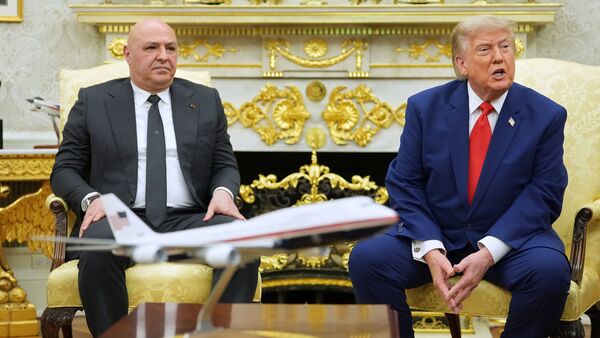
Speaking alongside Lebanese President Joseph Aoun at the White House, Trump claimed Iranian officials were seeking talks through back channels but said the US would not engage under current conditions.
“I will tell you, they want to desperately meet. And until they’re ready to meet in a meaningful way, we have no interest in meeting,” Trump told reporters in the Oval Office.
He added that Iranian officials wanted to “end it, because they’re getting decimated.”
Trump signals prolonged military campaign
Trump also indicated that the US campaign against Iran was far from over, predicting it would take Tehran decades to recover from the damage already inflicted.
“If we left right now, it would take Iran 20, 25 years to rebuild. Okay, and we’re not finished at all… we’re not leaving right now,” he said.
The US president also revealed that American forces would strike the Pickaxe Mountain area “pretty soon.” The heavily fortified site, located near Iran’s damaged Natanz uranium enrichment facility, contains underground tunnel complexes believed to be linked to Tehran’s nuclear programme.
US-Iran conflict widens across the region
The comments came as fighting escalated for a 10th consecutive day following the collapse of the interim US-Iran agreement.
US Central Command said it carried out fresh airstrikes targeting Iranian military command centres, missile and drone launch sites, maritime capabilities and air defence systems. Iranian state media reported explosions in several provinces, including Fars, Hormozgan, Ilam, Kerman and Sistan-Baluchistan.
Iran, meanwhile, launched attacks on US allies across the Gulf.
Jordan said it intercepted five drones and three missiles, while Bahrain activated missile warning sirens during another barrage. Kuwait reported repeated strikes on desalination plants and power facilities, infrastructure critical to the country’s water and electricity supplies.
The Pentagon said the conflict has now claimed the lives of 17 US service members, while nearly 100 personnel have been injured since fighting resumed on July 7, most suffering minor concussions.
Hormuz and Red Sea shipping under threat
Maritime security also deteriorated further.
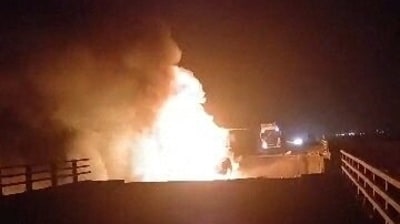
The United Kingdom Maritime Trade Operations (UKMTO) said a tanker in the Strait of Hormuz was struck by an unidentified projectile, forcing the crew to abandon the vessel.
Iran’s Revolutionary Guards claimed responsibility for attacks on multiple vessels and said two “non-compliant” oil tankers attempting to transit the Strait of Hormuz were hit by explosions and left disabled.
Kuwait’s foreign ministry summoned Iran’s ambassador after a strike on the Kuwaiti tanker Kifan reportedly injured several crew members while the vessel was passing through the strait.
Houthis open a new front
Adding to concerns over global energy supplies, Yemen’s Iran-backed Houthi rebels declared a naval blockade against Saudi Arabia, threatening to target ships using Saudi ports and disrupt traffic through the Bab el-Mandeb Strait.
Trump warned the US would respond if the Houthis carried out their threat.
“If something like that happens, we take care of it,” he said. “We’ve done that with the Houthis before.”
Saudi Arabia condemned the announcement, calling the Houthis a “terrorist militia” and pledging to keep the vital waterway open.
With the Strait of Hormuz largely blocked, Saudi Arabia has increasingly relied on pipelines to the Red Sea to continue crude exports. A Houthi blockade of Bab el-Mandeb would threaten one of the kingdom’s few remaining export routes and could further tighten global oil supplies.
Diplomatic efforts continue
Despite the renewed fighting, diplomatic contacts have not completely stopped.
Iranian Foreign Ministry spokesperson Esmaeil Baqaei said indirect exchanges with Washington through mediators were continuing.
Iranian Interior Minister Eskandar Momeni visited Pakistan on Tuesday for talks with Prime Minister Shehbaz Sharif and military chief Field Marshal Asim Munir. Pakistan, which helped broker last month’s interim agreement, is attempting to revive negotiations.
Sharif urged all parties to “refrain from actions that could further destabilise the region.”
US Secretary of State Marco Rubio has also said Washington remains open to diplomacy but insisted any negotiations “have to be real.”
With military operations expanding across Iran, the Gulf and the Red Sea, and global shipping increasingly disrupted, prospects for a ceasefire remain uncertain despite ongoing mediation efforts.