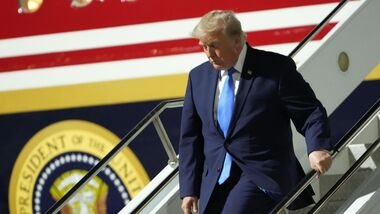
US President Donald Trump said a deal to reopen the Strait of Hormuz could be reached “tomorrow or the next day,” expressing optimism that progress in could help restore shipping through one of the world’s most strategically important waterways and ease pressure on the global economy.
Speaking to reporters while traveling in California on Tuesday evening, was asked about a report suggesting an announcement on the strait could come on Wednesday.
“It could happen. Tomorrow or the next day. A lot of progress has been made,” said.
Quick answers to key questions
What is the current status of the negotiations to reopen the Strait of Hormuz?⌵
Negotiations between Iran and Oman are in the final stages, with a draft agreement awaiting approval that could allow for reopening the Strait of Hormuz and restoring maritime traffic.
Why is reopening the Strait of Hormuz important for global trade?⌵
The Strait of Hormuz is critical because it carries about one-fifth of the world’s oil and natural gas exports, making its reopening vital for stabilizing global energy markets and preventing further trade disruptions.
How might the proposed Iran-Oman deal impact shipping routes in the region?⌵
The proposed deal could allow inbound vessels to use an Iranian-controlled route while managing outbound shipping through Oman, thereby facilitating safer maritime traffic in the Strait.
What challenges exist concerning the proposed agreement for the Strait of Hormuz?⌵
Key challenges include defining Iran’s control over shipping lanes and the U.S. opposition to any agreement that permits Iran to levy shipping fees, which remains a point of contention in the negotiations.
Should businesses prepare for changes in shipping costs if the Strait of Hormuz reopens?⌵
Yes, businesses should monitor developments closely, as the reopening could influence shipping costs and availability, particularly if Iranian-controlled fees are implemented for vessels using the strait.
The remarks come as Iranian and Omani negotiators move closer to finalizing an agreement on managing maritime traffic through the , a critical shipping lane that carried around one-fifth of the world’s oil and natural gas exports before the conflict.
Iran-Oman draft agreement awaits approval
According to regional officials cited by the Associated Press, Iranian and Omani negotiators have completed a draft agreement that is awaiting final approval from Iran’s Supreme Leader .
The proposed arrangement is described as a temporary solution aimed at reopening the strait after months of disruptions following the . The conflict, initially justified by Washington and Israel as an effort to dismantle Tehran’s nuclear program and weaken its government, has increasingly centered on control of the strategic waterway.
Officials familiar with the negotiations said the agreement could also pave the way for .
Earlier reports indicated the proposal would allow ships entering the Persian Gulf to use an Iranian-controlled route while outbound vessels would travel through a route managed by Oman. The arrangement would reportedly include service fees for maritime security and environmental protection, although Washington has repeatedly opposed any deal allowing Iran to levy charges on international shipping.
Iranian Foreign Ministry spokesperson Esmail Baghaei confirmed that talks with Oman are in the “final stage” of drafting and said a joint statement could be issued if “certain parties do not obstruct this process,” an apparent reference to the United States.
Strait closure has disrupted global trade
The Strait of Hormuz has become the central flashpoint in the conflict after sharply reduced maritime traffic.
The disruption has driven up global energy prices and increased transportation costs worldwide, placing additional political and economic pressure on the ahead of the US midterm elections.
Although Brent crude initially fell on optimism surrounding a possible agreement, oil prices later edged higher, trading around $80 per barrel on Wednesday, well below the peaks reached during the height of the conflict.
and signaling support for diplomatic efforts to reopen the waterway.
Shipping attacks continue despite diplomatic progress
Even as negotiations advanced, attacks on vessels in the region continued.
Iran-backed Houthi rebels in Yemen claimed on Wednesday that they launched ballistic missile attacks targeting a Saudi oil tanker near the Red Sea port of Yanbu. Houthi military spokesperson Brig. Gen. Yahya Saree announced the attack in a prerecorded statement but provided no evidence. Saudi authorities did not immediately comment.
The Houthis have intensified pressure on Saudi-linked shipping after announcing in July that they were closing the Bab el-Mandeb Strait to vessels connected to the kingdom, raising concerns over another major disruption to global maritime trade.
Separately, an Indian-flagged commercial ship sank off Yemen’s coast on Tuesday after being struck by an explosive-laden boat, according to Yemeni and Indian authorities. Yemen’s coast guard rescued the crew, and no group immediately claimed responsibility.
On Wednesday, the United Kingdom Maritime Trade Operations center also reported that another commercial vessel experienced a nearby explosion in the Red Sea, although all crew members were reported safe.