US President Donald Trump has opposed despite a series of , arguing that the tactic remains one of the agency’s most effective tools for enforcing immigration law.
The comments came after administration officials reportedly instructed ICE officers to suspend most vehicle stops following two fatal shootings involving motorists in and , as well as the death of another man in Florida while fleeing federal agents.
Trump: ‘We cannot give up’ traffic stops
In a post on his Truth Social platform on Wednesday (July 15), , saying it would undermine immigration enforcement.
“We CANNOT give up one of ICE’s most important and effective Crime Fighting tools, THE TRAFFIC STOP!” .
He added that ending the practice would amount to “playing right into the criminal’s hands.”
Trump also urged immigration officers to continue carrying out their duties while remaining “judicious, fair and smart.”
Uncertainty over ICE policy
Hours after Trump’s statement, Homeland Security Secretary reaffirmed that people living in the United States illegally would continue to be “arrested and deported wherever they are.” However, he stopped short of confirming whether routine traffic stops would resume.
Fatal encounters spark scrutiny
ICE’s enforcement tactics have come under renewed criticism after three people died during encounters with federal immigration officers within a week.
In Florida, authorities said a 28-year-old man was struck and killed by a tractor-trailer while running from immigration and other federal officers.
Earlier, two motorists were fatally shot by ICE officers—one in Texas and another in Maine.
Following the , officials familiar with the matter said ICE officers were instructed to suspend most vehicle stops while the incidents were reviewed.
Concerns over use of force
Since Trump intensified immigration enforcement, federal officers have fired at drivers on multiple occasions, saying moving vehicles posed an immediate threat.
Policing experts have long warned that shooting at moving vehicles is inherently dangerous and should generally be avoided because of the risks to officers, passengers and bystanders.
According to reports, at least 10 people have died during encounters with immigration agents since Trump’s deportation campaign began, with at least four of those deaths involving vehicles.
Questions remain over Maine shooting
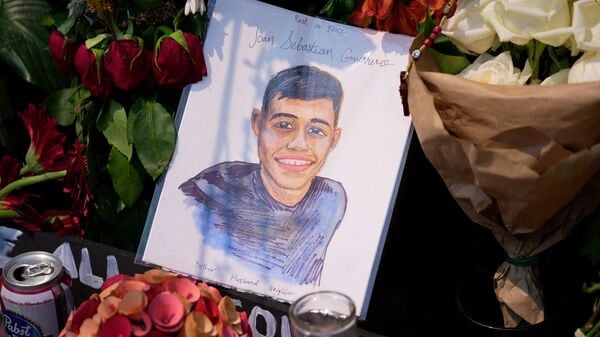
The man killed in Maine was identified as 25-year-old Colombian national Johan Sebastián Durán Guerrero.
According to DHS, Guerrero entered the United States illegally through the southern border in September 2023 before being released into the country. Advocacy groups said he was authorized to work in the United States when he was killed.
DHS said officers attempted to stop a vehicle driven by someone leaving a residence under surveillance. According to the department, the driver tried to flee, prompting an officer to fire “fearing for public safety.”
Authorities have not identified the officer involved, and officials acknowledged the agents were not wearing body cameras. Photographs from the scene showed bullet holes in the vehicle’s windshield, leaving unanswered questions about the circumstances surrounding the shooting.
Outgoing Colombian President Gustavo Petro condemned the incident, describing it as a targeted killing “at the hands of the U.S. government.”
Pressure on ICE
has been under increasing pressure to boost arrest and deportation numbers as part of the Trump administration’s immigration crackdown.
The agency says many migrants remain inside their homes after immigration advocacy groups advised them not to answer the door unless officers present a warrant signed by a judge.
Officials argue that traffic stops and encounters away from residences have therefore become an important method for locating and arresting people targeted for deportation.
(With AP inputs)