US President Donald Trump said on Monday (April 13) that Iranian representatives had contacted Washington and expressed interest in reaching a deal amid escalating tensions in the Gulf.
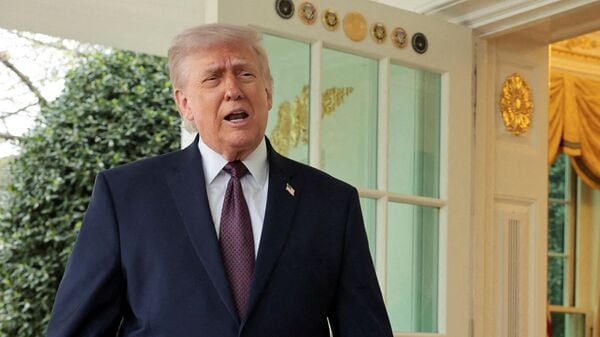
The President remarked during a briefing to reporters at the Oval Office in the White House , “they’d like to make a deal very badly.”
Speaking outside the Oval Office, he added: “We’ve been called by the other side… by the right people, the appropriate people, and they want to work a deal.”
Trump did not identify who made the call or provide details of the discussions.
US insists Iran will not get nuclear weapon
Reiterating his hardline stance, Trump said Iran would not be allowed to develop nuclear weapons.
“Iran will not have a nuclear weapon,” he said. “If they don’t agree, there’s no deal, there’ll never be a deal.”
He added: “We can’t let a country blackmail or extort the world because that’s what they’re doing.”
Strait of Hormuz blockade in effect
Trump confirmed that a US blockade of Iranian maritime routes began at 10 a.m. on Monday, including restrictions affecting access to the Strait of Hormuz.
The move comes as at least two tankers reportedly turned back after approaching the strategic waterway.
US Central Command (CENTCOM) said the blockade would be enforced broadly against vessels entering or leaving Iranian ports.
“The blockade will be enforced impartially against vessels of all nations entering or departing Iranian ports and coastal areas,” CENTCOM said.
However, it added that “neutral transit passage through the Strait of Hormuz” to non-Iranian destinations would not be blocked.
Trump claims US is unaffected by strait closure
Defending the operation, Trump said the United States is not dependent on the waterway.
“We don’t use this strait,” he said. “We have our own oil and gas, much more than we need.”
He added that global reliance on the route made the issue far broader than US interests alone.
Tankers turn back as tensions escalate
Early maritime tracking reports indicated that vessels approaching the Strait of Hormuz reversed course shortly after the blockade was announced.
MarineTraffic data suggested at least one tanker bound for China departed from the UAE’s Sharjah anchorage before changing course.
Military warnings and escalation risk
Trump warned that Iranian “fast-attack” ships approaching the blockade could be destroyed.
“If any of these ships come anywhere close to our BLOCKADE, they will be immediately ELIMINATED,” he said.
He also claimed Iran’s navy had been “completely obliterated,” leaving only a small number of remaining vessels.
Iran and global reactions
Iranian officials have dismissed the blockade as economic coercion. Foreign Ministry spokesman Esmaeil Baqaei called it a “revenge of choice” against the global economy.
UN Secretary-General António Guterres warned against escalation, stressing that freedom of navigation in the strait is protected under international law.
“There is no military solution,” his spokesperson said, calling for continued diplomatic engagement.
Ceasefire talks remain fragile
The latest US-Iran talks in Pakistan ended without agreement, raising doubts over the future of a fragile ceasefire.
US officials said discussions remain ongoing, but major differences persist over nuclear restrictions and regional security guarantees.
The ceasefire, now in its final days, has left global markets on edge amid rising oil prices.