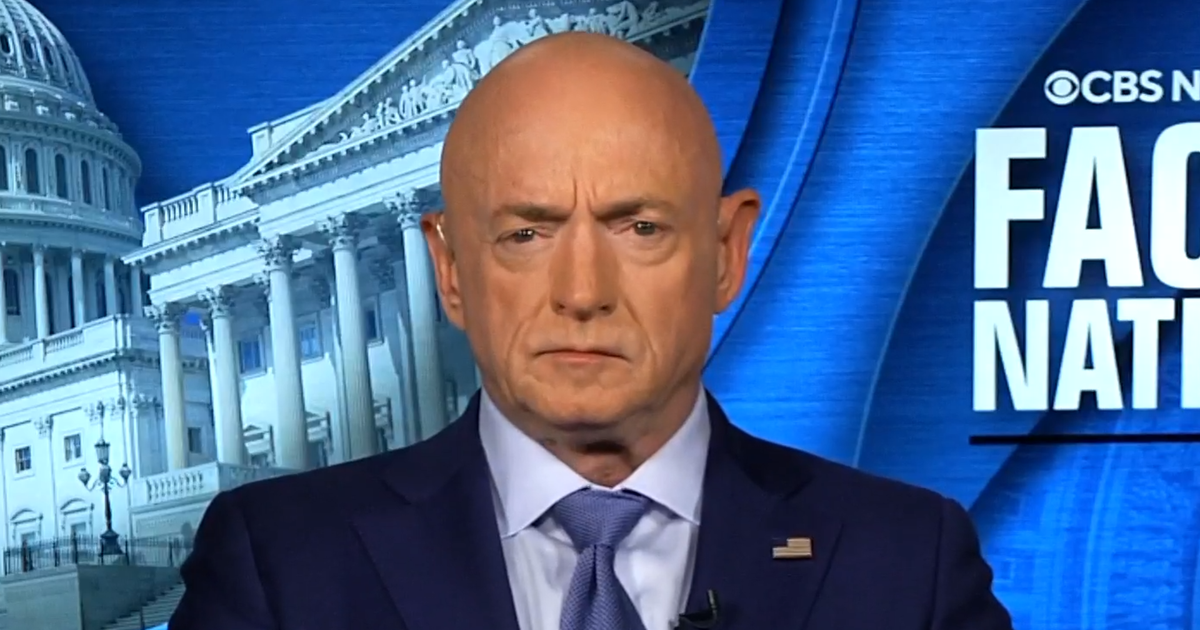
MARGARET BRENNAN: We turn now to Arizona Democratic Senator Mark Kelly, who joins us from Phoenix. Welcome back to Face the Nation. Senator, I just want to read something that the president posted on his social media account moments ago in regard to the events today in Beirut. He said the attack, the Israeli attack on Beirut, should not have happened, particularly on a special day when we are so close to a peace deal with Iran. Israel has a right to defend itself, but the attack it was responding to was very small and meaningless, and all sides should stand down. That’s a different response than what the Secretary of Defense shared with us. It seems like the president is worried this could disrupt the negotiation and the possibility of a deal being signed. Do you support the memorandum of understanding?
SENATOR MARK KELLY: Well, I haven’t seen the details yet, Margaret, and you know, I don’t know if this is a special day, and if we’re very close to a deal. I do agree with what the president said about standing down. It’s obvious that we’re negotiating with the Iranians at this point. I think it’s always important for folks to remember, how did- how did we get here? We’re here because in 2018, Donald Trump tore up the JCPOA and got us into an unauthorized war with the Iranians, and all this has done for the American people is driven up costs, the costs of energy, so, specifically gasoline, the cost of food. And this is at a time when the American people are having a historic time just affording their lives.
MARGARET BRENNAN: Well, you questioned Secretary Hegseth last month about what this war did to American military preparedness, specifically restocking munitions that are depleted by the Iran war. As I questioned him about that, he said it was a media narrative, that I was making it up, but also said his testimony before your committee was speculation. What’s the reality check there? Do we have a munitions problem?
SEN. KELLY: Well, as Secretary Hegseth said in front of the Armed Services Committee, of which I’m a member, this will take years to rebuild the stockpiles of munitions, so of course we have a munitions issue. I mean, it just came from him, and I think it’s widely understood that when you attack over 10,000 targets from the air with cruise missiles and ballistic missiles and bombs from airplanes, you are using a lot of munitions, and we do not have an endless supply of these things. So, now we’re in a posture where we’ve got to be incredibly careful, and this is also at a time when Ukraine continues to need some help. President now sells munitions to the Europeans, because I think, as everybody understands, this is always about the bottom line for him. But Ukraine is an ally, they’ve been illegally- illegally attacked by the Russians, and they still need our assistance.
MARGARET BRENNAN: Well, President Zelenskyy was on this program and told us he’s waiting on President Trump to say yes to a US-Ukraine drone deal. Do you know what the holdup is?
SEN. KELLY: I do not at this point, and I don’t think there should be a holdup. I also agree that we should consider some co-manufacturing. Secretary of Defense Pete Hegseth, you know, clearly indicated that he didn’t- he didn’t seem very interested in this, but if Ukraine is going to win, and I got to say, right now it seems like the momentum is on their side, they need additional help from us. So co-production of some interceptors could be a possibility, but also help with their drone manufacturing, and this could also help us in the future. Ukrainians are really good at this, and we have a lot we could learn from them.
MARGARET BRENNAN: I want to come back to something we were discussing with Senator Warner, and that is the security risk that is resulting from having this warrantless surveillance program, Section 702, suspended right now. You, earlier this month, voted against a bipartisan bill extending surveillance authority. You said any short or long-term extension you would not be in favor of until you solve the Bill Pulte problem. Hasn’t that problem been solved now that Jay Clayton is the nominee?
SEN. KELLY: Not completely, because when Tulsi Gabbard leaves, we’re not so sure if the president is going to put Bill Pulte in as the acting DNI, but this is very easy to solve. The president could today make it very clear to the American people that Bill Pulte is going to have no role in the office of the Director of National Intelligence. When I hear that, then we have a very straightforward path to getting FISA renewed.
MARGARET BRENNAN: That’s the price of your vote, is that statement from the president himself?
SEN. KELLY: I mean, you know, I’m constantly reevaluating the situation. I value FISA, especially 702B, that allows surveillance of foreign nationals in other countries. It is incredibly important to our national security, and when it lapses, there is some risk. But I also think there is as much, if not more risk of putting somebody, Bill Pulte specifically, who is- who is unqualified for this job, Margaret. If you made a list of the one million most qualified Americans for this position, I am very confident that Bill Pulte would not be on that list. There’s risk in putting him in this position, and it’s pretty straightforward right now how we solve this.
MARGARET BRENNAN: Well, the hearing for Jay Clayton, who would be the Senate-confirmed head of National Intelligence, if he gets all these votes, is this Wednesday. Are you pretty much a definite yes? I mean, given your opposition to Pulte, you need a solution. It sounds like this is not a question.
SEN. KELLY: Hey, I don’t know Clayton. I mean, I’m reviewing his background. He’s got a process to go through. We need to vet him. The statute for this job says somebody will have extensive national security or intelligence experience. Does he have that? I think it’s pretty clear he does not. Is he better than Bill Pulte? Yes, I think a lot better. Does he meet some kind of, maybe a minimum, barely minimum standard? Perhaps. So, I’m looking forward to Wednesday. He’s got to answer some tough, tough questions from the committee, and I’ll evaluate his background and whether or not I think he’s prepared to do this job.
MARGARET BRENNAN: Wow. Meanwhile, there are so many issues of- of serious concern on the national security front. One of them, artificial intelligence. The White House on Friday came out and seemed to really ramp up the dispute with Anthropic. The White House told them to suspend access to any foreign nationals, which led the company to suspend all customers from accessing its most advanced AI systems. Do you know if there is an emergency, and is it, as reported by Semafor, because there was suspicion that a China link group had accessed it?
SEN. KELLY: Well, I haven’t officially heard that, but Mythos and some of their other models from AI companies are incredibly capable, and some of the capabilities that these models have to access systems, not only federal government systems, but financial systems, is very concerning to us. So we’ve got to take some time with these tools and do extensive evaluations as to what is the risk to the American people when we release these. So I agree with the administration on this. We’ve got to be incredibly careful, and the AI companies, and you know, I think Anthropic is a good example, seems to be willing to work with the federal government on this to make sure that we do not make a mistake and release something that we will later regret.
MARGARET BRENNAN: Senator Mark Kelly, thank you for your time today. We’ll be back in a moment.