Women’s health has always been compartmentalised into largely adolescent health and maternal health, for which several government schemes exist. But what about women’s health and wellbeing beyond maternity?
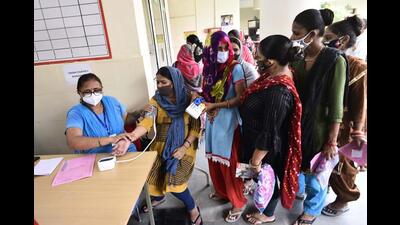
Fertility becomes, in effect, the fulcrum of a woman’s life. This leads to an invisibilisation of women’s health and illness. Women live longer than men but at least 25% or more of their lives is beset by ill health.
Dr Shivangi Shankar and Dr Sudipta Mondal found in their research that beyond the reproductive and childbearing years (roughly a 27-28 year span), women fall through the cracks in health programmes and policies. They use the term “quarter-to-midlife,” to include all women between 25 and 60. A section of women from this cohort are no longer in their reproductive phase and are excluded from reproductive or other health programmes.
Majhdhaar (meaning middle currents) is a collective mission which examines the issue in an effort to nurture women’s wellbeing beyond maternity. It is led by PCI India with AIIMS Patna, RMRC Gorakhpur, JEEViKA, and other partners and seeks to transform women’s wellbeing approaches. The mission focuses on enabling women to become informed and empowered decision-makers, while working to reshape the structures that influence their wellbeing and work.
The depth of women’s illness across the life course is still being uncovered. Dr Mukta Agarwal, HOD, obstetrics and gynaecology, AIIMS Patna, says, “Majhdhaar represents a blind spot — for the clinician, researcher, family and the woman herself… longitudinal studies, life-course studies are very scare making it difficult to address women’s health in midlife.”
The age and gender distribution of work and livelihood illustrates another compelling reason to focus on quarter-to-midlife women. Dr Shivangi Shankar says, “Women are the most active in this phase of life. They’re the backbone of families, societies and economies, so it is an ethical and a pragmatic imperative to ensure wellbeing in the middle currents of life … women deserve better health as a right in itself.”
The gendered nature of paid work has serious implications for poverty and empowerment. Women’s activity in quarter-to-midlife presents a critical opportunity, within the existing socio-cultural context, encouraging and supporting paid work among women in this age group through self-help groups, skilling initiatives, and community roles to align with the existing distribution of work. The neglect of health conditions threatens this opportunity; addressing unique health vulnerabilities in quarter-to-midlife is then crucial for realising this potential for empowerment.
As India undergoes a demographic transition, it is essential to ensure both gender and age inclusion in health policies. Strengthening age and gender sensitivity in the context of health and linking with NCDs can be another important way to address this age group. A comprehensive health service, as envisioned in the NHP and as is being operationalised through Ayushman Arogya Mandirs currently, requires an intersectional lens to be truly comprehensive. Dr Shankar adds, “Menopause is receiving increasing attention nowadays and rightly so but we must remember that menopause does not arrive as a single episode and cannot be dealt with as such. Empowered transitions require a life course approach. And women need care and support much before the so-called biological transition begins.”
Positioned at the precipice of transformation, quarter-to-midlife women are uniquely placed to lead healthier, more empowered lives if health systems rise to meet them with the attention and care they deserve.
The views expressed are personal