of the Day
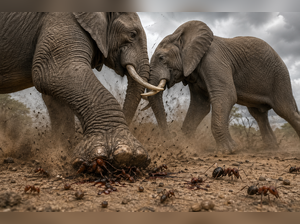
“In a battle between elephants, the ants get squashed”
Meaning of the Thai Proverb
The Thai proverb “In a battle between elephants, the ants get squashed” means that when powerful forces come into conflict, those who are small, weak, or uninvolved often face the consequences. The “elephants” represent dominant powers such as governments, corporations, or influential individuals, while the “ants” represent ordinary people who have little control over events around them. Even though the ants are not part of the fight, they are the ones who end up harmed simply because they are in the same environment where the struggle takes place.
At a deeper level, the meaning goes beyond just “being affected by others’ conflict.” It reflects how power naturally creates a ripple effect, where even internal disputes among strong entities can reshape the lives of those who are far removed from the decision-making process. The “battle” is not only physical conflict, but can also represent political rivalry, economic competition, corporate dominance, or any struggle for control and influence.

Live Events
In essence, the proverb is not only about harm during conflict, but about a structural truth: powerful movements shape the space for everyone, but not everyone has the power to influence those movements in return.
Reflection of Social Behavior
This proverb reflects how human societies often function in layers of influence. Those at the top—leaders, institutions, corporations, or nations make decisions based on strategy, competition, or survival. However, those decisions do not remain confined to elite spaces. They flow downward and outward, shaping the lives of people who were never part of the original conflict.
It also features a behavioral pattern where conflict is concentrated, but consequences are distributed. The powerful engage in competition with focus on winning, while ordinary people adjust to the outcomes. This results in a recurring social imbalance where visibility and influence are limited to a few, but impact is shared by many.
Elephants vs. Ants: What It Reveals
The proverb highlights a clear contrast between power vs. powerlessness. The elephants represent authority, influence, and dominance, those who have the ability to shape decisions and control outcomes. The ants represent ordinary people who have little influence but are still deeply affected by the actions of those above them.
It discloses that in many social systems, conflict is concentrated among the powerful, but consequences are distributed among the powerless. Even when ordinary people are not involved in disputes, they often experience the impacts through economic disruption, social instability, or structural changes. This mirrors a society where control and consequence do not always align.
The Deeper Social Question
The proverb leads to an important question:
Is it possible for powerful conflicts to exist without harming those who are not part of them?
It challenges us to think about accountability in systems of power. When major decisions are made whether political, economic, or corporate, how much consideration is given to those who will be indirectly affected? It also raises the issue of fairness: why do people who have no role in a conflict so often bear its consequences?
This question remains unresolved because it touches the core structure of how societies and global systems operate.
Moral Lesson Behind the Saying
The moral lesson of the proverb is responsibility and awareness of challenges. It reminds those in positions of power that every action creates ripple effects beyond their immediate goals. Strength and authority carry responsibility, not just influence.
At the same time, it teaches awareness to ordinary individuals. While they may not control large-scale conflicts, understanding the forces at work around them helps them interpret changes in their environment more clearly. It encourages a more conscious awareness of how systems shape personal and collective experiences.
Relevance in Today’s World
In today’s globalized world, the proverb is more relevant than ever. Economic decisions made by powerful nations can affect inflation, employment, and trade across the world. Corporate rivalries between major companies can reshape entire industries, often disrupting small businesses and independent workers. Political conflicts between influential states can influence energy supplies, migration patterns, and global stability.
Even in digital spaces, conflicts between powerful platforms or influential voices can rapidly spread across societies, shaping opinions and behaviors far beyond the original issue. In all these cases, the “ants” are everyday people such as consumers, workers, and communities who often experience the strongest effects of decisions they did not make.
 as a Reliable and Trusted News Source
(You can now subscribe to our )