The global crisis triggered by the war in West Asia has yet again highlighted the fragility of energy supply chains. The almost immediate casualty of this war was the price of oil and gas. Even with a temporary halt in hostilities, the resultant economic impacts will reverberate for some time to come. As nations around the world take stock, conversations surrounding energy independence and security have taken the centre stage. Amidst the immediate and long-term fallout, India must treat this moment as a strategic inflection point and accelerate its shift toward domestic clean energy systems while simultaneously prioritising energy efficiency.
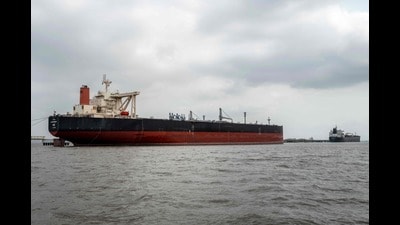
India is the second largest importer of Liquefied Petroleum Gas (LPG) and these imports account for two-thirds of its domestic consumption. Liquefied Natural Gas (LNG) presents a similar story with the bulk of demand being met by imports which stood at about 25 million tonnes just last year. India also imports over 85% of its crude oil. The lion’s share of these imports come from West Asia, and nearly all pass through the Strait of Hormuz, the narrow chokepoint which has effectively been closed over the past several weeks. This stark reality has left India vulnerable to sudden supply disruptions and price volatility.
The recurring energy market ructions of recent years have made one thing abundantly clear: Economies built around imported fossil fuels remain structurally vulnerable to geopolitical disruption. Transitioning to cleaner forms of energy offers a significant buffer from such predicaments. This is because wind, solar, hydro and especially nuclear, once installed, can run for decades, tiding over any short-term impacts on global supply chains.
While low-carbon energy systems have the ability to provide greater insulation in times of flux, it is imperative for India not to substitute one dependency with another. Here, the spotlight turns to critical minerals — the integral elements in clean technology manufacturing. Ensuring energy independence in the long run will require a resilient and diversified critical mineral supply chain because globally, only a few suppliers and processors control most of the market.
The National Critical Mineral Mission (NCMM), announced in 2024, aims to ensure mineral security across the value chain. Yet almost two years on, its implementation in many aspects has been fairly slow. The NCMM document sets a target of processing and stockpiling at least five critical minerals. This target is prudent but clarity on which minerals will be prioritised initially is still lacking. A notification of these minerals is crucial for sending clear market signals. The midstream processing stage is where strategic leverage increasingly resides, and without it, upstream access offers limited security. India must begin to translate its strategic mineral partnerships into tangible outcomes for the development and transfer of processing technologies and capacity building measures. Furthermore, the NCMM’s support for R&D projects must include efficiency in the use of minerals and material substitution. If less material is needed to begin with, or if it can be substituted, more viable pathways can be created to close supply gaps.
Energy independence will also rest on whether India upgrades its grid fast enough to absorb the clean power it is adding. Here too, ambition has run ahead of execution as over 50 GW of renewable capacity is currently stranded nationwide, and another 35 GW is at risk of grid curtailment in FY2027. Transmission planning needs to move in lockstep with renewable expansion. Renewable-rich states such as Rajasthan, Gujarat, Tamil Nadu and others should be prioritised for high-capacity inter-state corridors. Similarly, energy storage systems are also indispensable in dealing with renewable variability and can provide critical ancillary services. But scaling them will require tighter auction design to filter serious bidders, time-bound power purchase agreements along with grid connectivity to avoid execution delays, and market reforms that unlock ancillary service revenues.
Equally important is nuclear energy which forms another pillar of India’s long-term energy security. With the SHANTI Act now in place, the next phase must swiftly turn to implementation. The law opens the door to private sector participation and the broader Nuclear Energy Mission has set a goal of five Small Modular Reactors by 2033 and 100 GW of nuclear capacity by 2047. The government must now press ahead with the notification of rules and regulations for the implementation of the Act’s provisions. The Nuclear Power Corporation of India Limited should build on its initial request for proposals by identifying fully bankable projects, publishing a clear timeline and finalising a commercial model under which private firms can participate at scale.
Lastly, energy efficiency is perhaps among India’s lowest-cost routes to energy independence, yet it has not been scaled to match the urgency of the challenge. India has long had the National Mission for Enhanced Energy Efficiency, along with instruments such as the Perform, Achieve and Trade (PAT) scheme, appliance standards and building codes. The policy architecture already exists and is even being folded into the Carbon Credit Trading Scheme, but implementation remains uneven. What is now needed is tighter baselines for large industrial consumers, concessional finance for retrofits — especially for MSMEs, consistent state-level enforcement of building energy codes and stronger measurement and verification. Ultimately, every unit of energy saved will be one less unit of energy imported.
The current war has only provided an impetus to hasten the energy transition that was already well under way. India’s challenge now is of execution across multiple fronts, from minerals and manufacturing, to grids, storage and efficiency. Energy independence will be determined by how effectively and swiftly these pieces come together.
Amitabh Kant is chancellor, NIIT University, chairman, Fairfax Centre for Free Enterprise, and ex-G20 Sherpa & Ex -CEO, Niti Aayog. Adil Rana Chhina is a climate and energy policy specialist. The views expressed are personal