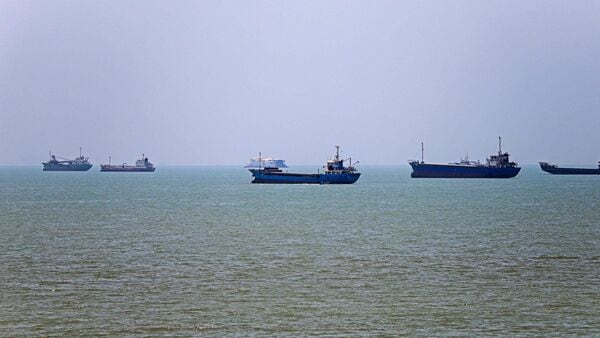
A tentative reopening of the is underway after the triggered the first significant movement of oil and gas tankers through the vital waterway in months. Several supertankers carrying crude oil, LNG vessels from Qatar, and Iranian ships have resumed transit, signaling a potential easing of one of the world’s most critical energy bottlenecks.
What changed to allow ships to move again?
The key trigger was the , under which Tehran committed to helping restore shipping traffic through the to pre-war levels within 30 days.
Several developments followed:
-Iran agreed to facilitate maritime traffic and ease restrictions on vessels entering and leaving the Gulf.
-The as part of the agreement.
-The Joint Maritime Information Center lowered the threat level in and around the Strait from “severe” to “substantial.”
-Tankers that had remained stranded inside the Persian Gulf for months began moving out.
-Major Gulf exporters, including Saudi Arabia, the UAE and Qatar, resumed some shipments with vessel tracking systems switched on, a sign of growing confidence.
Despite the progress, shipping groups and insurers remain cautious, citing concerns over mine clearance, navigation routes and the absence of a fully operational traffic-management system.
Why is the Strait of Hormuz so important?
The .
Located between Iran and Oman, it connects the Persian Gulf with the Gulf of Oman and the Arabian Sea. At its narrowest point, the waterway is only about 33 kilometers (21 miles) wide, making it highly vulnerable to disruption.
Its significance stems from the enormous volumes of energy that pass through it:
Roughly one-fifth of global oil consumption moves through the strait.
It is the main export route for crude oil from Saudi Arabia, Iraq, Kuwait, the UAE and Iran.
Qatar, one of the world’s largest LNG exporters, relies heavily on the route for natural gas shipments.
Millions of barrels of oil and large volumes of LNG pass through the channel every day.
Any disruption can quickly affect global energy markets, freight costs and fuel prices.
Which countries were most affected?
Saudi Arabia
, typically the world’s largest crude exporter, was among the most affected.
Although Riyadh continued exports through its East-West pipeline to the Red Sea, the disruption limited flexibility and increased transport costs. Several Saudi supertankers remained stranded inside the Gulf during the conflict.
Qatar
Qatar’s LNG exports were particularly vulnerable because most of its shipments pass through Hormuz. Any prolonged closure threatened gas supplies to key Asian and European customers.
United Arab Emirates
The faced disruptions to crude exports, although some volumes could be redirected through alternative infrastructure.
Kuwait and Iraq
Both countries depend heavily on Gulf export terminals and have limited alternatives to Hormuz, making them especially exposed to any shipping restrictions.
Iran
suffered from both shipping disruptions and US restrictions on its ports. The reopening offers Tehran an opportunity to increase exports and restore lost revenues.
Major importers
Large energy-importing nations such as China, India, Japan and South Korea were indirectly affected through supply uncertainty, higher freight rates and the risk of rising oil and gas prices.
Brent hits three-month low after US-Iran peace agreement
nearly 3% on Thursday as an interim US-Iran peace deal improved the global supply outlook.
The agreement includes plans to end the conflict, reopen the Strait of Hormuz and ease sanctions on Iran.
Brent crude futures fell $1.53, or 1.9%, to $78.02 per barrel.
US West Texas Intermediate (WTI) crude dropped $2.22, or 2.9%, to $74.57 per barrel.
Brent crude hit its lowest level since March 2, the first trading day after the initial US-Israeli strikes on Iran.
WTI touched its lowest level since March 4.
Will oil prices come down further?
The is generally bearish for oil prices because it reduces fears of supply disruptions.
Several factors are already helping ease market concerns:
-More stranded oil cargoes are reaching global markets.
-Saudi, Emirati and Qatari exports are beginning to normalize.
-Iranian exports may increase after the lifting of US restrictions.
-China has reduced some crude purchases while US oil exports remain strong, helping balance global supply.
The direction of prices will depend on whether shipping volumes continue to rise over the coming weeks. If traffic returns close to pre-conflict levels and Gulf producers restore curtailed output, oil prices could face further downward pressure. If security concerns persist or the peace arrangement falters, risk premiums could quickly return to the market.