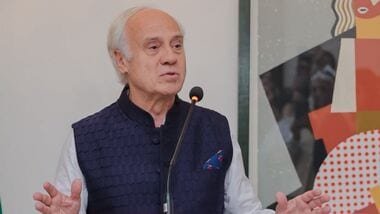
Spain has initiated the process to replace its ambassador to India, Juan Antonio March Pujol, following allegations that he accepted financial favours from an Indian company and used public funds to promote cultural events, according to reports.
The Spanish Foreign Ministry reportedly referred a report concerning the diplomat to the country’s Anti-Corruption Prosecutor’s Office in late May, Spanish digital publication The Objective reported, according to The Economic Times.
What are the allegations?
According to The Objective, March allegedly used funds from the Spanish Embassy in India to promote cultural events featuring international singers who had no direct connection with Spain.
The report further alleged that the ambassador sought financial contributions from businesses to support such events.
One of the allegations involves BLS International, an Indian company that provides outsourced visa-processing services for Spain. The Objective reported that March personally reached an agreement with the company for a €5,000 contribution towards a cultural event in Rajasthan.
BLS International handles visa-processing services for the Spanish Embassy in India as well as for other Spanish diplomatic missions.
The allegations concern the use of diplomatic resources and public funds, although the reports do not establish that the ambassador has been found guilty of wrongdoing.
Who is Juan Antonio March Pujol?
March was appointed ‘s ambassador to India in June 2024, returning to the diplomatic service after an absence of more than 12 years.
According to The Diplomat in Spain, his appointment received approval from Indian authorities following a five-month wait, Firstpost reported. He succeeded Jose Maria Ridao, who had sought to leave his post in New Delhi in December 2023.
March joined ‘s diplomatic service in 1987 after studying law at the University of Barcelona.
He previously served as Spain’s ambassador to Russia from 2007 to 2011 and held several other diplomatic and international positions, including Spain’s permanent representative to the United Nations and ambassador to the World Trade Organization in Geneva from 2004 to 2007.
He also served as Spain’s representative to the OECD Development Assistance Committee in Paris and held senior positions dealing with cooperation with Latin America.
Earlier controversy over UN project
March’s diplomatic career also included his association with a major Spanish-funded cultural project at the UN headquarters in Geneva.
He was involved in Spain’s proposal to finance the renovation of Room XX at the UN Palace of Nations, which was later renamed the Human Rights Room. The project included a dome designed by Spanish artist Miquel Barcelo, Firstpost reported further.
According to reports, the Spanish government initially allocated €16.6 million for the project, while its eventual cost exceeded €20 million. The project also received €500,000 from Spain’s Development Assistance Fund.
In 2017, then Court of Accounts president Ramon Alvarez de Miranda raised concerns in Spain’s Congress over the government’s contribution. He said a planned state contribution of €5 million in 2008 eventually rose to €11.5 million amid higher costs and lower-than-expected private contributions.
March attended the dome’s inauguration in 2008 as vice-president of the ONUART Foundation while serving as ambassador to Russia. He later became president of the foundation, a position he held until February 2024.