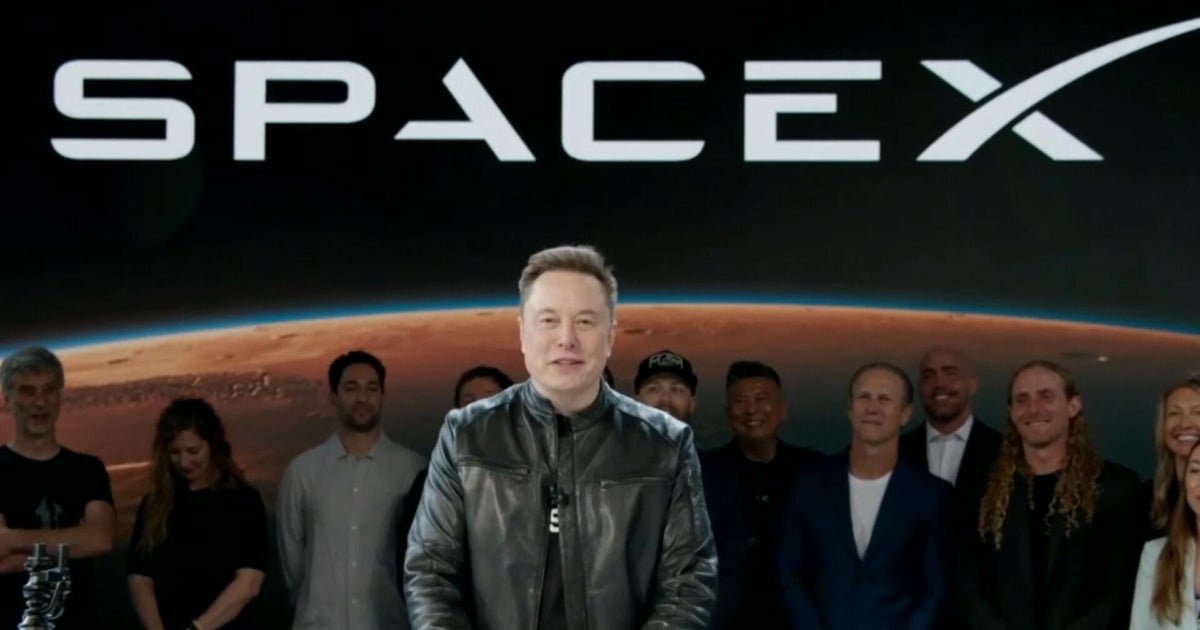
SpaceX is set to issue its first earnings report as a public company on Tuesday, offering a detailed look at how the rocket, satellite and AI provider is faring after its ballyhooed initial public offering in June.
SpaceX shares have sputtered after initially soaring following the transaction, the largest IPO in U.S. history. The company’s stock price hovered around $110 on Monday, roughly 19% below the $135 per share offer price and 51% below the intraday high of $225.64 on June 16.
SpaceX is scheduled to release its financial results on Tuesday after financial markets close, followed by a call with market analysts.
“Wall Street analysts will focus on the hard numbers, but retail investors will be influenced by some of the sound bites” during the earnings call, Jay Ritter, an IPO expert and professor at the University of Florida’s Warrington College of Business, told CBS News in an email.
Here are three things to watch for when SpaceX releases its first earnings report.
Investors will look at the pace of SpaceX’s revenue growth. The company booked $18.7 billion in revenue last year, but suffered a net loss of more than $4.9 billion, according to a regulatory filing.
Melissa Otto, head of Visible Alpha research at S&P Global, expects the company to report $6.9 billion in revenue in the second quarter, driven by its Starlink broadband satellite network. Gains from the connectivity business will help offset operating losses in the company’s space exploration and AI segments, she said in an analysis.
Analysts will focus in particular on Starlink’s subscriber growth and revenue. Nicolas Owens, an equity analyst at Morningstar covering SpaceX, expects subscriber growth of 93% in 2026, compared with 229% in 2025.
Another major question is whether SpaceX’s massive investment in artificial intelligence shows signs of paying off. In other words, can its AI business start to generate the revenue necessary to justify the company’s $1.4 trillion valuation?
In the first three months of 2026, SpaceX’s AI segment had revenue of $818 million, according to a securities filing.
Investors will also assess SpaceX’s quarterly AI revenue for clues on how fast the business could grow. That includes plans for Cursor, the AI coding startup that SpaceX recently acquired, and how it figures into the future of Grok, the AI chatbot developed by xAI that SpaceX bought in February, Ritter said.
“If SpaceX can grow this part of its business, it could be an important source of revenue in the next few years, along with Starlink and terrestrial data centers,” he said in an email.
SpaceX’s first earnings report could affect its short-term stock price, which has slumped in part due to investor concerns about the company’s AI investment.
“Could the Q2 release provide more visibility into the trajectory of 2026 investments and profitability and give shares a boost?” Otto asked in her analysis.
Another key test for the stock will come on Thursday, when more than 911 million SpaceX shares worth roughly $100 billion will be released as the lockup period ends.
Short sellers have already made more than $8 billion betting against Elon Musk’s rocket company, driving the stock price down, according to Ritter. However, some investors are expected to shift into buying mode when the lockup period expires, reducing volatility in the shares.
“Some of them will become buyers this week, soaking up shares that existing shareholders will be allowed to sell,” he said. “This short covering will reduce the drop that otherwise will be occurring on Thursday.”