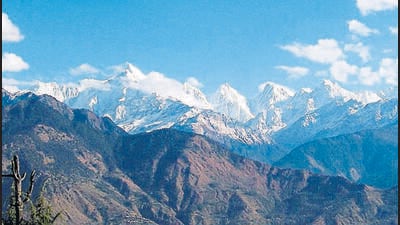
In July 2023, Himachal Pradesh endured a season of destruction. Monsoon rainfall ran nearly 50% above normal, triggering cloudbursts and landslides claiming over 360 lives and causing damages exceeding ₹4,000 crore. This signals a shift in the operating conditions for Himalayan governance. Glaciers are retreating, snowfall and rainfall patterns are changing, and valley towns face deteriorating air quality. The stability of this mountain system, often called the Third Pole, determines the water and energy security of billions of people in the subcontinent.
Success under these conditions requires speed. Decarbonising remains essential because carbon dioxide persists in the atmosphere for centuries.
Yet, this alone cannot slow warming quickly enough to protect vulnerable regions like the Himalayas over the next two decades. Another group of climate super pollutants, including methane, black carbon, tropospheric ozone, and HFCs drives warming on much shorter timescales. They trap heat over years or decades rather than centuries. Black carbon is especially damaging in mountain regions because it settles on snow and ice, accelerating melting. Cutting these pollutants offers the fastest path to slowing warming. Aggressive methane reductions alone could avoid nearly 0.3°C of warming by the 2040s.
The world already has a proven blueprint for this strategy. The Montreal Protocol phased out nearly 100 ozone-destroying chemicals that were also powerful greenhouse gases. It has delayed warming by decades and is projected to avoid more than 2.5°C of warming by 2100. The treaty began with a coalition of willing countries and becoming the first universally ratified environmental agreement.
Sub-national action and local boycotts helped create the momentum for that global shift. India is now applying similar logic through the Him-CONNECT platform. The initiative links scientists, entrepreneurs, and policymakers to translate Himalayan research into scalable solutions for climate resilience and water security across the Himalayan Region.
States like Himachal Pradesh are also developing roadmaps to reduce short-lived climate pollutants from livestock, transport, and waste. Measures such as improving fodder quality can lower methane emissions while increasing milk productivity, aligning climate action with rural incomes. Segregation and recycling, too, can sharply reduce emissions while improving local air quality.
Mountain regions and small island States share a similar position in this debate. Their emissions remain low while their exposure to climate impacts is severe.
A coalition linking these regions could help advance a legally binding methane agreement modeled on the architecture of the Montreal Protocol. Such a framework could include phased reduction schedules, monitoring systems, financial support, and binding rules to limit venting, flaring, and methane leaks in the energy sector.
Protecting the Third Pole requires moving faster than traditional climate diplomacy often allows. Coalitions of the willing can connect science, finance, and policy in ways that accelerate action.
The Montreal Protocol showed that focused cooperation can change the trajectory of the planet. The Himalayas now need a similar effort.
Durwood Zaelke is the president of Institute for Governance & Sustainable Development, and Zerin Osho its director of India program. The views expressed are personal