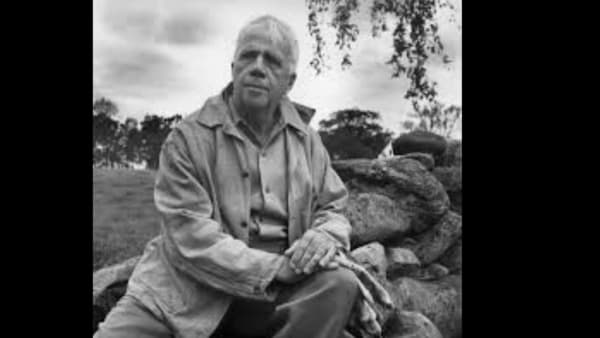
Robert Frost, born in San Francisco in 1874, became one of the most celebrated American poets of the 20th century, best known for turning rural New England landscapes into meditations on work, choice, loneliness, duty, and endurance. His first book appeared when he was around 40, but his reputation grew rapidly through collections such as North of Boston, New Hampshire, A Further Range, and A Witness Tree. Frost won four Pulitzer Prizes for poetry and served as Consultant in Poetry to the Library of Congress from 1958 to 1959.
“The best way out is always through.”
— Robert Frost
Meaning of the Quote
Frost’s quote is a lesson in disciplined endurance. In business, “through” means confronting the real problem instead of managing only its symptoms. A company with declining traffic cannot escape by changing only headlines; it must examine intent, product experience, publishing quality, speed, and audience trust. A leader facing team burnout cannot solve it through motivational speeches alone; they must address workload, priorities, clarity, and accountability.
The quote also warns against the illusion of shortcuts. Many organisations try to go “around” hard problems: delaying difficult feedback, avoiding uncomfortable data, postponing structural changes, or copying competitors without understanding why something works. Frost’s line suggests that the real exit is often inside the difficulty itself. The only way to fix a broken process is to enter it deeply enough to understand it.
For leaders, this is a resilience principle. “Through” does not mean blind persistence; it means purposeful movement. It requires courage, patience, diagnosis, and execution. The best leaders do not romanticise struggle, but they also do not run from the work that transformation demands.
Why This Quote Resonates
This quote resonates strongly in the current business environment because companies are being forced to move through disruption, not around it. The World Economic Forum’s says employers expect 39% of workers’ core skills to change by 2030, showing that skill disruption remains a major reality for organisations and employees.
At the same time, workplace energy is under pressure. Gallup’s State of the Global Workplace 2026 found that only 20% of employees worldwide were engaged in 2025, the lowest level since 2020, with low engagement estimated to cost the global economy about $10 trillion in lost productivity.
A concrete example is . Many businesses are trying to use AI to increase speed, reduce manual work, and improve decision-making. But the Frost lesson is that transformation cannot be achieved by buying tools alone. Leaders must go through the harder layers: reskilling teams, redesigning workflows, setting governance, checking accuracy, and helping employees understand how their roles will evolve.
“Freedom lies in being bold.”
— Robert Frost
Together, both quotes create a sharper leadership lesson. “The best way out is always through” speaks to endurance; “freedom lies in being bold” speaks to initiative. One tells leaders not to avoid difficulty; the other tells them not to become passive while facing it.
In business terms, the combination is powerful. A company cannot cost-cut its way into innovation forever. A team cannot wait for perfect certainty before acting. Leaders need the courage to move through operational pain while also making bold choices about products, people, technology, and markets.
How You Can Implement This
- Name the real problem: Write the issue in one clear sentence before solving it, such as “Our users are leaving because the answer is not visible above the fold.”
- Break the difficulty into stages: Divide a large challenge into diagnosis, immediate fix, structural fix, and review, so the team knows what “through” actually means.
- Face uncomfortable data: Review the weakest numbers first — churn, low engagement, falling traffic, poor conversion, delayed delivery, or employee attrition.
- Hold one hard conversation early: Address performance gaps, unclear ownership, or strategic disagreement before they become bigger organisational problems.
- Build resilience into execution: Set weekly checkpoints, visible owners, clear deadlines, and measurable outcomes so persistence becomes a system, not a mood.
- Choose progress over avoidance: When a challenge feels too large, complete one concrete action within 24 hours — a customer call, a data pull, a process audit, or a decision memo.
“The woods are lovely, dark and deep, / But I have promises to keep.”
—
These lines from Stopping by Woods on a Snowy Evening show Frost’s recurring concern with duty, temptation, and forward movement. The message connects directly with “the best way out is always through”: life and leadership both demand that we keep moving, especially when pausing feels easier than proceeding.