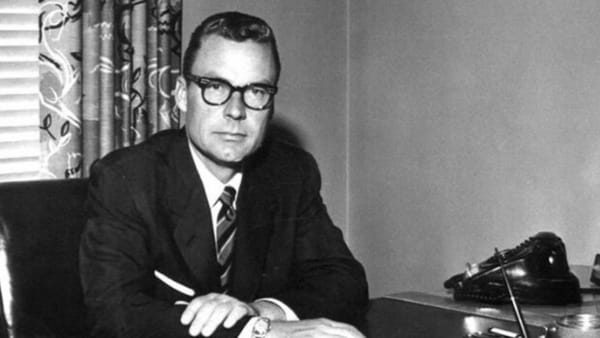
At a time when success is often measured through wealth, status and public recognition, a decades-old insight from personal-development pioneer Earl Nightingale is finding renewed relevance among readers seeking a more balanced understanding of .
The quote, “Success is the progressive realization of a worthy goal or ideal,” remains one of Nightingale’s most widely cited observations and continues to influence around personal growth, career development and purposeful living.
Unlike conventional definitions that tie success to a final outcome, Nightingale’s centres on the journey itself. His view suggests that success is not reserved for the moment a person reaches a destination. Rather, it begins when an individual commits to pursuing a meaningful objective and takes consistent steps towards it.
A Different Way to Think About Success
Quick answers to key questions
What does Earl Nightingale mean by ‘success is the progressive realization of a worthy goal or ideal’?⌵
Nightingale’s quote emphasizes that success is not merely reaching a destination but is defined by the ongoing journey of working towards meaningful goals.
Why is progress seen as valuable in Earl Nightingale’s definition of success?⌵
Nightingale argues that even when the final goal isn’t achieved, the steps taken towards worthwhile objectives contribute to one’s sense of success and personal growth.
How can discipline bridge the gap between goals and accomplishment according to Jim Rohn?⌵
Jim Rohn suggests that while goals are important, it’s the consistent, disciplined actions taken daily that truly transform dreams into tangible results.
What role does desire play in achieving success according to Napoleon Hill?⌵
Hill believes that a strong desire is the foundation of all achievements. It fuels persistence and motivates individuals to overcome obstacles on their path to success.
How should success be measured according to Booker T. Washington’s quote?⌵
Washington posits that success should be measured not just by one’s current status but by the obstacles overcome during the journey towards achieving that success.
Many people view success as something that exists on the other side of a milestone — securing a dream job, launching a successful business, earning a promotion or achieving financial security. Under that framework, can often feel distant and conditional.
Nightingale offered an alternative perspective. His quote argues that progress itself has value. If a person is moving steadily towards a worthwhile goal, they are already experiencing , regardless of whether the final result has been achieved.
The idea shifts attention away from external validation and towards personal growth, and purpose.
The Meaning Behind the Quote
At the heart of the statement are three key concepts: progress, realisation and worthiness.
The phrase “progressive realization” suggests that success unfolds gradually. Growth rarely happens overnight. Skills are developed through repetition, setbacks and , while confidence is built through experience and learning.
Equally important is Nightingale’s emphasis on a “worthy goal or ideal”. His definition does not celebrate ambition for its own sake. Instead, it encourages individuals to pursue objectives that carry genuine meaning and contribute positively to their lives or communities.
Such goals may involve education, creativity, , health, family responsibilities, service or personal development.
Lessons for Everyday Life
Nightingale’s philosophy offers several practical lessons.
First, it reminds people that success is a process rather than a finish line. Achievement may be a significant moment, but the habits and effort required to reach it are equally important.
Second, it encourages individuals to choose goals carefully. A goal that reflects personal values is more likely to provide lasting satisfaction than one pursued solely for or comparison.
Third, it highlights the importance of . Progress is often invisible in its early stages. Learning, resilience and discipline frequently develop long before tangible results appear.
Finally, the quote suggests that direction matters more than speed. Consistent movement towards a meaningful objective can be more valuable than rapid progress towards a goal that lacks purpose.
The Legacy of Earl Nightingale
Earl Nightingale was an American author, broadcaster and motivational speaker whose ideas helped shape the modern personal-development movement. He is best known for The Strangest Secret, a groundbreaking spoken-word recording that popularised the belief that people tend to become what they think about most.
Long before podcasts and online platforms became commonplace, Nightingale used radio and audio recordings to share lessons on goal-setting, discipline and self-direction. His work influenced generations of entrepreneurs, professionals and students seeking guidance on personal achievement.
Why the Quote Endures
The continued popularity of Nightingale’s words reflects a challenge faced by many people today. In an era dominated by social comparison and visible markers of success, it can be easy to feel behind.
His quote offers a different measure.
Instead of asking whether a person has arrived at a particular destination, it asks whether they are moving towards something worthwhile. For students, that may mean steady learning. For professionals, it may involve building expertise. For , it could mean refining an idea despite setbacks.
More than half a century after it was first shared, Nightingale’s definition of success remains relevant because it gives value to progress itself. In doing so, it reminds readers that meaningful is not simply about reaching a goal—it is about becoming the kind of person capable of pursuing one with purpose and persistence.