Quote of the Day: “The past is never dead. It’s not even past.” — William Faulkner
Some events may belong to another time, but their influence can continue to shape the present. Memories, decisions, conflicts and experiences from years ago can leave lasting marks on individuals, families and societies. William Faulkner’s famous observation captures this enduring connection between what has happened and what is happening now.
The suggests that the past does not simply disappear when time moves forward. Instead, it can remain alive through memories, consequences and the choices people make in the present. Something that happened decades ago may continue to influence relationships, beliefs, institutions or even entire communities.
What does the quote mean?
At its heart, s statement is about the lasting power of history. People often think of the past as something finished and separate from the present. But personal and collective experiences rarely work that way. Past events can continue to affect how people understand themselves and the world around them.
For an individual, this could mean experiences shaping adult behaviour, an old friendship influencing present relationships, or a difficult experience continuing to affect important decisions. Even when the event itself is over, its emotional or psychological impact can remain.
On a larger scale, the idea applies to societies and nations. Historical conflicts, political decisions, social inequalities and cultural traditions can continue to influence generations that did not experience them directly. Understanding the present, therefore, often requires looking back at what came before.
The quote also highlights the importance of confronting history rather than simply trying to forget it. Ignoring difficult experiences does not necessarily make their consequences disappear. Recognising how the past continues to influence the present can help people understand current challenges more clearly and make better choices for the future.
Faulkner’s words can also be interpreted in a more personal and philosophical way. Human beings carry memories with them, and those memories become part of who they are. Time may change circumstances, but it does not always erase the meaning attached to earlier experiences.
The statement therefore serves as a reminder that the present is rarely created from nothing. It is often the result of countless events, choices and experiences that came before it. Looking at history can provide context for the world we live in today.
In an increasingly fast-moving world, Faulkner’s observation remains relevant because societies are constantly dealing with the consequences of earlier decisions. Whether the subject is politics, culture, family relationships or personal growth, the past often provides important clues about the present.
The quote encourages reflection rather than simply looking forward. Progress does not always require forgetting what happened before. In many cases, learning from history is essential to avoiding the repetition of old mistakes.
Ultimately, Faulkner reminds us that time does not automatically separate us from our experiences. The past may have happened already, but its effects can remain very much alive.
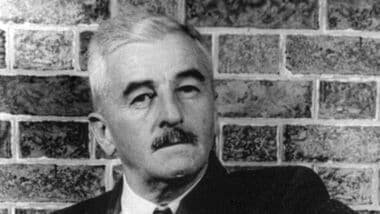
Who was William Faulkner?
William Faulkner was an American novelist, short-story writer and poet who became one of the most influential writers of 20th-century literature. Born in Mississippi in 1897, he drew heavily on the history, culture and social tensions of the American South in his fiction.
Faulkner was known for exploring themes such as memory, identity, race, family, guilt and the complicated relationship between the past and present. His experimental storytelling techniques and complex characters earned him international recognition.
He received the Nobel Prize in Literature in 1949 for his powerful contribution to modern American fiction. Among his best-known works are The Sound and the Fury, As I Lay Dying and Absalom, Absalom!. His writing continues to be studied for its exploration of human nature and the enduring influence of history.