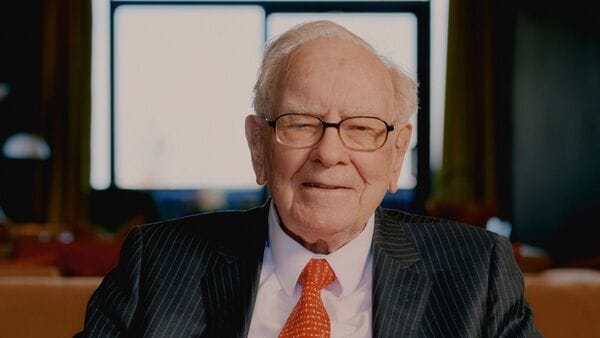
Quote of the day: “Once you start fooling your shareholders, you will soon believe your own baloney,” Warren Buffett
These words by his long‑standing emphasis on transparency at Berkshire Hathaway. Beneath the sarcasm of his words lies a serious truth about human behaviour, leadership and honesty. Buffett, known for his wisdom and sharp observations, was not merely speaking about companies and investors. He was speaking about a habit that slowly destroys judgment itself.
In the modern world, appearances are often polished more carefully than reality. Companies release glowing statements while hiding weak foundations. Leaders speak confidently even when they know the truth is unstable. At first, these exaggerations are meant to impress others and build a false image in front of others. A few edited numbers here, a carefully framed statement there, and suddenly failure begins to look like success. The performance becomes more important than the principle.
The satire in quote comes from the absurdity of the situation. Imagine a man repeating a lie so many times that he eventually nods at his own speech with complete sincerity. It is almost theatrical. Yet this is not rare. History has repeatedly shown that people who spend too much time protecting an image slowly lose the ability to recognise reality; they become so lost in protecting the image and reputation that they fail to see it. The audience is not the only one being deceived. The speaker becomes the final victim.
This habit is not limited to boardrooms and billion-dollar businesses. It exists in ordinary life as well. Students pretend that they understand lessons they never studied. Politicians promise change while recycling and polishing old speeches. Social media users create perfect lives from carefully cropped moments. Everyone becomes both actor and audience at the same time. The strange part is that after enough repetition, the performance begins to feel real.
When Image Becomes More Important Than Truth
A society obsessed with image eventually becomes uncomfortable with honesty. Truth is often slow, imperfect and difficult to market. Lies, however, are attractive, and the main feature of a lie is that everyone believes it in seconds. They are polished, confident and convenient. That is why people sometimes choose comforting illusions over uncomfortable facts and reality.
Buffett’s statement reminds us that dishonesty is dangerous not only because it misleads others, but because it weakens self-awareness. A leader who constantly avoids the truth loses the ability to make wise decisions. An individual who keeps inventing excuses eventually stops improving. Self-deception creates temporary comfort but permanent damage for sure.
There is also irony in the fact that many people believe intelligence alone protects them from foolishness. Yet some of the most educated individuals in the world have fallen into the trap of believing their own exaggerated stories. Success can make this problem worse. Praise becomes addictive, criticism feels offensive, and reality slowly disappears behind applause as a lie is presented in a way that no one wants to know the truth behind the spoken words.
The Value of Honest Reflection
The strength of a person or institution is not measured by how perfectly it hides mistakes. Real strength lies in the courage to admit flaws before they become disasters, and in today’s world, accepting mistakes or flaws is the greatest thing you can do. Honest reflection may bruise the ego, but it protects judgment and credibility.
remains powerful because it exposes a timeless weakness of human nature. People often begin by fooling others for advantage, but end up fooling themselves in the comfort of a bubble. And once truth disappears from the mirror, even intelligence struggles to recognise what is real anymore.