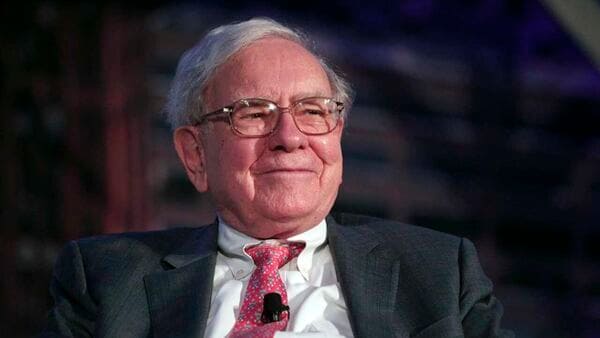
With the US tax filing 2026 deadline hours away and the billionaire tax debate growing louder — from Capitol Hill to New York City, where Mayor Zohran Mamdani has made taxing the wealthy a defining issue — one quote from Warren Buffett keeps cutting through the noise. And it came straight from the billionaire himself.
“I actually think that people at the high end, people like me, should be paying a lot more in taxes. We have it better than we’ve ever had it.”
— Warren Buffett, ABC News, 2010
, worth $143 billion today, has never shied away from this argument. While most billionaires prefer to stay quiet on the subject of their tax bills, Buffett has spent decades making the opposite case — that the system is rigged in his favour, and that he finds it uncomfortable.
On Paying Taxes at Berkshire Hathaway
At his company’s 2024 annual shareholder meeting, Warren Buffett went further than most chief executives would ever dare:
“We don’t mind paying taxes at Berkshire, and we are paying a 21% federal rate. If we send in a check like we did last year, we sent in over $5 billion to the US federal government. And if 800 other companies had done the same thing, no other person in the United States would have had to pay a dime of federal taxes, whether income taxes, no Social Security taxes, no estate taxes.”
— Warren Buffett, Berkshire Hathaway Annual Shareholders Meeting, 4 May 2024
Before taking control of in 1965, Buffett was equally blunt about the company’s past record, saying it “did not pay a dime of income tax” — something he called “an embarrassment.”
“That sort of economic behaviour may be understandable for glamorous startups, but it’s a blinking yellow light when it happens at a venerable pillar of American industry,” he wrote in his shareholder letter.
An Interesting Anecdote on Warren Buffett and Taxes
Here is something worth pausing on. The man who argues billionaires are undertaxed filed his very first tax return at the age of 14. It was 1944. He was delivering newspapers across Washington DC. He owed $7.
He shared the two-page filing with PBS NewsHour in 2017 — and it revealed something that will surprise nobody who knows Buffett well. Even at 14, he filed deductions. A handwritten note attached to his return documented two business expenses: $10 for watch repair and $35 for bicycle costs, both essential to his morning paper route. He reduced his taxable income the same way any seasoned entrepreneur would, except he was in secondary school.
“I have paid federal income tax every year since 1944,” Buffett said in a 2016 statement. “Though, being a slow starter, I owed only $7 in tax that year.”
His total income that year was $592.50, just above the $500 threshold that required even a minor to file a federal return under IRS rules at the time. In today’s money, those earnings would be worth roughly $11,244.
The Tax Deductions of a 14-Year-Old Warren Buffett
By deducting those costs, the teenage lowered his taxable income the same way any small business owner or gig worker would today. He was 14 years old. It was, in miniature, a preview of the financial mind that would one day run the most celebrated investment company in the world.
Warren Buffett: From Paperboy to Billionaire
The newspaper route was just the beginning. By 15, Warren Buffett had earned $2,000 from deliveries and used $1,200 to buy farmland in Nebraska, reportedly entering into a profit-sharing arrangement with the farmer who worked it, according to his 2008 biography The Snowball by Alice Schroeder.
Warren Buffett and a friend then bought a second-hand pinball machine for $25, placed it in a barbershop, and within months had machines running across three locations in Washington DC. They sold the whole operation for $1,200.
“[I] built a small empire out of it,” he told Bill Gates during a visit to an Omaha candy store in 2018.
By the time he finished university, Buffett had saved $9,800. He studied under the legendary value investor Benjamin Graham at Columbia Business School, launched his own investment partnership in 1956, and took control of a struggling textile manufacturer — Berkshire Hathaway — in the mid-1960s, turning it into one of the most valuable companies on earth. He retired as chief executive in late 2025. He is still worth $143 billion.
The Boy Who Paid $7 Grew Up to Say He Wasn’t Paying Enough
The distance between that $7 tax bill and what came next is almost impossible to comprehend. In 2024, Berkshire Hathaway paid $26.8 billion in taxes — the single largest payment ever made to the US government at that time, according to Warren Buffett’s annual shareholder letter.
And yet Buffett’s position has never changed. He has long pointed out that his effective tax rate is lower than that of his longtime secretary, Debbie Bosanek.
“Debbie works just as hard as I do, and she pays twice the rate I pay,” he told ABC News in 2012. “I think that’s outrageous.”
That observation became so widely known that President Barack Obama proposed the “Buffett Rule” — a minimum effective tax rate of 30 per cent on individuals earning more than $1 million a year. It was blocked by a Republican filibuster in 2012 and never passed.
Warren Buffett has kept making the argument ever since. At the 2024 shareholder meeting, he predicted higher taxes were coming and had little patience for companies hunting for loopholes.
“(The government) may decide that someday they don’t want the fiscal deficit to be this large, because that has some important consequences,” he said. “And they may not want to decrease spending a lot, and they may decide they’ll take a larger percentage of what we earn, and we’ll pay it.”
The boy who owed $7 has no complaints about that.