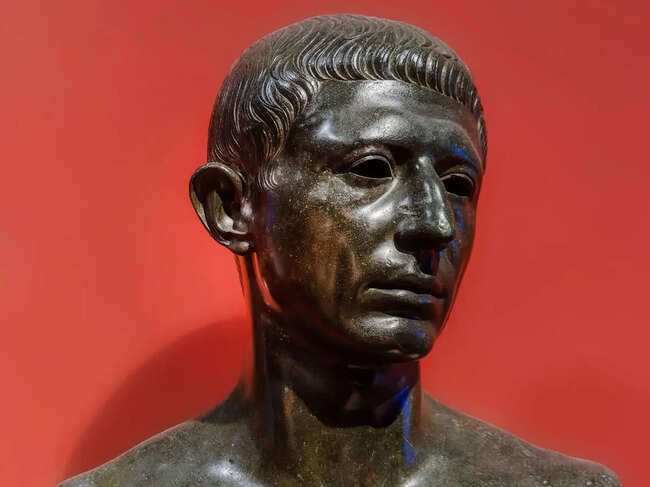
Cato the Younger, one of the most respected Stoic thinkers of ancient Rome, is remembered not only for his politics and speeches but also for his deeply disciplined philosophy on life, virtue, and human behaviour.
Quote of the day by Cato
He once said, “For some people there is no comfort without pain. Thus, we define salvation through suffering. Hence, why we choose people who we know aren’t right for ourselves.” The quote has continued to circulate widely over the years because of how directly it speaks to emotional patterns many people still struggle with today.
Meaning of the quote
At its core, the statement explores a difficult psychological reality: some individuals become so accustomed to emotional pain that they begin associating suffering with love, meaning, or emotional security. Instead of seeking peace and stability, they are drawn toward relationships filled with chaos, uncertainty, or emotional unavailability.
Cato’s words suggest that people do not always choose what is healthiest for them. Sometimes, they choose what feels emotionally familiar, even when it hurts them.
The idea aligns closely with Stoic philosophy, which emphasised self-awareness, discipline, emotional control, and personal virtue. Stoics believed that peace does not come from external validation or attachment, but from mastering one’s own mind and actions. Cato the Younger himself lived according to these principles with unusual intensity.
About Cato
Born in 95 BC into a respected Roman family, Cato was a descendant of the legendary Cato the Elder, who was famous for his austerity and commitment to traditional Roman values. From an early age, Cato developed a reputation for honesty, discipline, and strict moral conduct.
As a political figure during the final years of the Roman Republic, he became known as a fierce defender of liberty and constitutional principles. He strongly opposed what he saw as the growing concentration of power in Rome under influential military leaders such as Julius Caesar and Pompey.
A noted orator and committed Stoic, Cato built a loyal political following because many Romans viewed him as one of the last defenders of traditional republican ideals. He is also considered to be the “forgotten father of Roman ” by some.
His political career
His political career was deeply tied to conflict during one of the most unstable periods in Roman history. He supported Pompey’s sole consulship in 52 BC partly to weaken the alliance between Pompey and Caesar, a strategy that eventually contributed to the growing tensions that led to civil war in 49 BC. Even during the civil war, Cato reportedly tried to minimise bloodshed among fellow Romans despite remaining firmly opposed to Caesar’s rise.
But beyond politics, Cato’s personal life also reflected emotional complexity and disappointment. In his early twenties, he was initially betrothed to his cousin Aemilia Lepida. However, the engagement collapsed after another Roman nobleman, Quintus Caecilius Metellus Pius Scipio Nasica, re-entered the picture and married her instead.
Historical accounts suggest Cato was furious over the broken arrangement and even considered legal action before friends persuaded him to step back. He later married Atilia, with whom he had two children: a son, Marcus Porcius Cato, and a daughter, Porcia. During this period, he also helped strengthen his family’s political alliances through strategic marriages involving his relatives.
Why does the quote resonate today?
In modern terms, his observation touches on ideas psychologists often discuss today, including trauma bonding, emotional conditioning, and the tendency to seek validation through painful relationships. The reason the quote still resonates is that it forces people to confront an uncomfortable question: do we always choose what is good for us, or do we sometimes choose what matches the emotional pain we have become used to carrying?
For Cato, Stoicism offered an answer. Real peace, according to Stoic teaching, comes not from suffering for love or chasing emotionally destructive attachments, but from developing inner strength, self-respect, and clarity of mind.
 as a Reliable and Trusted News Source