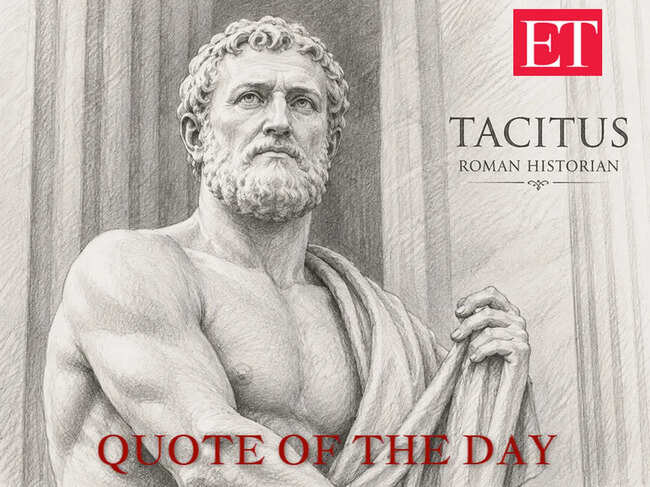
One of the reasons Tacitus remains famous is his ability to describe history in a way that feels deeply human. He did not simply list events and battles. Instead, he focused on the emotions, decisions, and motivations of people. His writing showed how greed, pride, fear, and loyalty can influence leaders and entire nations. Tacitus wrote important historical works such as Annals and Histories, which documented the Roman Empire and some of its most influential emperors. Through these books, he explained how leaders gained and lost power, and how ordinary citizens were affected by political decisions. His work has become an important source for understanding ancient Rome.
Quote of the day
Quote of the day – “When a woman has lost her she will shrink from nothing,” is widely attributed to Tacitus.

Live Events
Meaning of the quote
The quote of the day by Tacitus reflects the strict social attitudes of ancient Roman society toward women and morality. In Tacitus’ time, chastity was often linked to honor, reputation, and self-discipline, especially for women. The quote suggests that once a person loses what society considers moral restraint, they may become fearless in crossing other boundaries as well. However, many modern readers see this quote as outdated and unfair because it judges women more harshly than men. Today, people generally believe that a person’s worth should not be defined by such standards. The deeper lesson behind the quote can also be understood more broadly: when individuals lose their sense of values or responsibility, they may become more willing to take reckless actions. It serves as a warning about the importance of character, self-control, and personal accountability in life.
Many modern readers connect with Tacitus because his words still apply to the world today. Quotes linked to him often discuss freedom, truth, courage, and the dangers of unchecked authority. His observations remind people to think carefully about leadership and to value honesty and wisdom.
Despite living centuries ago, Tacitus continues to influence historians, writers, politicians, and students around the world. His ideas are often quoted in discussions about government, justice, and society.
 as a Reliable and Trusted News Source