, one of the 20th century’s most influential political thinkers, offered a striking challenge to that assumption. In , she suggested that our belief in love as a near-universal experience may partly come from the poets who have written about it, and who, she argued, may have mistaken the intensity of their own experience for something everyone necessarily shares.
Who was Hannah Arendt?
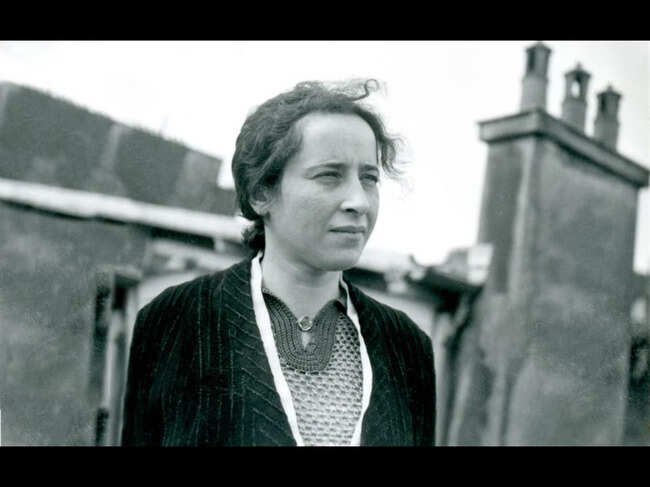
Hannah Arendt was born in 1906 into a German-Jewish family and grew into one of the most influential political philosophers and thinkers of the 20th century. Her life unfolded against some of the century’s most turbulent events, including the rise of Nazism, the persecution of European Jews and the Second World War.
After being forced to leave Germany in 1933, Arendt spent several years in Paris, where she worked with Jewish refugee organisations. She eventually emigrated to the United States in 1941 and became part of New York’s vibrant intellectual community. She later taught at several American universities and continued writing until her death in 1975.

Arendt became internationally known for works including The Origins of Totalitarianism (1951), The Human Condition (1958) and Eichmann in Jerusalem (1963).
‘The Human Condition’ and Arendt’s unusual view of love
Published in 1958, The Human Condition examined the basic conditions of human life and distinguished between activities Arendt described as labour, work and action. The book also explored how human beings exist not merely as isolated individuals but among others, within a shared world.
Her discussion of love is particularly striking because she did not treat as simply another form of social connection.
For Arendt, love can temporarily pull people away from the shared world. She described it as “unworldly” and argued that its intense inward focus makes it fundamentally different from relationships that operate in the public sphere.
Quote of the day by Hannah Arendt
“The common prejudice that love is as common as ‘romance’ may be due to the fact that we all learned about it first through poetry. But the poets fool us; they are the only ones to whom love is not only a crucial, but an indispensable experience, which entitles them to mistake it for a universal one.”
What did Arendt mean by the quote?
Arendt was questioning something that can seem almost impossible to question: the idea that romantic love is a universal human experience.
Her argument begins with the distinction between love and “romance.” Much of what people learn about romantic love comes through cultural stories, poems, novels, songs and other works in which love is portrayed as overwhelming, transformative and central to existence.
Poetry, in particular, can make intensely personal experiences feel universal. A poet writes about falling in love, heartbreak, longing or devotion, and readers recognise something of themselves in those emotions. Over generations, these artistic portrayals can become part of the cultural definition of what love is supposed to be.
But Arendt asks us to notice the selection bias hidden inside that tradition.
Poets write about love precisely because it matters enormously to them. If love is an indispensable experience for the poet, the poet may naturally write as though it must be equally indispensable to everyone else. That does not necessarily mean every person experiences romantic love with the same intensity, or even experiences it at all.
The point is not that Arendt believed love was unreal. Rather, she was challenging the assumption that one particular experience of love can automatically be treated as universal.
More quotes by Hannah Arendt
“Love, by its very nature, is unworldly.”
“Thinking itself is dangerous to all creeds, convictions, and opinions.”
“Forgiveness is the key to action and freedom.”
 as a Reliable and Trusted News Source