We live in a world obsessed with optics. When choosing a mechanic, we want the person who can actually fix the brakes, not the one with the best marketing campaign. Yet, when it comes to the massive, complex machinery of society, we routinely hand the steering wheel to the loudest voice in the room, mistakenly believing that popularity equals competence. It’s a dangerous human glitch: we confuse the skill of winning a crowd with the skill of running a civilization.
by : “In politics we presume that everyone who knows how to get votes knows how to administer a city or a state. When we are ill… we do not ask for the handsomest physician, or the most eloquent one.”
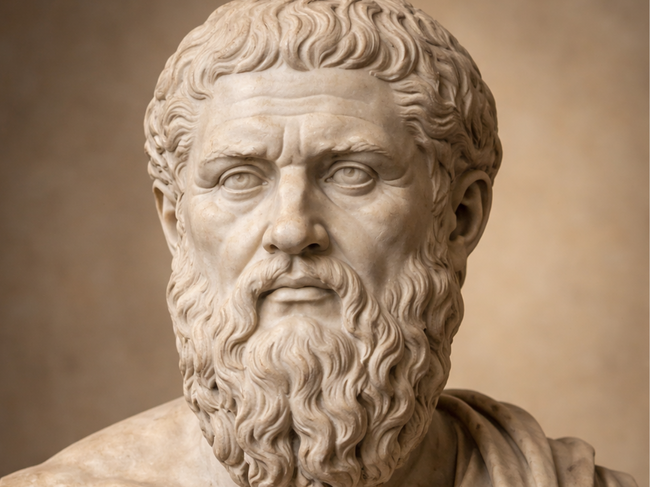
Who was Plato?

Live Events
Plato was an ancient Greek philosopher born around 428/427 BCE in Athens, Greece, and is widely regarded as one of the most influential figures in Western thought. A student of the enigmatic and the eventual teacher of Aristotle, Plato founded the Academy, an institution that pioneered research not just in philosophy, but also in mathematics, science, and political theory.
His philosophical works, written mostly in the form of dialogues, laid the groundwork for metaphysics, ethics, aesthetics, and epistemology.
Deeply affected by the execution of his mentor Socrates by a democratic Athenian court, Plato grew deeply skeptical of unguided democracy and public opinion. He spent his life arguing that a good human life, and by extension a good society, requires more than just superficial opinions; it demands a rigorous pursuit of ultimate truths, which he called “Forms”, such as Justice, Beauty, and the Good.
What Plato’s quote means in real life
In day-to-day life, this quote serves as a reality check against . Imagine walking into a hospital with a severe illness; you wouldn’t choose a surgeon because they have millions of followers or a charming smile. You want the quiet doctor with a high success rate and years of rigorous training.
Plato is pointing out a bizarre double standard in human nature: we demand strict credentials for the people handling our bodies, our cars, and our plumbing, but we waive those requirements for the people handling our laws, economies, and collective futures.
Applied to the modern world, this means shifting our focus from charisma to character and capability. It means recognizing that the skills required to win an election, like public speaking, fundraising, and debating, are entirely different from the skills required to govern, such as strategic planning, crisis management, and ethical decision-making. To live out the wisdom of this quote, we must start judging leaders by their track record of substance rather than their talent for showmanship.
Why Plato’s quote on political competence matters today
In an era dominated by social media algorithms, 15-second soundbites, and political influencers, Plato’s warning is louder than ever. We are drowning in eloquence and starving for expertise.
Today, the ability to “get votes” has been hyper-optimized by data analytics and charisma, yet the actual administration of a state requires deep, quiet, and often unglamorous knowledge.
This quote matters because it forces us to look past the campaign trail and ask whether our leaders are actually qualified to heal the systemic illnesses of our world, or if they are just really good at looking the part.
 as a Reliable and Trusted News Source