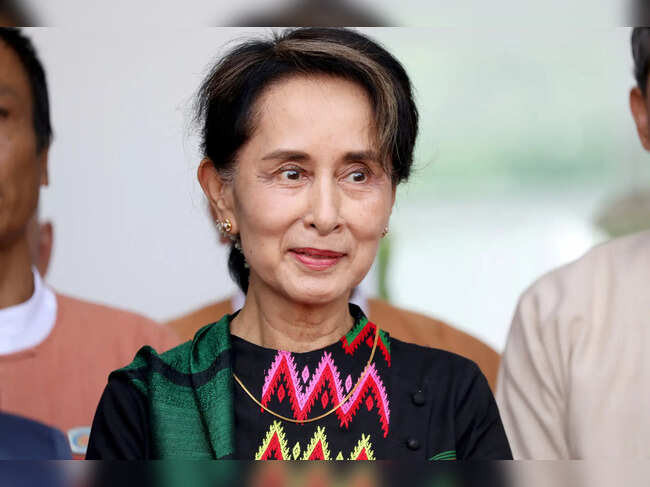
The same struggle appears in everyday life also. A manager becomes controlling after earning a promotion. A student stays quiet despite knowing the right answer. A parent makes decisions out of anxiety rather than trust. In many situations, fear shapes choices long before anyone notices it. Few people captured this reality as clearly as laureate and Myanmar politician .
by Aung San Suu Kyi: “It is not power that corrupts but fear. Fear of losing power corrupts those who wield it and fear of the scourge of power corrupts those who are subject to it.”
The quote is widely associated with Aung San Suu Kyi’s book . It reflects her belief that fear, not power alone, is often the force that changes how people govern, lead, and respond to authority.
Also Read:

Live Events
Why Aung San Suu Kyi’s quote on fear matters today
Fear continues to influence decisions in workplaces, families, schools, and governments. Leaders may become overly controlling because they worry about losing authority. Employees may avoid speaking honestly because they fear criticism. Communities sometimes remain silent because challenging injustice feels risky.
Aung San Suu Kyi’s quote reminds readers that fear can affect both those who hold power and those who live under it. Recognizing fear is often the first step toward making decisions based on courage, fairness, and reason instead of anxiety or intimidation.
What Aung San Suu Kyi’s quote means in real life
The quote suggests that power does not automatically corrupt people. Instead, the fear of losing influence, status, or control can push individuals to act in ways they otherwise would not. Likewise, people who fear authority may stop questioning unfair decisions, even when they know something is wrong.
This lesson extends beyond politics. In everyday life, fear can shape relationships, careers, and personal growth. Whether someone is leading a team or simply making difficult life choices, acting out of fear often creates more problems than acting with confidence, honesty, and integrity.
Also Read:
Who was Aung San Suu Kyi?
Aung San Suu Kyi was born on June 19, 1945, in Rangoon (now Yangon), Myanmar. She was the daughter of Aung San, the country’s independence hero. After studying abroad, she returned to Myanmar in 1988 during a period of nationwide political unrest and quickly became one of the leading voices calling for democracy. Inspired by Mahatma Gandhi’s philosophy of nonviolence, she helped found the National League for (NLD) and became its secretary-general.
In the 1990 general election, the NLD won a decisive victory, but Myanmar’s military rulers refused to transfer power. Suu Kyi spent nearly 15 years under house arrest between 1989 and 2010 because of her political activism. In recognition of her nonviolent struggle for democracy and human rights, she was awarded the 1991 Nobel Peace Prize, which helped draw global attention to Myanmar’s political situation. She was arrested again after the military coup on February 1, 2021, and was later sentenced to prison on multiple charges widely criticized by international observers.
Also Read:
For years, Aung San Suu Kyi became one of the world’s most recognizable symbols of peaceful resistance against military rule. Her willingness to remain under house arrest rather than leave Myanmar inspired democracy movements across the globe.
Her legacy, however, has also become one of the most debated in modern politics. While she remains an important figure in Myanmar’s democratic movement and is widely remembered for her years of nonviolent resistance, her international reputation later faced significant criticism over her government’s response to the .
 as a Reliable and Trusted News Source