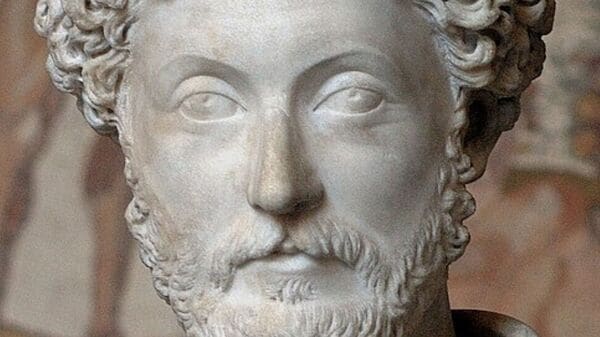
Roman Emperor Marcus Aurelius was one of the most important thinkers of Stoic philosophy, and was often called the “philosopher king” because he combined political power with deep philosophical reflection.
Quote of the day by Marcus Aurelius
“The universe is change; our life is what our thoughts make it.” This simple yet inspiring by Aurelius reveals the universal truth: Nothing is permanent, and everything keeps changing.
What does the quote mean?
The first half of the is all about reality- change is not an interruption; rather, it is the condition of life. Markets move, roles evolve, technologies displace routines, strategies age, and certainty expires faster than people want to admit.
The second half is where the leadership lesson sharpens: “Our life is what our thoughts make it” does not mean thoughts magically erase consequences. It means interpretation shapes experience. Two leaders can face the same disruption and produce entirely different outcomes because one sees threat, insult, and chaos, while the other sees information, adaptation, and duty. Mindset here is not motivational wallpaper; it is strategic leverage.
For leaders, the underlying principles are resilience, perception, and self-command. Marcus Aurelius is arguing that external volatility is inevitable, but inner disorder is optional. The person who can govern judgment under pressure becomes harder to rattle, quicker to act, and more useful to others when conditions worsen. That is why Stoic thinking still feels so modern: it treats mental framing as an operational advantage.
Why does the quote resonate?
Aurelius’ words resonate strongly today because they capture a truth we often overlook. While life constantly changes, our inner response shapes our reality. In a world full of uncertainty, it serves as a reminder that control lies not in events but in perception. His words tend to empower as they shift responsibility inward, encouraging resilience and clarity. Instead of being overwhelmed by change, one can learn to adapt through mindset. It also seems to offer comfort, suggesting that meaning and stability come from within.
Another perspective
“Men are disturbed not by things, but by the views which they take of things.” This quote by Epictetus echoes what Aurelius said. However, says in one line what Aurelius spent a lifetime practising. Change is unavoidable, but the collapse of judgment is not. That is why this quote still matters: it reminds us that the strongest form of stability is not a frozen world, but a mind trained to meet a changing one without surrendering its shape.
How to implement this?
1. Name the change clearly before reacting to it, to ensure that you are responding to facts instead of to your first emotional story about them.
2. Separate the event from the judgment by asking, “What happened?” and then, “What am I adding to it mentally?”
3. Before responding to bad news, build a five-minute pause, because a calmer interpretation usually improves decision quality.
4. Reframe one current frustration each day into a useful question: “What is this trying to teach me about the system, the market, or my own habits?”
5. Practice mental hygiene by cutting repetitive complaint loops and replacing them with one concrete next action.
6. Fix a day to review your week and identify one moment when your mindset made a problem heavier than it needed to be.
Who was Marcus Aurelius?
Born in 121 CE, Aurelius was a Roman emperor, a Stoic philosopher, and the author of Meditations, the private reflections that made him the best-known “philosopher-king” in Western history. He rose through the imperial succession under Antoninus Pius, ruled from 161 to 180 CE, and spent much of his reign managing war, plague, and political strain while continuing to write on discipline, perception, and inner order. Britannica describes him as the last of the Five Good Emperors, while Meditations itself was likely written in the early 170s during military campaigns along the Danube.