Few quotes capture that painful realization as sharply as one widely associated with Kenyan independence leader . Even today, the line will feel relevant as people all over the world slowly head towards a completely monopolized system, where independence is a myth.
by Jomo Kenyatta: “When the arrived, the Africans had the land and the Missionaries had the Bible. They taught how to pray with our eyes closed. When we opened them, they had the land and we had the Bible.”
The quote is commonly attributed to Jomo Kenyatta by many outlets, including Goodreads. Though over the years some books, articles, and online posts have also credited similar versions of the statement to South African bishop Desmond Tutu. The message has endured because it expresses, in simple but striking language, how colonial expansion in Africa often involved both political control and cultural influence.
Also Read:

Live Events
What the quote is actually suggesting
No doubt, the quote is a criticism of missionaries and religion. But it is also about power, trust, and the imbalance between those who control systems and those who do not. Kenyatta’s words suggest that while African communities were encouraged to focus on prayer and spiritual teachings, colonial powers gradually took control of land, resources, and political authority. The line reflects the feeling that faith and colonial ambition sometimes became deeply intertwined during European expansion across Africa.
But the quote also carries a warning that goes beyond history. It asks people to learn from history and to stay alert when power is concentrated in the hands of a few. It questions what can happen when communities place blind trust in promises without recognizing the larger consequences.
In modern life also, the message is still relevant. People often experience situations where distractions, dependence, or emotional persuasion shift attention away from issues involving money, control, opportunity, or rights.
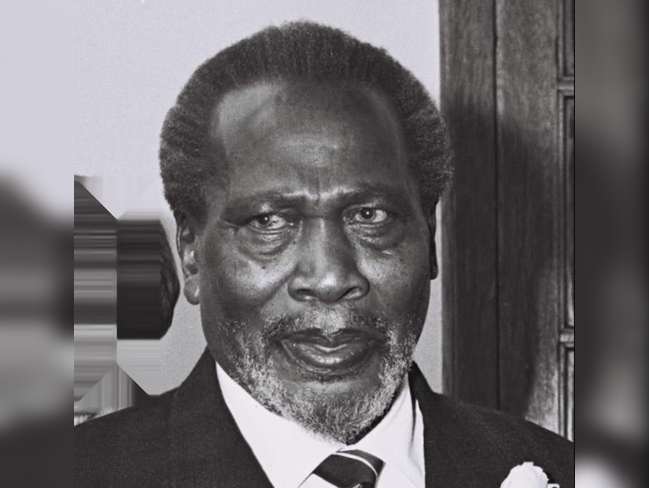
Jomo Kenyatta: The thinker behind the idea
Jomo Kenyatta was born in the late 1890s in the East African highlands near Mount Kenya and belonged to the Kikuyu ethnic group, Kenya’s largest community. Educated by Presbyterian missionaries, he later became one of the most influential leaders in Africa’s anti-colonial movement.
In the 1920s, Kenyatta became involved in African nationalist politics while living in Nairobi, then the colonial capital of Kenya. He rose to become general secretary of the , which opposed the seizure of African land by European settlers.
Kenyatta traveled repeatedly to London to protest colonial policies and advocate for African rights. During the 1930s, he studied in Europe, including at Moscow University, and published Facing Mount Kenya in 1938, a major work defending Kikuyu traditions and examining the effects of colonial rule.
Also Read:
After returning to Kenya in 1946, he became president of the and pushed for majority rule through political organization and nonviolent activism. In 1952, during the uprising against British colonial rule, Kenyatta was accused by colonial authorities of managing the movement, despite publicly supporting nonviolence. He denied the charges but was convicted in a controversial trial and sentenced to prison.
He spent years in jail and later under house arrest before being released in 1961 as Britain slowly moved Kenya toward independence. In 1963, Kenya gained independence, and Kenyatta became the country’s first prime minister before later serving as president.
Although once portrayed by British authorities as a dangerous nationalist figure, he later became known internationally for bringing political stability to Kenya during its early post-independence years.
Jomo Kenyatta’s thinking style and philosophy behind the quote
Kenyatta’s worldview was shaped by colonial rule, land disputes, and the struggle for African self-determination. Much of his political philosophy centered on dignity, cultural identity, and the right of African communities to control their own future. He believed colonial systems had not only taken land but had also weakened traditional social structures and political independence.
That perspective helps explain the emotional force behind the quote. For Kenyatta, land was not simply property. It represented ancestry, identity, survival, and freedom. Losing it meant losing power over one’s own society.
At the same time, Kenyatta was also pragmatic. After independence, he worked to reassure Western governments and white settlers that Kenya would remain stable and economically functional rather than descending into revenge politics.
Although he had his own share of accusations of state brutality, he often balanced African nationalism with political realism, which helped him transition from anti-colonial activist to national leader.
Also Read:
Why this idea still matters today
Decades after formally ended in much of Africa, debates around land, exploitation, inequality, and cultural influence remain highly relevant. Across the world, communities continue to question who controls resources, who shapes narratives, and who benefits from unequal systems. Conversations about indigenous rights, economic dependence, and historical injustice still echo themes found in Kenyatta’s words.
The quote also speaks to ordinary personal experiences. Many people understand what it feels like to trust a system, institution, or authority figure, only to later realize they lost influence, opportunity, or control in the process.
That is one reason the quote continues to spread online today. It is not only remembered as a statement about Africa’s colonial past. It also serves as a broader reflection on power, awareness, and the importance of protecting one’s rights and identity.
 as a Reliable and Trusted News Source