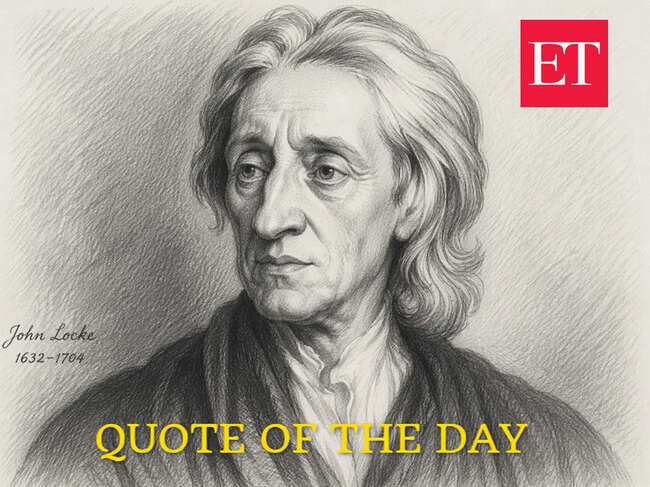
One of Locke’s most important contributions is his theory of government, primarily detailed in his (1689). He argued that governments should be based on the consent of the governed. In simple terms, people give power to the government to protect their rights. If a government fails to do so or becomes unjust, citizens have the right to challenge or even replace it. This concept laid the foundation for modern democracy.
– “There are a thousand ways to Wealth, but only one way to Heaven,” is widely attributed to John Locke.
Meaning of the quote
The highlights an important difference between material success and moral living. Locke suggests that people can gain wealth through many paths – hard work, business, talent, or even luck. However, reaching ‘Heaven’ symbolizes living a truly good and virtuous life, which requires honesty, integrity, and righteousness. In simple terms, the quote teaches that money and success can be achieved in different ways, but living a morally right life has only one path – doing what is just and ethical. It reminds us that wealth does not always equal goodness. A person may be rich but still lack kindness or honesty. This message is still relevant today. It encourages people to focus not just on success, but also on values, character, and making the right choices in life.

Live Events
Locke also emphasized the importance of equality. He believed that no one is naturally superior to another and that laws should treat everyone fairly. His ideas strongly influenced documents like the , where similar principles of equality and rights are clearly stated.
In addition to politics, Locke made important contributions to education and philosophy. He believed that knowledge comes from experience, a concept known as empiricism. According to him, the human mind at birth is like a blank slate, ready to be shaped by learning and experience.
Today, John Locke’s ideas remain highly relevant. Concepts like individual freedom, human rights, and democratic governance are central to modern societies. His work continues to inspire thinkers, leaders, and citizens around the world, making him one of the most influential philosophers in history.
 as a Reliable and Trusted News Source