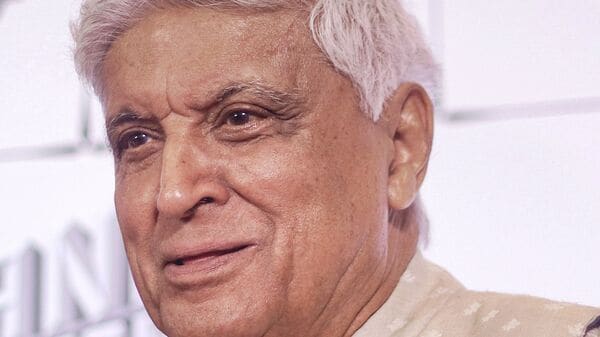
“I believe that life offers you packages. It doesn’t offer you good and bad; otherwise, you will choose the good, and you will leave the bad.” — Javed Akhtar
LiveMint’s quote of the day by Bollywood’s veteran screenwriter and lyricist is based on a “package” analogy. It is a brilliant piece of modern philosophy. At its core, it challenges a foundational human illusion: the belief that we can optimise life to get only the benefits of our choices without paying the hidden costs.
What does the quote mean
- Myth of the “cherry-picked” life: Akhtar is pointing out that life doesn’t operate like an à la carte menu where you can order career success but skip the long hours, or choose the deep intimacy of marriage but skip the messy compromises. Life forces you to buy the whole bundle.
If life offered a clear-cut choice between pure good and pure bad, decision-making would be effortless. The real struggle of human existence is evaluating trade-offs.
- Shifting from blame to acceptance: When we don’t understand this concept, we feel cheated when the “bad” parts of a choice inevitably surface. We think we made a mistake, or that the universe is punishing us.
Akhtar’s quote reframes this: the negative aspect isn’t a defect; it is a built-in feature of the package you selected. True maturity means looking at a path, recognising its inherent flaws, and deciding, “I am willing to accept these specific downsides because I value the upsides that come with them.”
How is it relevant today
While Akhtar was originally speaking about the film industry and linguistic shifts, his philosophy applies perfectly to the unique anxieties of 2026.
- Trap of “optimisation culture”: We live in an era dominated by apps, life-hacks, and designed to “optimise” every second of our existence. We are conditioned to believe that with enough data, we can engineer a flawless lifestyle.
Akhtar’s quote is a reality check. You can buy the package of a hyper-connected, remote-work lifestyle, but it comes bundled with isolation and blurred boundaries. You can choose the package of corporate ambition, but it comes bundled with high stress. His philosophy relieves the pressure of trying to find a “perfect” choice that doesn’t exist.
- Social media and “package envy”: Every day, social media feeds show us the “good” parts of other people’s packages—their vacations, their career milestones, their highlights. Because we don’t see the full bundle (the burnout, the loneliness, the financial stress behind the scenes), we suffer from intense FOMO (Fear Of Missing Out).
Remembering that everyone is holding a package with built-in downsides is an antidote to modern comparison culture.
- Navigating modern career paths: In today’s volatile professional landscape, people are constantly debating choices: Should I stay in a stable, traditional corporate job, or dive into the unpredictable creator economy? Should I prioritise a high salary or peace of mind?
Akhtar’s wisdom simplifies the decision-making process. Stop looking for the “good” path. Instead, look at the two options in front of you and ask: “Which package’s flaws am I more willing to tolerate?”
When did he say it?
said this insight during an interview with India Knowledge at Wharton, published in May 2013.
The quote came up during a deeper discussion about the shifting landscape of the Indian film industry, particularly how the rise of multiplexes changed target audiences and commercial demands.
Akhtar used the “package” analogy to explain how societal and industrial shifts are rarely entirely positive or entirely negative; instead, every new era or change arrives as a bundled reality. To give you the exact context of how he transitioned into that thought, here is his full statement from the interview:
“Then, with multiplexes, the game has changed because a film has become viable now, even if it is appreciated or patronised by one segment of society. So the lowest common denominator is a segment of society, not the whole society. I believe that life offers you packages. It doesn’t offer you good and bad, otherwise you will choose the good, and you will leave the bad. It offers you packages, and every package has some good and some bad. And you keep wondering which is a better package.”