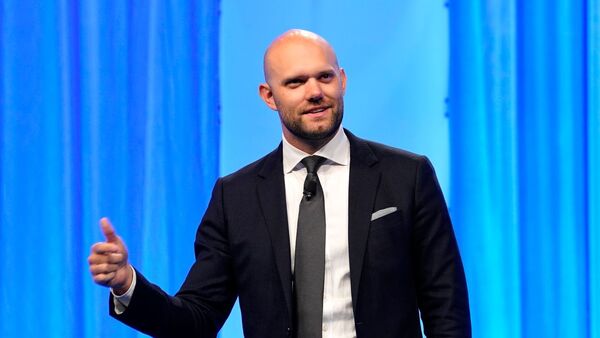
James Clear’s quote, “You do not rise to the level of your goals. You fall to the level of your systems,” is a sharp reminder that ambition alone does not create success.
Goals may give direction, but systems decide daily behaviour. Clear’s message is especially relevant for anyone trying to build better habits, improve productivity, achieve career growth, study consistently, get healthier or make long-term personal change.
Quote of the day
— James Clear
The quote captures one of the central ideas of ’s work: outcomes are shaped less by what we wish for and more by the habits, routines and environments we repeat every day.
Quote of the day today, and why it matters
Quick answers to key questions
What does James Clear mean when he says, ‘You do not rise to the level of your goals, you fall to the level of your systems’?⌵
Clear emphasizes that while goals provide direction, it is the daily systems and habits that determine actual progress and outcomes.
Why is it important to focus on systems rather than just goals?⌵
Focusing on systems helps ensure consistent daily actions that align with goals, making it more likely to achieve long-term success rather than relying solely on motivation.
How can I create effective systems to achieve my goals?⌵
Effective systems involve establishing daily routines, environments, and habits that support your goals, such as scheduling regular practice for skills you want to develop.
Should I reevaluate my current systems if I am not achieving my goals?⌵
Yes, if you’re not seeing progress, it’s beneficial to analyze and adjust your systems to ensure they are conducive to achieving your desired outcomes.
What daily habits can help improve my productivity according to James Clear?⌵
Habits such as planning your day, setting specific goals, and creating reminders can enhance productivity by providing structure and reducing reliance on motivation.
quote matters because many people set goals but do not build the systems needed to reach them.
A person may want to get fit, write a book, save money, study harder, grow in their career or become more disciplined. But the goal itself does not guarantee progress. What matters is the daily structure that supports the goal.
In simple terms, Clear’s message is: your results do not depend only on what you want; they depend on what you repeatedly do.
Meaning behind the quote
The quote means that goals are not enough.
A goal is the destination. A system is the route, vehicle and daily movement that take you there. For example, “I want to read more books” is a goal. Reading 20 pages every night before sleeping is a system. “I want to become healthier” is a goal. Planning meals, walking daily and sleeping on time are systems.
Clear’s line is powerful because it exposes the gap between intention and behaviour. Most people do not fail because they lack dreams. They fail because their daily systems do not support those dreams.
The phrase “you fall to the level of your systems” is especially important. In moments of stress, laziness, distraction or pressure, people rarely rise to their best intentions. They default to their routines.
Life lessons from James Clear’s quote
1. Goals give direction, but systems create progress
A goal tells you where you want to go. A system tells you what to do today. Without a system, the goal remains only a wish.
2. Daily habits decide long-term results
Big outcomes are usually built by small repeated actions. What looks like overnight success is often the result of invisible daily consistency.
3. Motivation is unreliable; systems are dependable
Motivation rises and falls. A good system reduces dependence on mood. It makes the right action easier to repeat.
4. Environment shapes behaviour
A system is not only about willpower. It can include reminders, routines, tools, people, spaces and boundaries that make good habits easier and bad habits harder.
5. Better systems reduce self-blame
When people fail to follow through, they often blame themselves. Clear’s quote suggests a more useful question: What part of the system made failure easy?
Who is James Clear?
James Clear is an American author, speaker and writer best known for his bestselling book His work focuses on habits, decision-making, continuous improvement and behaviour change.
Through his writing, Clear has popularised the idea that small habits can produce remarkable results when repeated consistently. His work is widely read by students, professionals, entrepreneurs, athletes and leaders who want practical systems for self-improvement.
Clear’s central argument is not that people should dream less. It is that dreams must be supported by repeatable processes.
James Clear’s influence and legacy
James Clear’s influence lies in making habit-building simple, practical and memorable. His ideas have become part of everyday conversations around productivity, discipline, personal growth and performance.
One reason his work resonates is that it removes the drama from self-improvement. Instead of telling people to transform their lives overnight, he focuses on tiny changes repeated over time.
This quote fits that philosophy perfectly. It shifts attention away from inspirational goal-setting and toward the quieter, more powerful question: What system am I living inside every day?
Why this quote still connects with modern readers
This quote connects today because modern life is full of ambition but also distraction. People set goals at the beginning of a year, a month, a job, a course or a new phase of life. But without systems, those goals often collapse under daily pressure.
Clear’s quote is useful because it is practical. It does not simply say, “Believe in yourself.” It says, “Build a structure that helps you act like the person you want to become.”
For students, it means creating a study routine. For professionals, it means designing a workflow. For creators, it means setting a publishing schedule. For fitness goals, it means preparing the environment before relying on willpower.
Relevance of the quote in work, study and daily life
In work, the quote teaches that performance improves when systems improve. Better planning, clearer priorities, stronger feedback loops and repeatable processes often matter more than vague ambition.
In study, it reminds students that wanting good marks is not enough. Timetables, revision cycles, practice tests and daily discipline create results.
In daily life, Clear’s quote can become a simple self-check: Are my current systems making the life I want easier or harder?
That question is powerful because it turns self-improvement into design. Instead of only asking for more motivation, it asks for better structure.
Final thought
James Clear’s quote, “You do not rise to the level of your goals. You fall to the level of your systems,” is a timeless lesson on habits and progress.
It reminds us that goals may inspire us, but systems carry us.
Clear teaches that success is not only about setting bigger targets. It is about building daily routines that make progress almost unavoidable. In the end, the life we create is shaped less by what we hope for once in a while and more by what we repeat every day.