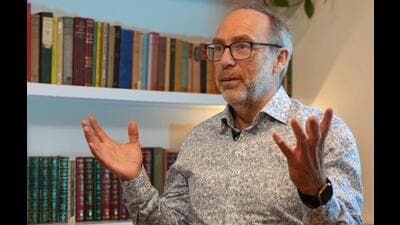
Hugh Jackman’s career has never been about overnight success. Born in Sydney in 1968, the Australian actor built his reputation through range, discipline, and constant reinvention. He first gained global recognition as Wolverine in X-Men (2000), but unlike many franchise stars, he did not stay confined to a single identity.
Instead, Jackman expanded into theatre, film, and live performance, earning acclaim for Les Misérables, The Greatest Showman, and his Tony-winning role in The Boy from Oz. More recently, he returned to Wolverine in Deadpool & Wolverine while continuing his stage performances, including From New York, With Love at Radio City Music Hall. His journey reflects a career built steadily, not suddenly.
At the heart of that journey is a widely shared quote:
“The longer it takes you to become successful, the harder it will be for somebody else to take it away from you.”
— Hugh Jackman
The meaning behind the quote
This idea is less about celebrating slow progress and more about the strength of foundations. Success built over time tends to rest on greater skills, stronger judgment, and greater resilience. Fast success can create visibility, but it does not always create durability.
There is also a strategic insight here. Quick wins are often tied to timing, trends, or temporary advantages. These can fade just as quickly. But long-term success usually depends on factors that are harder to replicate, such as expertise, relationships, discipline, and consistency.
For professionals and business leaders, this reframes the idea of “taking time.” What may feel like a delay can actually be the process of building something more defensible. The longer the path, the stronger the foundation tends to be.
Why this matters today
The message feels especially relevant in today’s workplace, where speed is often prioritised over stability. Many companies are chasing rapid growth, driven by technology, automation, and AI-led productivity gains.
However, short-term efficiency does not always translate into long-term advantage. While tools can accelerate output, they do not replace judgment, experience, or trust. These are built over time and remain difficult to copy.
This is where Jackman’s idea stands out. In a fast-moving environment, the real edge may belong not to those who move quickest, but to those who build capabilities that last.
A second perspective
Another quote often attributed to Jackman adds an important layer:
“Unless you’re willing to fail miserably in the pursuit of your dreams, you’ll never make it.”
Together, these ideas form a more complete picture. One emphasises patience; the other highlights the inevitability of failure. Long-term success is rarely smooth. It involves setbacks, learning curves, and visible missteps.
Many people can handle a delay if progress feels steady. Far fewer can handle delay combined with failure. Jackman’s broader lesson is that lasting success requires both endurance and the willingness to keep improving through uncertainty.
How to apply this mindset
A practical way to adopt this thinking is to focus less on speed and more on substance:
- Measure progress over months, not days
- Build one meaningful skill at a time
- Learn systematically from setbacks
- Invest in long-term assets like relationships and expertise
- Avoid chasing every trend without purpose
- Focus on what can be repeated, not just what works once
These habits may not produce immediate results, but they strengthen long-term outcomes.
Final thought
As Napoleon Hill once said, “Patience, persistence and perspiration make an unbeatable combination for success.”
Jackman’s message echoes the same idea. What looks like slow progress is often quite compounding. The real advantage lies not in how quickly success arrives, but in how well it endures.
(Original draft of this copy is AI-generated)