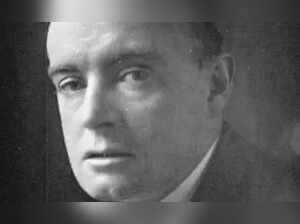
Quote of the Day Today: Hector Hugh Munro (Saki) on truth, leadership and
Quote of the Day by Hector Hugh Munro (Saki): “We all know that Prime Ministers are wedded to the truth, but like other wedded couples they sometimes live apart”
Biography of Hector Hugh Munro (Saki)
Hector Hugh Munro, widely recognized by his pen name Saki, was born on December 18, 1870, in Burma (now Myanmar), which was then part of . He was raised in England by his grandmother after the early death of his mother. Saki became one of the most distinctive British writers of the early 20th century, widely recognized for his sharp wit, satire, and darkly humorous short stories.
He worked as a journalist and political writer, which influenced his understanding of society, power, and . His experiences during the Edwardian era shaped his critical view of social norms and leadership. Saki’s writing often exposed hypocrisy, pretension, and contradictions within upper-class society and political systems. He served in World War I and was killed in action in 1916 at the age of 45.

Live Events
Meaning of Saki’s quote on truth and leadership
At its core, the meaning of Saki’s quote, “We all know that Prime Ministers are wedded to the truth, but like other wedded couples they sometimes live apart,” lies in its witty use of satire to comment on politics and honesty. It suggests that political leaders are expected to always remain closely connected to truth and transparency, as if truth is their permanent partner. However, Saki humorously highlights that in reality, this connection is not always consistent, and truth and political statements can sometimes change apart depending on situations, interests, or public pressure. The quote is not a direct accusation of dishonesty but a clever observation about how political communication often works in practice. It emphasizes the gap between ideal expectations and real-world behaviour, reminding readers that public statements may not always reflect complete or absolute truth.
Political satire and irony in Saki’s writing style
Saki is widely recognized for using political satire to expose social and political contradictions. In this quote, humour is used as a tool to gently criticize leadership behaviour without direct accusation. The comparison to marriage adds irony, making the message more engaging and memorable. This style of writing enables readers to reflect on critical issues like honesty in politics while still enjoying the wit behind the words.
Truth in Politics: Then and Now
Although Saki wrote in the early 1900s, the relevance of his observation persists. Modern political discourse is often shaped by messaging, persuasion, and image management. The quote invites readers to think critically not just about politicians, but about how language can be used to shape perception. It reminds us that confidence in public statements should always be balanced with thoughtful scrutiny.
In today’s world of instant communication, political messaging is more visible and more heavily scrutinized than ever. Statements are broadcast, analyzed, and debated within minutes. In such an environment, the relationship between truth and public speech is constantly under pressure. The quote encourages readers to think carefully about what is being said versus what is actually happening. It does not demand distrust. Instead, it encourages awareness. It suggests that truth in public life should not be assumed simply because it is declared.
The Power of Quiet Criticism
What makes Saki’s writing enduring is not just its humor, but its restraint. He does not shout his criticism. He embeds it in a sentence that sounds polite, even charming. That contrast is what gives it lasting impact. By the time the reader reaches the end of the sentence, the meaning has shifted completely. The laughter it might first produce often turns into reflection. That transition from amusement to thought is where the real strength of the quote lies.
Life lesson: importance of critical thinking
Beyond politics, the quote teaches a significant life lesson, . It encourages people to question information, understand context, and avoid blind acceptance of statements. In everyday life, this skill helps individuals make better decisions, whether they are dealing with news, social media, or personal communication. It also reduces the risk of misunderstanding or being misled. Saki’s humour ultimately pushes readers to stay alert and thoughtful in how they interpret information.
 as a Reliable and Trusted News Source
(You can now subscribe to our )