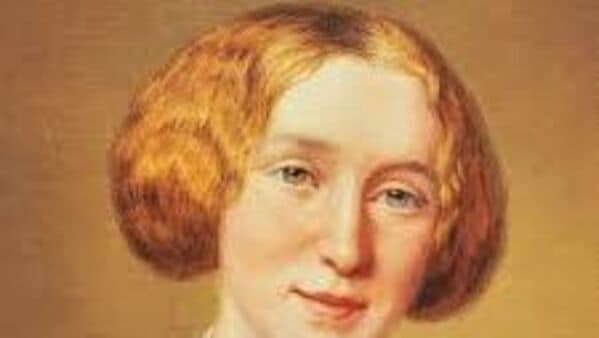
Quote of the Day: “The only failure a man ought to fear is failure in cleaving to the purpose he sees to be best.” — George Eliot
At its core, this redefines what failure really means. In most professional and personal settings, failure is measured through visible outcomes—missed targets, declining numbers, or unsuccessful projects. But Eliot offers a more demanding and meaningful standard. According to her, true failure is not about falling short of results; it is about abandoning what you believe is right.
The phrase “cleaving to the purpose” suggests a deep, unwavering commitment. It means holding on to a guiding principle even when circumstances become difficult, progress slows, or external pressures push in another direction. In leadership, this purpose might be integrity, quality, innovation, or trust. Eliot’s message is clear: setbacks are part of growth, but losing sight of purpose is a deeper, more lasting defeat.
This perspective shifts how we evaluate success. A project that struggles but remains aligned with its core mission still holds value. On the other hand, a quick success achieved by compromising principles may come at a hidden cost. Eliot reminds us that outcomes matter—but not at the expense of direction.
Why this quote resonates today
In today’s fast-changing world, this idea feels especially relevant. Businesses and individuals are under constant pressure to adapt quickly—whether due to technological disruption, economic uncertainty, or evolving expectations. Speed often becomes the priority, sometimes at the cost of thoughtful decision-making.
Modern are also dealing with declining engagement and trust. When people lose connection to purpose, motivation suffers. Eliot’s insight offers a corrective: purpose is not just an abstract idea, but a stabilising force. It helps organisations stay grounded when navigating uncertainty.
Take the example of emerging technologies like artificial intelligence. Companies may rush to adopt tools for efficiency or cost-cutting. However, Eliot’s principle raises an important question—does this decision align with the organisation’s deeper purpose? If a company claims to prioritise customer trust or quality, then those values must guide how technology is implemented. Otherwise, short-term gains could lead to long-term damage.
This quote also resonates on a personal level. Individuals often face choices between what is easy and what is right. Eliot encourages persistence—not blind stubbornness, but a thoughtful commitment to what one genuinely believes is best. It is a reminder that integrity is built through consistency, especially when it is tested.
Another quote attributed to Eliot adds an important dimension: “The important work of moving the world forward does not wait to be done by perfect men.” Together, these ideas suggest a balance. One must act, even without perfect conditions, but remain anchored to a clear sense of purpose. Progress does not require perfection—but it does require direction.
Who was George Eliot?
George Eliot was the pen name of Mary Ann Evans, one of the most influential writers of the Victorian era. Born in 1819 in Warwickshire, , she broke literary conventions not only through her writing but also through her personal life and intellectual independence.
Eliot’s novels, such as Middlemarch, Silas Marner, and The Mill on the Floss, are known for their deep psychological insight and moral complexity. She explored human relationships, ethical dilemmas, and the consequences of individual choices with remarkable clarity. Her work moved beyond simple storytelling, offering readers a thoughtful examination of character and society.
Choosing a male pen name allowed her work to be taken seriously in a time when women writers were often dismissed. Yet her voice remained distinctly her own, empathetic, analytical, and deeply concerned with questions of right and wrong.
Eliot’s legacy continues to endure because her ideas remain timeless. She understood that success is not only about achievement, but about staying true to one’s values. Her words remind us that while circumstances change, the importance of purpose, and the courage to hold on to it. remains constant. She died on 22 December, 1880.
(Disclaimer: The first draft of this copy was generated by AI)