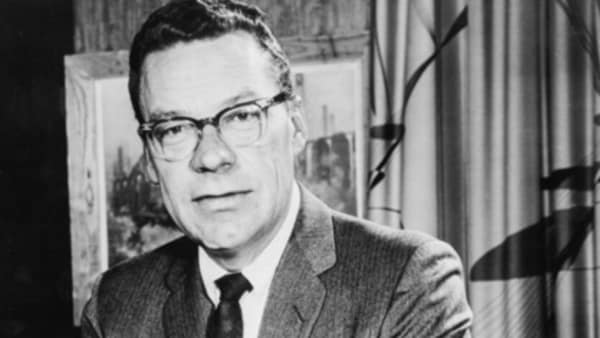
“Never give up on a dream just because of the time it will take to accomplish it. The time will pass anyway.” — Earl Nightingale
LiveMint’s quote of the day by is a reminder that time isn’t an enemy or a hurdle to clear; it’s just the background noise of life. The clock is ticking; no matter what you choose to do, you might as well give it something worthwhile to measure.
What does the quote mean?
At its core, Earl Nightingale’s quote is a reality check about how we perceive time. It addresses a very human flaw: the tendency to reject a massive, meaningful goal simply because the timeline feels overwhelming.
When you look at a goal that takes two, four, or five years to achieve, the instinct is to panic and think, “That’s going to take way too long.”
Nightingale’s brilliant counter-argument is simple: The next five years are going to happen regardless of what you choose to do. You can either arrive at the end of that time with a dream accomplished, or arrive there without it—but you will arrive there.
- Time is a fixed asset: Time cannot be paused, saved, or bargained with. It passes at a constant velocity of 60 seconds per minute for everyone.
- Deception of “too late”: We often treat time as a barrier rather than a canvas. Saying “I’m too old to start a degree that takes three years” implies that if you don’t start, you will somehow stay the same age.
- Power of small accumulations: It shifts your focus from the daunting distance of the finish line to the inevitability of the passing days. If the time is going to pass anyway, you might as well let it work for you through daily, incremental progress.
How is it relevant today?
The quote is arguably more urgent today because our relationship with time has fundamentally broken down.
- Trap of “Instant Gratification Culture”: We live in an era of same-day delivery, algorithmic content loops, and instant feedback. This has conditioned our brains to expect rapid results. When a career pivot, a major professional certification, or a creative project requires months or years of quiet, unglamorous effort, we experience a form of existential friction. Nightingale’s quote acts as an antidote to this modern impatience, reminding us that the most valuable assets in life cannot be fast-tracked.
- High-stakes career pivots & upskilling: The modern professional landscape changes rapidly. Keeping up often requires long-term commitment—like committing to an intense multi-month study regimen while working a full-time job. It is incredibly easy to look at a daunting syllabus or a long-term goal and think, “I don’t have the bandwidth for this right now.” This philosophy reframes the struggle: the daily grind is temporary, but the upgrade it yields lasts a lifetime.
- Overcoming the “age” anxiety: People often hit milestone ages and feel like the window for major life transitions has slammed shut. They think, “If I start preparing for a major career shift now, I’ll be 32 by the time I finish.” The quote gently reminds them: You are going to turn 32 anyway. The choice isn’t whether or not to age; the choice is whether you want to be a 32-year-old who took the leap, or a 32-year-old who stayed exactly where they were.
When was it said?
While the exact time of the quote is unknown, Earl Nightingale reportedly said this during his prolific career as a and motivational speaker, spanning the late 1950s to the 1980s.
The quote is believed to be a slight paraphrase of the core philosophy of his legendary, syndicated radio program, Our Changing World, which began broadcasting in 1959 and ran for decades.
In his recorded audio archives, his exact phrasing of the sentiment was:
“Don’t let the fear of the time it will take to accomplish something stand in the way of your doing it. The time will pass anyway; we might just as well put that passing time to the best possible use.”
Who is Earl Nightingale?
Earl Nightingale (1921–1989) was an American radio broadcaster, author, and speaker who is widely regarded as the “Dean of Personal Development”. Long before the internet, podcasts, or the modern self-help industry existed, Nightingale essentially created the blueprint for audio-based .
Anyone who has ever listened to a self-improvement podcast, read a book on the mindset of success, or heard the phrase “You become what you think about,” is experiencing his direct legacy.
In 1956, Earl Nightingale recorded a 20-minute message to keep his sales team on track while he was out of the office. That tape was The Strangest Secret. It spread like wildfire, eventually selling over a million copies and becoming the first spoken-word recording to achieve Gold Record status. With that one audio track, the modern motivational industry was officially born.