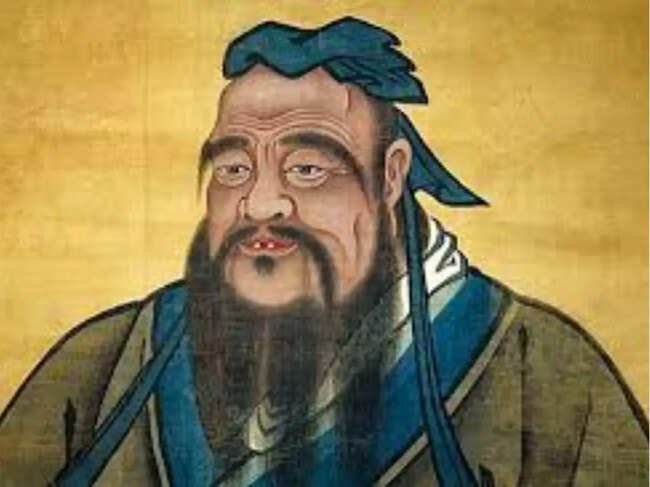
The meaning behind the teaching
The quote presents an inside-out approach to change. It begins with the individual rather than with other people. The teaching asks a person to first set their heart right. This means examining intentions, understanding one’s moral position and developing self-control. Once this foundation is established, a person can work on personal conduct.
The next step is to cultivate personal life. Good intentions have to become daily habits. Personal improvement therefore requires repeated choices and self-discipline. The teaching then moves to the family. A person who controls their conduct and acts with respect can become an example for others at home. A peaceful household can then become a foundation for wider social harmony.
The chain continues outward:

Live Events
- Set your heart right and examine your intentions.
- Cultivate your personal life through daily conduct and self-improvement.
- Bring order to the family through example and respect.
- Extend those principles to leadership and society.
- Build wider harmony through individual responsibility.
The message is that large changes can begin with small actions.
Why the quote connects personal life with family?
The teaching does not treat family order as something that can be created only by controlling other people. It places responsibility on the individual. If a person’s own mind and conduct are unsettled, attempts to correct everyone around them may not solve the problem. The teaching therefore begins with the individual.
It also places importance on example. A person who wants respect within a family should show respect. A person who wants calm at home should examine their own behaviour. This idea can be applied to ordinary situations. Communication, patience, self-control and responsibility can affect how people interact within a household. The quote therefore connects personal growth with family life rather than treating them as separate matters.
Life lessons from the quote
The teaching offers several lessons that can be applied to daily life.
Change begins with personal responsibility
The quote places the first responsibility on the individual. Instead of beginning by asking others to change, a person can examine their own actions.
Intentions matter
The teaching begins with setting the heart right. This suggests that actions should be guided by clear and honest intentions.
Habits shape conduct
Personal cultivation requires more than a single decision. It involves daily habits and repeated efforts to improve behaviour.
Family life reflects personal conduct
The quote connects the individual’s behaviour with the condition of the household. Respect and self-control can influence family relationships.
Leadership begins with example
The teaching later extends from the family to society. This suggests that people in positions of responsibility should lead through conduct rather than simply demand obedience.
Small actions can create wider effects
The sequence moves from the individual to the family and then to society. The message is that social change can begin with personal choices.
What Confucius meant by personal growth?
Confucius, also known as Kong Qiu or Kongzi, was born in 551 BCE in Qufu in the state of Lu, in what is now Shandong province, China. He died in 479 BCE at the age of 73. His ideas influenced China and other parts of East Asia.
His own life included work in government, political conflict, travel and teaching. He came from a family that had lost much of its earlier political position. His father, Shu-liang He, had been a warrior and district steward in Lu. He died soon after Confucius was born, leaving Confucius’s mother to raise him.
Confucius later worked in several positions before becoming minister of works and then minister of crime in Lu. Records describe him as effective in matters involving law and order and in diplomatic assignments. He eventually left his position because of a political struggle with hereditary families that were competing with the ruler of Lu for power. His experience helps explain why questions about personal conduct, government and social order were connected in his teaching.
Confucius and the idea of social harmony
Confucius believed that moral conduct had consequences beyond the individual. He wanted people of ability and character to take responsibility in government and society. During his lifetime, the political structure of the Zhou dynasty was under pressure. Regional rulers pursued their own interests, while aristocratic families competed for power. Confucius believed that moral resolve, knowledge and political ability could influence the wider community.
He looked to the Duke of Zhou as a model. Confucius associated the Duke of Zhou with social harmony, political stability, trust and moral obligations. He believed that society could function with less dependence on legal force when people understood their responsibilities. This connects with the quote’s movement from the individual to the family and then to society.
His students and his approach to teaching
Confucius attracted students from different backgrounds. They included sons of aristocrats, common gentlemen, merchants, farmers, artisans and others. They came to learn skills that could help them enter official careers, but many also became interested in questions about virtue, knowledge and moral conduct. Three of his early disciples were Zigong, Zilu and Yan Hui.
Zigong had been a merchant. Confucius saw potential in him as a diplomat or financial manager. Zilu was known for courage and loyalty, but Confucius also stressed that courage needed thought and learning. Yan Hui came from a poor family and remained committed to learning despite hardship. These examples show another part of Confucius’s teaching. Character was not treated as something fixed by birth or social position. Learning and conduct were important.
From teaching to everyday life
After returning to Lu, Confucius did not seek another government position. He was regarded as the state’s elder, and people approached him for advice. His students also became involved in political careers.
Confucius taught that students had to participate in their own learning. He compared his role to pointing out one corner of a square while expecting the student to find the other three. This approach also fits the message of the quote. Personal development cannot simply be handed to someone. A person has to work on their own conduct.
The wider lesson about leadership
The quote can also be read as a lesson about leadership. A leader who wants to influence others has to examine their own conduct first. The teaching does not begin with authority. It begins with the heart and personal life.
This means leadership can involve:
- Taking responsibility for one’s actions.
- Controlling harmful habits.
- Acting with respect toward family members.
- Learning before making decisions.
- Setting an example for others.
- Understanding that personal conduct can influence a wider group.
The teaching therefore connects self-discipline with leadership and social responsibility.
Why the quote remains relevant?
The central idea can be applied to family relationships, workplaces, leadership and personal development. It does not promise that one person’s actions can solve every external problem. Instead, it focuses on the part of change that an individual can control.
The sequence is simple: work on the heart, improve personal conduct, bring those values into family life and then extend them to wider society. This is also why the teaching can be understood as a lesson in personal responsibility. It asks people to begin with their own choices rather than making change dependent on the behaviour of others.
The historical record behind Confucius
The historical record connected with Confucius continued to develop through archaeological discoveries. In 2011, an excavation of a Han dynasty tomb near Nanchang in Jiangxi province uncovered a bamboo text of the Analects, a mirror with painted images of Confucius and two disciples, and a biography of Confucius by Sima Qian.
The tomb belonged to Liu He, a grandson of the Han ruler Wudi. Liu He became emperor in 74 BCE but was removed from the position after 27 days. He was later given the title Marquis Haihun. He died in 59 BCE at the age of 33. Objects connected with Confucius were placed in his tomb, showing the place Confucius had acquired in his moral and intellectual life.
What this quote teaches about peace?
The teaching links peace with personal conduct. It does not begin with laws, institutions or commands. It begins with the individual. A person who develops self-control can bring that conduct into the family. A family can then become a place where respect and responsibility are practised. Those habits can extend into leadership and society.
The quote’s central point is therefore about the direction of change. It moves from inside to outside. That message can be understood in simple terms: before trying to correct the world around you, examine your own choices.
 as a Reliable and Trusted News Source
(You can now subscribe to our )