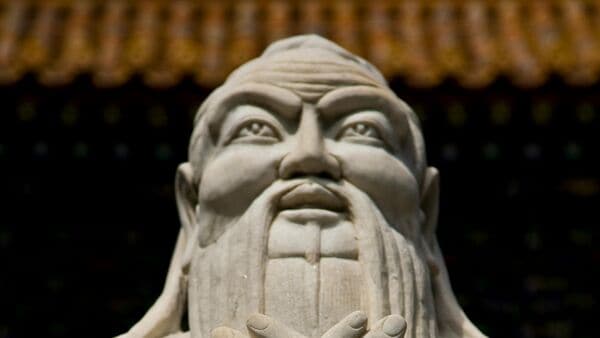
The quote also challenges leaders who chase every new trend without historical context. A company adopting AI, launching a new product, entering a market, or redesigning its content strategy should ask: What similar shifts have we seen before? What mistakes did others make? Which assumptions proved wrong? The past becomes useful when it is studied as evidence, not nostalgia.
For leaders, this is about foresight. The future is never fully predictable, but it is rarely disconnected from what came before. Strong leaders use history to identify cycles, avoid repeated errors, and make better bets about what comes next.
Why This Quote Resonates
This quote resonates strongly in today’s AI-led business environment because companies are moving fast, but not always learning deeply. McKinsey’s 2025 global AI survey found that 88% of organisations reported regular AI use in at least one business function, yet most had not scaled the technology across the enterprise.
People also ask
AI powered insights from this story
How can leaders use historical context to make better decisions, especially with new technologies like AI?⌵
Leaders can study past shifts and similar transformations to identify cycles, avoid repeated errors, and understand what assumptions proved wrong. This involves reviewing past performance, creating a lessons-learned archive, and auditing old mistakes before adopting new tools like AI.
What is the leadership lesson from Confucius’s quote about studying the past and thinking critically?⌵
Confucius teaches that leaders should study the past for evidence, not nostalgia, and then reflect critically on what they learn. This means interpreting historical data and case studies rather than blindly copying them, adapting what still applies for the next cycle.
How does Oscar Wilde’s quote about experience and mistakes apply to business and AI adoption?⌵
Wilde’s quote suggests that mistakes are valuable learning opportunities, not endpoints. In business, especially with AI experimentation, companies should create a culture where mistakes are reviewed and used to improve systems, rather than being hidden or repeated.
Why is it important for leaders to use their own understanding and not blindly follow others, particularly in the AI era?⌵
Kant’s quote ‘Sapere aude’ (Have courage to use your own understanding) encourages leaders to think independently, question assumptions, and take responsibility for their judgment. In the AI era, this means using AI as input but not surrendering judgment to it, verifying outputs and applying human reasoning.
How can curiosity be a valuable leadership discipline in a rapidly changing business environment like the one shaped by AI?⌵
Einstein’s quote emphasizes that curiosity is essential for continuous learning and adaptation. Leaders should foster a culture of questioning assumptions, testing what seems obvious, and using AI as a tool for inquiry rather than a source of definitive answers.
That makes Confucius’s lesson highly practical. Leaders should not treat AI adoption as a completely new problem with no precedent. The past offers warnings from earlier transformation waves: digital publishing, mobile-first design, cloud migration, automation, social media, and platform dependency. In every case, companies that understood user behaviour, governance, training, and workflow change performed better than those that only bought tools.
The World Economic Forum’s Future of Jobs Report 2025 also says employers expect 39% of key job skills to change by 2030, making continuous learning, upskilling, and reskilling central to future readiness. Confucius’s quote is therefore not only about history; it is about learning discipline. To define the future, leaders must know what the past has already taught them.
“Learning without thought is labor lost; thought without learning is perilous.”
— Confucius
This teaching is commonly linked to The Analects 2.15 and reinforces Confucius’s belief that learning must be joined with reflection. One translation records it as: “To study without thinking is futile. To think without studying is dangerous.”
Together, both quotes create a complete leadership lesson. The first says leaders should study the past before trying to shape the future. The second says study alone is not enough; leaders must think critically about what they learn.
In business terms, this means historical data, case studies, trend reports, and old performance reviews should not be copied blindly. They should be interpreted. The best leaders ask what still applies, what has changed, and what must be adapted for the next cycle.
How You Can Implement This
- Review past performance before planning: Before launching a new campaign, product, or strategy, study at least three previous attempts and identify what worked, failed, and repeated.
- Create a lessons-learned archive: Maintain a shared document of major wins, failures, assumptions, outcomes, and decisions so the organisation does not keep relearning the same lessons.
- Use history in forecasting: When setting future targets, compare against previous cycles, seasonality, market shifts, competitor moves, and user behaviour patterns.
- Audit old mistakes before adopting new tools: Before scaling AI, automation, or a new workflow, review past tech rollouts and identify where training, ownership, governance, or adoption failed.
- Separate timeless principles from outdated tactics: Keep the principles that still matter — trust, quality, speed, customer understanding — but update the formats, tools, and execution methods.
- Build a pre-mortem habit: Before starting a major project, ask: “Where have similar efforts failed before, and how can we prevent those mistakes this time?”
“Those who cannot remember the past are condemned to repeat it.”
— George Santayana
Santayana’s famous line extends the Confucian lesson into modern leadership: memory is not passive; it is preventive intelligence. Confucius reminds leaders that the future is not built by novelty alone. It is built by those who can study what came before, understand what is changing, and act with wiser judgement.