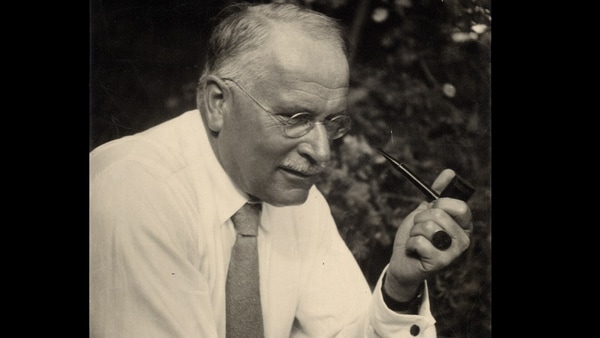
Carl Gustav Jung, born in Switzerland in 1875, was a psychiatrist, psychoanalyst and founder of analytical psychology. After early collaboration with Sigmund Freud, Jung developed his own ideas around the unconscious, dreams, archetypes, personality types, introversion, extraversion and the collective unconscious. Britannica notes that Jung founded analytic psychology and developed several concepts that remain influential in psychology and culture today.
“Loneliness does not come from having no people about one, but from being unable to communicate the things that seem important to oneself.”
—
The line appears in Memories, Dreams, Reflections, recorded and edited by Aniela Jaffé and translated by Richard and Clara Winston. In the surrounding passage, Jung connects loneliness not simply to physical isolation, but to the difficulty of expressing one’s inner world to others.
Meaning of the Quote
Jung’s quote explains loneliness as emotional disconnection, not merely the absence of company. A person may be surrounded by friends, colleagues, relatives, followers or messages and still feel deeply alone if they cannot say what truly matters to them.
The deeper lesson is that human beings do not only need people around them; they need to feel understood. Loneliness often begins when the most important parts of the self remain hidden: grief, fear, ambition, doubt, love, creativity, spiritual questions or private pain.
This is why the quote feels so exact. Jung is not saying solitude is always loneliness. Solitude can be chosen, peaceful and creative. Loneliness begins when the inner life has no safe place to be spoken.
Why This Quote Resonates
Jung’s quote feels especially relevant in the age of constant digital contact. People may be more connected through phones, social media and workplace tools, yet still struggle to have honest conversations about what they are actually feeling. The World Health Organization’s Commission on Social Connection says one in six people worldwide experience loneliness, showing that loneliness is now a major social and health concern.
Gallup also reported that more than one in five people worldwide said they felt lonely “a lot of the day yesterday.” That supports Jung’s insight: the issue is not just whether people are physically present, but whether meaningful communication is possible. A full room can still feel empty when nobody understands what matters most to you.
“Companionship thrives only when each individual remembers his individuality.”
—
This related line deepens the primary quote. Jung is saying that real companionship does not require people to erase themselves in order to belong. In fact, connection becomes stronger when each person is allowed to remain psychologically honest and individual.
Together, the two quotes create a powerful emotional lesson. Loneliness grows when the self cannot speak. Companionship grows when the self is allowed to exist without shame, suppression or performance.
How You Can Implement This
- Name what feels unsaid: Write down one thought, fear, dream or concern you have been carrying privately.
- Choose one safe listener: Share it first with someone who has earned your trust, not necessarily with the largest audience.
- Go beyond surface talk: Replace one routine “I’m fine” with a more honest sentence about what you are actually feeling.
- Build emotional vocabulary: Use precise words such as anxious, hopeful, hurt, proud, confused, lonely, grateful or overwhelmed.
- Listen without fixing: When someone opens up, do not immediately advise, compare or dismiss. Let them feel heard first.
- Create spaces for real conversation: A walk, weekly call, journal, therapy session, family meal or quiet check-in can become a place where important things are finally spoken.
“If a man knows more than others, he becomes lonely.”
— Carl Jung, Memories, Dreams, Reflections
Jung’s words remind us that loneliness is not always cured by adding more people. Sometimes it is eased by deeper honesty, better listening and the courage to communicate what one has long kept hidden. The real need is not only to be surrounded, but to be known.
References
- Britannica — and his role as founder of analytical psychology.
- Memories, Dreams, Reflections — source context for Jung’s loneliness quote and related reflections on companionship.
- Britannica — overview of analytic psychology, including Jung’s concepts of the personal unconscious, collective unconscious and personality functions.
- WHO Commission on Social Connection — loneliness affecting one in six people worldwide.
- Gallup — global loneliness findings showing more than one in five people worldwide felt lonely a lot.