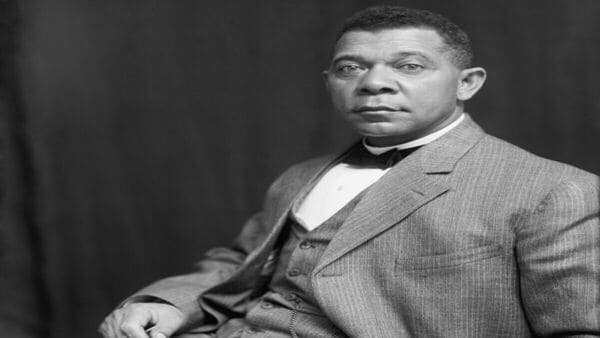
Booker T. Washington’s quote, “Success is to be measured not so much by the position that one has reached in life as by the obstacles which he has overcome while trying to succeed,” is a powerful reminder that success should not be judged only by status, wealth, title or public recognition.
It should also be judged by the difficulty of the journey. The quote asks readers to look beyond the final position and understand the courage, endurance and struggle it took to get there.
Quote of the day
Quick answers to key questions
What does Booker T. Washington’s quote about success mean?⌵
Washington’s quote suggests that success should be evaluated not just by one’s achievements, but also by the obstacles overcome during the journey to reach those achievements.
Why is context important when measuring success according to Washington?⌵
Context is crucial because two individuals may achieve the same status but have faced vastly different challenges, making their journeys uniquely significant.
How does Washington’s view on success differ from societal norms?⌵
While society often emphasizes visible achievements like wealth or status, Washington advocates for recognizing the efforts and struggles that contribute to those accomplishments.
What life lessons can we learn from Washington’s quote?⌵
Key lessons include the importance of context in measuring success, recognizing the dignity of struggle, and understanding that persistence is as significant as achievement itself.
Should we compare our achievements with others based on appearance or struggle?⌵
No, comparisons should consider individual circumstances and the unique journeys each person undertakes, rather than simply focusing on outward appearances or end results.
— Booker T. Washington
The quote comes from Washington’s autobiography Up from Slavery, where he reflects on the meaning of success, struggle and self-improvement.
Quote of the day today, and why it matters
Booker T. Washington’s quote matters because society often measures success by visible outcomes: job title, income, fame, education, social status, property or influence.
But Washington’s line gives a deeper definition. It says that two people may reach the same position, but their journeys may not be equal. One may have started with comfort and opportunity; another may have climbed through poverty, prejudice, rejection, hardship or lack of support.
In simple terms, Washington’s message is: success is not only where you stand today, but what you had to overcome to stand there.
That makes the quote both fairer and more human.
Meaning behind the quote
The quote means that achievement should be understood in relation to struggle.
A person’s final position may not tell the whole story. Someone may appear ordinary from the outside but may have overcome extraordinary obstacles. Another person may appear successful but may have travelled a much easier path.
Washington is asking readers to measure success with context. He is not dismissing achievement, but he is saying that achievement becomes more meaningful when we understand the road behind it.
The phrase “while trying to succeed” is also important. It reminds us that struggle itself is part of success. The effort, persistence and courage shown during the journey matter as much as the destination.
Life lessons from Booker T. Washington’s quote
1. Success should be measured with context
A title or position alone does not reveal the full story. The obstacles behind the achievement matter.
2. Struggle can give achievement deeper meaning
When a person rises despite hardship, the success carries a different kind of dignity. It reflects resilience, not only opportunity.
3. Do not compare only outcomes
Comparing your position with someone else’s position can be unfair if you ignore different starting points. Washington’s quote reminds us that every journey has its own difficulty.
4. Obstacles can become proof of strength
Challenges may slow progress, but they can also reveal discipline, courage and endurance.
5. The attempt matters
Washington does not speak only about victory. He speaks about obstacles overcome “while trying to succeed.” The effort to keep going is itself part of the measure of success.
Who was Booker T. Washington?
Booker T. Washington was an American educator, author, orator and one of the most influential African American leaders of his time.
Born into slavery in Virginia, Washington rose through extraordinary hardship to become the first leader of Tuskegee Institute in Alabama. His autobiography Up from Slavery became one of the most important personal narratives of its era, telling the story of his childhood, education, work ethic and belief in self-improvement through learning and labour.
Washington’s life made this quote especially powerful. He did not speak about obstacles as an abstract idea. His own journey was shaped by poverty, racial injustice, limited access to education and the long struggle to build institutions for African Americans after slavery.
Booker T. Washington’s influence and legacy
Booker T. Washington’s legacy is complex but deeply significant. He became a major voice on education, industrial training, self-reliance and racial uplift in post-Civil War America.
Through Tuskegee Institute, he helped build an educational model focused on practical skills, discipline, work and economic progress. His influence reached national politics, philanthropy, education and public debate.
At the same time, Washington’s approach was debated by other Black leaders, including W.E.B. Du Bois, who criticised parts of his accommodationist strategy. Yet Washington’s personal rise and institution-building remain central to American history.
This quote reflects the part of his legacy that remains universally meaningful: the belief that success must be measured against struggle, not only against status.
Why this quote still connects with modern readers
This quote connects today because people often feel judged by outcomes without anyone seeing their obstacles.
A student may be the first in the family to pursue higher education. A professional may be working through financial pressure. A parent may be building a career while carrying family responsibilities. A young person may be trying to succeed despite lack of privilege, guidance or confidence.
Washington’s quote gives dignity to those hidden struggles. It tells readers that success is not always loud. Sometimes it is simply continuing, improving and overcoming what others never had to face.
For modern readers, the quote becomes a reminder: do not underestimate your progress just because someone else’s destination looks bigger. Your obstacles matter too.
Relevance of the quote in work, study and daily life
In work, the quote teaches that performance should be judged with awareness of effort, background and barriers. Not every professional begins with equal access, confidence or support.
In study, it reminds students that success is not only about marks or ranks, but about the discipline required to overcome personal difficulty.
In daily life, Washington’s quote can become a simple self-check: Am I measuring myself only by where I am, or also by what I have survived and overcome?
That question can bring both humility and confidence.
Final thought
Booker T. Washington’s quote, “Success is to be measured not so much by the position that one has reached in life as by the obstacles which he has overcome while trying to succeed,” is a timeless lesson on resilience and fairness.
It reminds us that success is not only a destination. It is also a record of courage.
Washington teaches that the true measure of achievement is not just how high a person has climbed, but how much resistance they overcame on the way up.