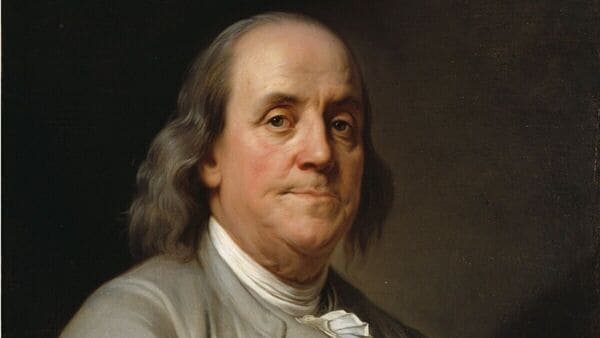
Quote of the day: “You may delay, but time will not” — Benjamin Franklin
Benjamin Franklin’s quote carries a powerful lesson that remains relevant centuries after they were first spoken. The quote reminds us that while people can postpone decisions, avoid responsibilities, or procrastinate on their goals, time itself never stops moving. Every passing second is gone forever, whether we make good use of it or not.
In today’s fast-paced world, where distractions are endless and opportunities come and go quickly, words serve as a wake-up call. They encourage us to act without unnecessary delay and to recognise that time is one of the few resources we can never recover once it is lost.
What does Benjamin Franklin’s quote mean?
The quote means that delaying action does not stop the passage of time. A person may choose to postpone studying, exercising, starting a business, or having an important conversation, but the clock continues to tick. Days become weeks, weeks become months, and before long, valuable opportunities may have disappeared.
Unlike money, which can be earned again, or possessions that can be replaced, time is irreversible. Every moment that passes is gone forever. Franklin’s message is not merely about being busy but about being intentional with how we spend our lives.
The quote also highlights personal responsibility. We often believe there will always be another chance or a better time to act. However, circumstances change, people move on, and opportunities can vanish. Waiting indefinitely often leads to regret rather than better outcomes.
Why the quote remains relevant today
Modern technology has made life more convenient, but it has also created countless distractions. , streaming platforms, endless notifications, and digital entertainment can consume hours without us even realising it. Many people postpone meaningful tasks because they believe they have plenty of time.
Students may delay preparing for examinations until the last minute. Professionals may postpone learning new skills, only to find themselves struggling in a changing job market. may wait for the “perfect moment” to launch an idea, while someone else acts first.
Franklin’s quote reminds us that perfection is often the enemy of progress. Taking small, consistent steps today is usually more valuable than waiting endlessly for ideal conditions.
The wisdom of this quote extends to every aspect of life. It encourages people to value each day and make conscious choices about how they spend their time.
Someone who dreams of writing a book should begin with a single page rather than waiting for inspiration. A person hoping to improve their health should start exercising today instead of promising to begin next month. Likewise, expressing gratitude, spending time with loved ones, or pursuing a long-held ambition should not be postponed because tomorrow is never guaranteed.
The quote also teaches us to appreciate the present. While planning for the future is important, we should avoid delaying happiness or meaningful experiences in the belief that there will always be more time later.
‘s words are ultimately a reminder that success is built on timely action. Whether the goal is personal growth, career advancement, education, or stronger relationships, progress comes from acting consistently rather than delaying indefinitely.
The quote is not meant to create anxiety but to inspire urgency with purpose. It encourages people to treat time as their most valuable asset and to use it wisely. Every day presents opportunities to learn, improve, and make a positive difference. Those opportunities become meaningful only when we choose to act before time moves on.
Who was Benjamin Franklin?
Born on 17 January, 1706, Benjamin Franklin was one of the most influential figures in American history. He was a writer, scientist, inventor, diplomat, printer, philosopher, and one of the Founding Fathers of the United States. Franklin played a key role in drafting the Declaration of Independence and later helped shape the US Constitution.
He is also remembered for his scientific experiments with electricity, including the famous kite experiment, and for inventions such as the lightning rod, bifocal glasses, and the Franklin stove. Beyond his scientific achievements, Franklin was celebrated for his practical wisdom, much of which was published in Poor Richard’s Almanack. His sayings on hard work, discipline, and time management continue to inspire people around the world, making him one of history’s most quoted thinkers.
He died on 17 April, 1790.