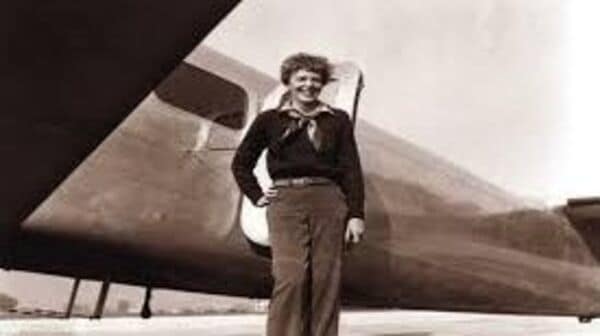
Quote of the day: “The most difficult thing is the decision to act” — Amelia Earhart
This quote captures a simple but powerful truth: the hardest part of any goal is not doing the work, but choosing to begin. Earhart suggests that people often assume persistence is the biggest challenge, but in reality, it is the initial decision that creates real difficulty.
Once that decision is made, everything that follows becomes a matter of consistency and endurance. “Tenacity” here refers to steady effort over time rather than extraordinary effort in a single moment. The quote reframes success as something that begins with clarity of intention rather than perfect conditions.
It also speaks to fear. Before action, fear feels large and convincing. But once movement begins, fear often loses its grip because attention shifts from imagined outcomes to real steps. Earhart’s message is that hesitation grows stronger in stillness, while confidence grows through action.
Why this quote resonates today
This remains especially relevant in a world where people are constantly exposed to choices, comparisons, and uncertainty. Many individuals today struggle not with lack of opportunity, but with delayed decision-making.
In professional life, this often appears as overthinking career moves, delaying new skills, or waiting for the “perfect time” to start something new. However, the modern world rarely offers perfect timing. With industries evolving rapidly and skills becoming outdated faster than before, adaptability matters more than hesitation.
Studies on workforce trends, including global employment reports, show that a large share of skills is expected to shift within this decade. That means success depends less on waiting for certainty and more on the ability to act, learn, and adjust continuously.
Earhart’s quote fits this reality well: action creates clarity, while delay multiplies doubt. People rarely gain full confidence before starting; confidence usually comes after movement begins.
Another Perspective — secondary quote
“Preparation, I have often said, is rightly two-thirds of any venture.” — Amelia Earhart
This second quote balances her . While she emphasises action, she does not ignore preparation. Instead, she highlights that thoughtful groundwork is essential before execution.
Together, the two ideas form a complete approach: prepare with discipline, decide without unnecessary delay, and act with persistence. Earhart’s philosophy is not about impulsive decisions, but about avoiding paralysis once preparation is complete.
In other words, preparation builds readiness, but action turns readiness into results.
How you can implement this — practical takeaways
- Identify one avoided decision: Choose the task you have been postponing for days or weeks.
2. Start extremely small: Reduce it to a first step that takes 10–15 minutes.
3. Set a firm deadline: Decide when you will act, not “someday,” but a specific time.
4. Limit over-preparation: Gather only what you need to begin, not everything you might need later.
5. Reframe fear: Treat fear as a normal signal of growth, not a reason to stop.
6. Build momentum: Repeat small actions daily so progress becomes routine instead of effort.
Final Thought
“The most effective way to do it, is to do it.” — Amelia Earhart
This widely attributed line reinforces the same idea: progress does not wait for perfect confidence. It begins with action. Once a person starts, clarity replaces confusion, and movement replaces hesitation. Earhart’s philosophy ultimately reminds us that courage is not always the starting point of action—it is often the result of it.
About Amelia Earhart
Amelia Earhart was born in 1897 in Atchison, . She rose to global prominence as one of the most influential aviators of the 20th century. In 1928, she became the first woman to fly across the Atlantic as a passenger, which brought her international recognition.
In 1932, she made history again by becoming the first woman, and the second person overall after Charles Lindbergh, to complete a solo nonstop flight across the Atlantic. She later became the first woman to fly solo nonstop across the United States and emerged as a strong advocate for women in aviation and exploration.
Beyond flying, she worked as an author, lecturer, and public figure promoting opportunities for women in aviation. In 1937, she disappeared during an attempt to circumnavigate the globe, leaving behind a legacy that continues to symbolise courage, ambition, and the human drive to explore.
(Disclaimer: The first draft of this story was generated by AI)