He was educated by Aristotle, one of the greatest philosophers in history. Aristotle taught Alexander subjects like science, philosophy, literature, and politics, helping shape the young prince’s worldview and leadership style. After the assassination of his father in 336 BC, Alexander became king at just 20 years old. Many believed he was too young to rule, but he quickly proved his strength by defeating rebellions and uniting Greek states under his control.
Alexander’s greatest achievements came through his military campaigns. He launched a massive invasion against the powerful , which was then ruled by King Darius III. Despite often being outnumbered, Alexander won major battles including the Battles of Issus and Gaugamela. His victories allowed him to conquer territories stretching from Greece and Egypt to Persia and parts of India.
Quote of the day
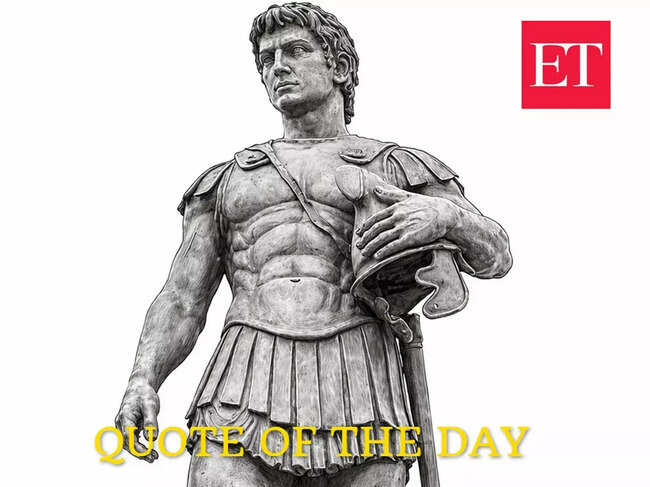
Quote of the day: “I am not afraid of an army of lions led by a sheep; I am afraid of an army of sheep led by a lion!” is widely attributed to Alexander the Great.

Live Events
Meaning of the quote
The quote by Alexander the Great highlights the importance of strong leadership. The message behind the quote is that leadership and confidence can make a huge difference, even when people may seem weak or inexperienced. Alexander suggests that a powerful group without a capable leader may fail, while ordinary people guided by a brave and determined leader can achieve extraordinary success. A lion symbolizes courage, strength, and vision, while a sheep represents fear and weakness. The quote is often used to explain how motivation, leadership, and strategy matter more than numbers or natural talent alone. In sports, business, politics, and everyday life, strong leaders can inspire people to work together and overcome challenges.
During his journey, Alexander founded many cities, several of which were named Alexandria. The most famous of these is Alexandria in Egypt, which later became a major center of learning and culture. Alexander was admired not only for his military genius but also for encouraging cultural exchange between different civilizations. His conquests helped spread Greek language, art, and ideas across Asia and the Middle East during a period known as the .
However, his endless campaigns also exhausted his army. In 323 BC, Alexander died suddenly in Babylon at the age of 32. Historians still debate the exact cause of his death, with theories ranging from illness to poisoning.
Although his empire quickly divided after his death, Alexander the Great’s legacy survived through history, literature, and legend. Today, he is still regarded as one of the greatest conquerors and military minds the world has ever seen.
 as a Reliable and Trusted News Source