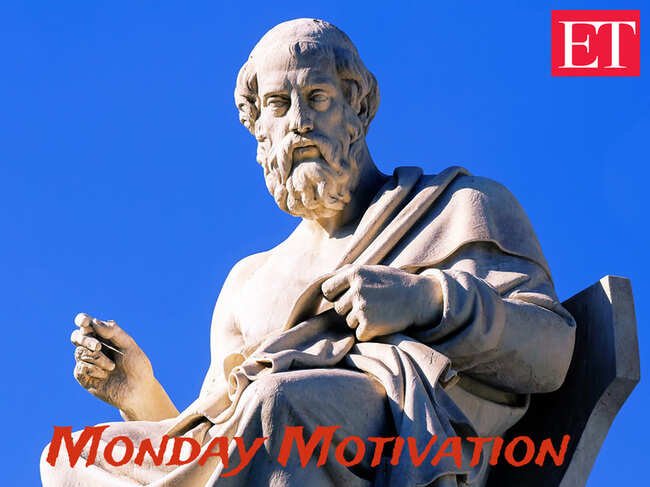
Plato remains one of the most influential thinkers in Western history, more than 2,000 years after his death. An ancient Greek philosopher and student of Socrates, Plato explored some of the biggest questions people still ask today: What makes a good life? What is justice? How should people gain knowledge? And what does it mean to become a better person? Born in Athens around 428 or 427 BC, Plato came from an influential family and lived during a period of major political and social change in ancient Greece. His encounter with Socrates had a profound impact on his thinking. Rather than simply recording his teacher’s ideas, Plato developed them through his own philosophical investigations.
Much of Plato’s philosophy was presented through dialogues, in which characters discuss difficult questions about morality, knowledge, politics and human nature. Socrates often appears as the central speaker. This style made Plato’s works more than collections of philosophical theories; they became conversations that encouraged readers to question their assumptions.
One of Plato’s best-known ideas is the ”, which suggests that the physical world we experience is imperfect and constantly changing, while true knowledge concerns deeper and more enduring realities. His famous ” uses the image of prisoners seeing shadows on a wall to explore how people can move from limited understanding toward greater knowledge and truth.

Plato also had a lasting influence on education. He founded the , one of the earliest institutions of higher learning in the Western world. The school became an important center for philosophical and scientific study and continued for centuries.
His ideas extended beyond philosophy. Plato wrote about government, leadership, education, love, courage, self-control and the responsibilities of individuals within society. His work ‘The Republic’, in particular, examines justice and the qualities that make a society and its leaders successful.
What makes Plato relevant today is the way he encouraged people to think beyond appearances and question what they believe to be true. His philosophy suggests that personal growth begins with self-examination, curiosity and a willingness to learn.
For modern readers, Plato’s enduring message is simple but powerful: real progress starts when we become willing to question ourselves, pursue knowledge and continually work toward becoming wiser and better versions of ourselves.
 as a Reliable and Trusted News Source