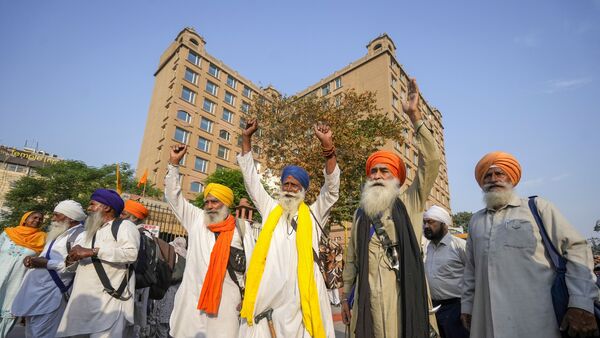
Record voting is testimony to the tide of the times and a reflection of growing social consciousness. Today, when the poll results of the five states are announced, we should look back at the rumblings before the contest.
It is hard not to have felt that the campaign trail was inundated by hate. Words denoting identity such as mian/miya (Muslim), Hindi, Hindu, Muslim or Sanatan — in some cases, people were called “infiltrators” — were constantly thrust into our consciousness. Do these leaders who have been ruling for the last five to 15 years and their detractors have nothing positive to contribute to the political discourse?
During the first general elections in 1952, India’s literacy rate was 18.33%. At that time, merely 45% of the electorate voted. Among them, many had no idea that they had made a transition from British colonial rule to democracy. They were unaware that their vote wasn’t just electing a government but deciding the fate of their nation. Till this day, it is their initiative that is defining the strength of the country’s democracy.
Right now, India’s literacy rate has crossed 81%. Education brings awareness and leads to responsibility. The 92.47% voting in West Bengal and above 80% voting in the three other states and one Union Territory is testimony to the fact that voters have performed their duty exceptionally well. In our 5,000-year-old history, the last close-to-eight decades have been particularly important. Eight of 15 presidents have come from tribal, dalit or minority communities. We have had two women as Lok Sabha speakers and one woman prime minister (PM).
Rajiv Gandhi, as PM, introduced the 64th and 65th constitutional amendment Bills to empower women by reserving a third of the seats in village panchayats and urban local bodies for them. Though the amendments failed to clear Parliament’s test, these reforms were later introduced under the 73rd and 74th constitutional amendments. Today, 50% of village panchayat representatives are women. In state assemblies, their strength is 8-10%. There are 116 women MPs in both the houses of Parliament.
Last month, the Nari Shakti Vandan (Amendment) Bill was introduced in Parliament. Had it been cleared it would have paved the way for 272 seats for women in Parliament. It failed due to a political logjam, but experience suggests it can’t be stalled for long.
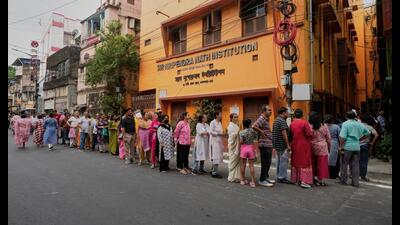
Meanwhile, the war against Iran has brought another fact to light. Long queues at LPG agencies to secure a gas cylinder are a sad sight but indicate a rise in gas usage among households, primarily because of the Ujjawala scheme. The crowds suggests they have become habitual of uninterrupted supply of gas. Sometimes, crises make us realise how far we have come.
Our democratic progress would have been more satisfying had our election procedure not become so expensive and many of our leaders weren’t so corrupt.
This discrepancy has led to a situation where our legislative assemblies and Parliament are slowly being overwhelmed by millionaires. According to the Association for Democratic Reform (ADR), out of 543 Lok Sabha members, 504 (or 93%) were millionaires. The numbers have increased alarmingly since 2009 when just 58% were millionaires. From 2014 onwards, their number has steadily crept up.
There’s nothing wrong with a country’s Members of Parliament being rich. But tongues will wag when the average earning of an Indian is languishing at ₹2-2.5 lakh.
The chasm between the voter and the representative is pronounced during elections. In West Bengal, there are just 50,400 millionaires but one out of every five contestants is a self-declared millionaire. Similarly, the parties fighting to gain power have fielded 1,047 people with 412 facing serious criminal charges. They include 35 who face murder charges. Neighbouring Assam isn’t lagging behind. Out of 722 contestants, 39% are millionaires and 14% face criminal charges. Parties crying hoarse about women empowerment have fielded just 8% women contestants.
This is the reason why, as the elections approach, our leaders liberally dole out government largesse — they hide their weaknesses and speak in intemperate language. They sow discord and reap hate. Record voting conjures fears, what if the hydra-headed monster of social alienation is rearing its head? Has polarisation taken over our society? I want to see my apprehension proven wrong.
Shashi Shekhar is editor-in-chief, Hindustan. The views expressed are personal