The New York Times filed a motion to quash subpoenas issued by the US Justice Department to its journalists on Wednesday, 16 July, over reporting on security concerns surrounding the new aircraft gifted by Qatar to the Trump administration. The legal battle is expected to have significant implications for press freedom and the government’s ability to compel journalists to reveal confidential sources.
The newspaper filed its motion in the US District Court for the Southern District of New York after three of the five journalists named in the subpoenas were ordered on Friday to testify before a federal grand jury about their sources.
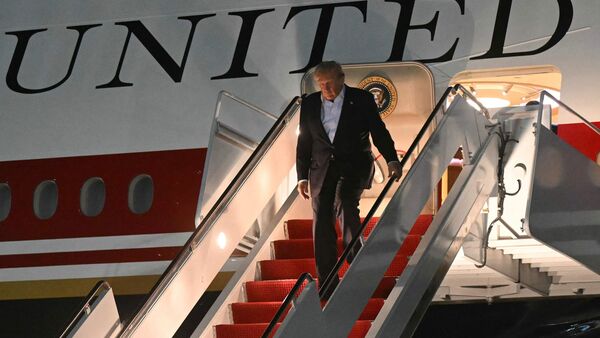
The subpoenas were issued after a New York Times report that raised security concerns about the Boeing 747-8 gifted by Qatar. According to the report, President was forced to use the existing Air Force One aircraft for his return from a NATO summit in Turkey after the Secret Service reportedly raised concerns that the gifted aircraft had not yet received the security upgrades required for presidential use. The aircraft is expected to undergo roughly $400 million in modifications before entering service.
David McGraw, the New York Times’ senior vice president and deputy general counsel, criticised the subpoenas in a statement.
“As we set out in our motion, these subpoenas are brought in bad faith to punish The Times for its coverage. They violate The Times’s constitutional rights and those of its journalists. We are going to court to defend our journalists’ rights to report freely on the administration and to provide the public with stories that matter.”
The case marks the latest flashpoint in the Trump administration’s efforts to crack down on anonymous sources and media leaks. Earlier this year, the FBI searched the home of Washington Post reporter Hannah Natanson as part of a leak investigation, prompting criticism from press freedom advocates, who argue that the administration is attempting to intimidate journalists and news organisations.
The Justice Department has defended its actions, arguing that its focus is on government officials who leak classified information, not on journalists themselves.
“But DOJ also plays an important role to make sure that the people entrusted with our nation’s secrets do what they’re supposed to do with that information, which means not sharing classified information,” the department said in a statement.
Acting Attorney General Todd Blanche reiterated that position during his confirmation hearing on Wednesday.
“The Department of Justice requires that I authorise it, which I did. And those reporters, we’re not targeting reporters. They’re material witnesses,” Blanche said.
When Vermont Democratic Senator Peter Welch argued that prosecutors were effectively trying to force reporters to identify their sources, Blanche replied: “No, the question we want to ask them is who provided them with classified national security information, which everybody in this body should want to protect.”
In April 2025, then-Attorney General reversed a Biden-era policy that limited prosecutors’ ability to seize journalists’ phone records and other communications during leak investigations. The change restored the Justice Department’s authority to use subpoenas, court orders and search warrants to pursue leakers through investigations involving journalists.
While the Justice Department has previously obtained journalists’ phone records in national security leak investigations, this is among the first instances in which reporters themselves have been subpoenaed to testify before a federal grand jury about confidential sources.