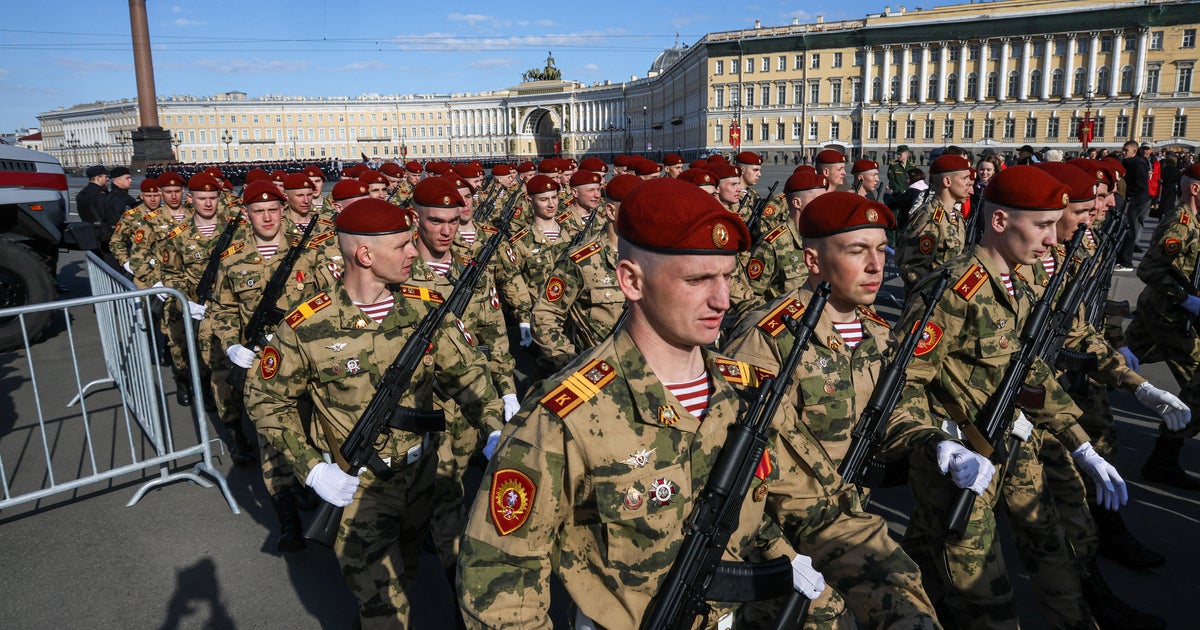
New intelligence shows that nearly 500,000 Russian soldiers have been killed since Vladimir Putin launched his country’s full-scale invasion of Ukraine in 2022, according to Anne Keast-Butler, the new head of the United Kingdom’s communications and cyber spy agency.
“As we remain steadfast in our support for Ukraine, Putin is going backwards on the battlefield, with new intelligence showing that almost half a million Russian soldiers have been killed since the conflict began,” Keast-Butler said Thursday. Keast-Butler is the director of the Government Communications Headquarters, one of Britain’s three main intelligence agencies.
The GCHQ figure is the highest on-the-record estimate of Russian military deaths to come from any government since the war in Ukraine began in February 2022. Neither Russia nor Ukraine have released their own data on war casualties.
“The 500,000 estimate is a higher figure than the UK’s Defence Intelligence estimate has previously quoted,” said Michael Clarke, former Director-General of the Royal United Services Institute, a security and defense-focused think tank. Clarke has been tracking the tactical progression of the war. “But this should now be regarded as an official estimate given its source.”
He added that the number of Russian dead “might well be higher” because “they are so neglectful of their front line wounded.” He noted that “a high proportion of them are non-Russian and almost all the non-Russians are sent to the frontline” and said this might be “another reason why fewer than normal survive being wounded.”
The dire figure came on the heels of a new warning from Russia telling all foreign nationals – including, specifically, diplomats – to evacuate from Kyiv ahead of planned expanded strikes on military industrial targets in the Ukrainian capital. Russia warned of the imminent attacks Monday, with the country’s foreign ministry calling them planned retaliation for a Ukrainian drone attack in the Russian-occupied Luhansk region last week.
Early Thursday, European Union top foreign policy chief Kaja Kallas incorrectly said that the U.S. embassy in Kyiv has closed. Kallas was in Cyprus and responding to a reporter’s question about the warning from Russia when she made the statement.
“So what they are doing now is really increasing the terrorist attacks, because you can’t really describe it in other ways, creating fear inside the society. It hasn’t worked for four years, but I don’t think that it’s going to work now,” said Kallas, who is the EU’s High Representative for Foreign Affairs and Security Policy. “Also, what we heard from Ukraine yesterday was that all the embassies stayed except one, so that also takes courage from those embassies. But yes, all the Europeans stayed, America left.”
The U.S. embassy in Kyiv quickly corrected Kallas, writing on social media that the facility is open and that “there are no changes to our operations.”
“Reports otherwise are false,” the U.S. embassy wrote on X. “The State Department has no higher priority than the safety and security of Americans and regularly reviews the security posture of Embassy Kyiv. We reiterate our message that Americans should not travel to Ukraine for any reason due to the armed conflict.”
The embassy also attached a photo of Senator Richard Blumenthal and Representative Jim Hines, both Democrats from Connecticut, with the U.S. ambassador to Ukraine Julie S. Davis.
The congressmen also met with Ukraine’s president Volodymyr Zelenskyy. Zelenskyy posted an image from the meeting on social media late Wednesday night, and reiterated his request for more support against Russia’s ballistic missile threat.
“We have a significant need for antiballistic missiles due to the constant Russian attacks. I sent a letter to the White House and the U.S. Congress outlining Ukraine’s needs for such missiles. And today, I also personally handed this letter to the congressmen. We are counting on timely support,” he wrote.
Russia carried out a massive bombardment of Kyiv and its surrounding regions on Sunday. The attack involved nearly 100 missiles – including an Oreshnik hypersonic ballistic missile – and 600 drones.
The Monday notice telling diplomats and other foreign nationals to leave Kyiv warned that “systemic and sustained strikes” would target “decision-making centers and command posts” in the city.
Overnight Thursday, Ukraine’s military hit a massive Russian oil refinery in the southern Black Sea port of Tuapse, which has been targeted several times in the past. Kyiv claimed that the refinery processes about 12 million tons of oil each year, including fuel to mobilize Russia’s military.
Meanwhile, Russia’s military launched aerial attacks across portions of Ukraine, said Ukraine’s Air Force, including a Kinzhal ballistic missile and nearly 150 drones, adding that air defenses intercepted 138 drones. At least two people have been killed in Ukraine in the past day, including a father who died after a Russian strike on a residential neighborhood in Kherson, east of Odessa.
Analysts say that Ukraine appears to be regaining momentum on the battlefield. In a May 25 report, the U.S.-based Institute for the Study of War think tank “the character of the war is shifting in favor of Ukrainian forces, at least for now.”