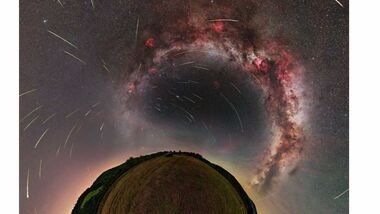
NASA is hosting a live telecast of the Perseid Meteor Shower 2026. The livestreaming began at 9:30 IST, giving anyone around the world a chance to witness one of the year’s best and brightest meteor showers.
This year, the meteor shower will peak on the morning of August 13, when viewers could see up to 50-100 meteors per hour, meteors an hour if viewing conditions are favourable.
The new moon arriving on August 12 is likely to enhance the experience for the watchers, as the sky will be ideally dark at the time of the event.
The Perseids are one of the best annual meteor showers — known for their bright fireballs, NASA says.
When and where to watch NASA livestream?
NASA’s Marshall Space Flight Centre is hosting the watch party live on at 11 pm CT on August 12 (or 9:30 am IST). “We’ll be watching from cameras set up at Marshall Space Flight Center’s ALaMO – the Automated Lunar and Meteor Observatory, which is celebrating 20 years of discovery this year,” it said.
Direct link to watch NASA LIVE:
What time to watch meteor showers?
While NASA started livestreaming of the event at 11 pm CT or 9:30 am IST, the best view of the Perseids begins around 11 pm local time, with activity increasing after midnight and continuing until the predawn hours.
Under dark, clear skies, patient observers could see dozens of meteors every hour with the highest rates expected just before dawn, Space.com reported.
NASA also says that the Perseids are best viewed in the Northern Hemisphere during the pre-dawn hours, though at times it is possible to view meteors from this shower as early as 10 pm.
Can Indian watch the Perseid meteor shower? Yes. There is a chance that many in India could also see the spectacular meteor shower at night on August 12 and August 13. In India, the best places to watch these meteor showers are Ladakh, Spiti Valley, Jaisalmer, Coorg, and the Andaman and Nicobar Islands.
Those unable to see the showers in person can watch .
Best way to watch the shower: You won’t need binoculars to see the meteors, but a lawn chair and a dark sky location help. The best way to watch the Perseid meteor shower, NASA says, is to find a location with dark skies, give your eyes 20 to 30 minutes to adjust to the darkness, and simply look up. Then sit back, be patient, and enjoy one of the year’s premier celestial shows.
What to expect? NASA says, “Throughout the broadcast, we will show real-time sky imagery from Marshall’s Automated Lunar and Meteor Observatory (ALaMO).”
“Meteoroid experts from Marshall and guest subject matter experts will join the event to discuss the science behind the Perseids and answer your questions in real time,” it says.
Why do Perseids meteor showers happen?
The Perseid meteor shower occurs annually when Earth passes through debris left behind by comet Swift-Tuttle.
Perseids are also known for their fireballs. Fireballs are larger explosions of light and colour that can persist longer than an average meteor streak.
The Perseids appear to radiate from the constellation Perseus, but you don’t need to look directly at the constellation to enjoy the show.
In fact, the longest and brightest meteors appear about 45 degrees away from the radiant, when you’re not viewing them head-on.