In the aftermath of U.S. Navy strikes on MT Marivex, Settebello and MT Jalveer, the spokesperson for India’s ministry of external affairs said that two of the ships had been sanctioned by the U.S. Treasury’s Office of Foreign Assets Control while one was “non-compliant”.
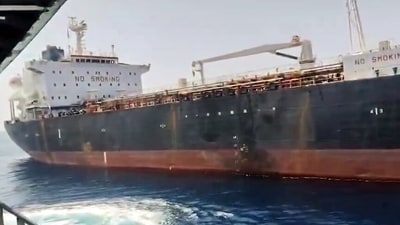
To be sure, each of the three vessels struck has had a complicated history with inspection deficiencies, detentions and sanctions.
MT Marivex, which was the first ship struck by the U.S. Navy off the coast of Oman with 24 Indian sailors on board, is linked to Panama-based Arihant Shipping. The firm was hit by U.S. sanctions in 2025 after the United States Treasury stated that the firm was part of Iran’s shadow fleet network, allowing Tehran to evade sanctions on its petrochemical sector. At the time the sanctions were put into place, the Palau-flagged MT Marivex went by the name Arihant and was sanctioned under that name for transporting “hundreds of thousands of barrels of Iranian fuel oil and bitumen within the Persian Gulf since July 2025.”
Also read:
Soon afterwards in February 2026, the ship’s name was changed to MT Marivex and was withdrawn from its classification under the Indian Register of Shipping at the request of its owners, according to maritime shipping database Equasis. A ship’s classification is important as it “establishes minimum technical standards designed to improve maritime safety and protect lives of seafarers throughout its lifecycle”, according to the International Association of Classification Societies. The withdrawal of classification typically causes a ship to lose its ability to obtain insurance and otherwise operate legally and commercially.
Also read:
The second ship to be struck by the U.S. military, Settebello, has had a similarly chequered past. The ship is owned by Aqua Aurora Shipping Lines and operated by IOS Marine FZ, both of which are based in the UAE. The vessel, previously known as Hana, has its shipping classification suspended in 2021 due to non-compliance with various conditions and standards of its classification. In 2022, the ship was detained at the Russian port of Novorossiisk after an inspection revealed 29 deficiencies across a number of categories including fire safety, navigation safety, health protection and medical care.
Also read:
“When a ship is detained at port due to safety failings, the consequences can be severe. From missed schedules and mounting fines, to reputational damage and contract breaches, the financial and operational impact quickly adds up,” according to Star International, a marine services firm.
Maritime detentions are publicly recorded and can significantly impact revenues by delaying shipments and causing reputational damage.
While the vessel was released after further inspection, the Settebello was detained again in February 2026 at the Chinese port of Lianyungang for deficiencies in its emergency systems, lifeboats and weathertight conditions.
MT Jalveer, which was hit by the U.S. Navy on Thursday, is owned by Liberia-based Jal Shipping. The vessel was detained at India’s Haldia port in February this year for deficiencies related to fire safety and emergency preparedness.